 Flooring Correct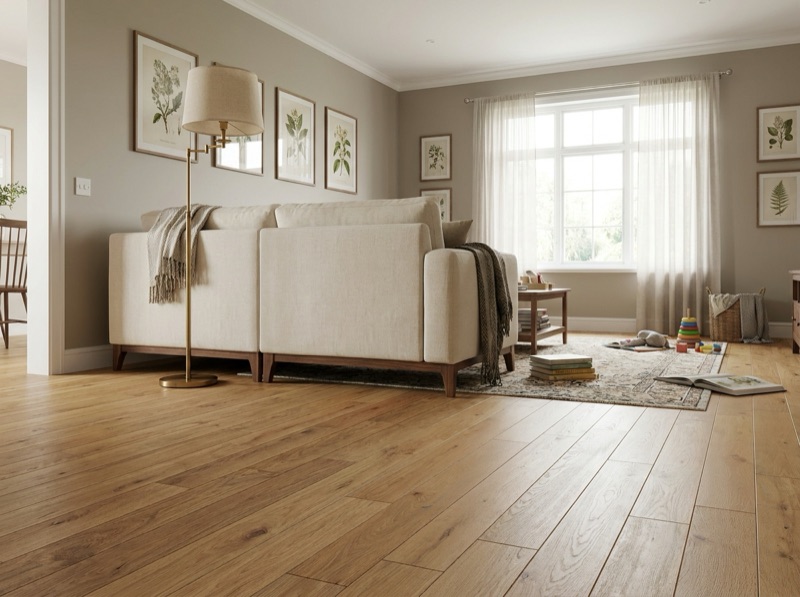
How do you stop rugs from sliding?
Kneel beside the rug and push a flat hand against its edge at roughly ankle height, the way a stumbling foot would. If the whole rug travels under light pressure, it needs a pad underneath, not just heavier furniture on the corners. A rug that resists your hand and only the surface pile gives is already reasonably secure for normal walking.
The test: push it the way a stumbling foot would
Kneel beside any edge of the rug, away from the corners where furniture might already be pinning it down, and push a flat, open hand against it at roughly ankle height, the height and angle a foot actually catches a rug edge at mid-stride. Push with the kind of pressure a normal walking step would put sideways on the rug, not a shove. This is a better test than lifting a corner and letting it drop, because lifting tests weight and this tests the thing that actually matters, which is lateral grip under a moving foot.
What the result actually tells you
If the whole rug slides several inches under that light push, or if it takes almost no resistance at all before it starts moving, that is a genuine slip risk, not a minor annoyance to live with. It means the backing on the rug and the surface underneath are not gripping each other, and the fix is a pad between them, not a heavier rug or furniture weighing down the corners, since a foot can still catch the middle of an unanchored rug regardless of what is holding the edges.
If the rug barely moves and what gives is the pile itself compressing under your hand rather than the whole rug traveling, the friction between the rug and the floor is already doing its job for normal foot traffic. That is common with a heavier rug on carpet, where the pile of one textile grips the pile of another, and less common with a lightweight rug on a hard, smooth surface like tile or luxury vinyl plank, where there is almost nothing for the backing to grab onto without help.
The part the hand test misses entirely
The hand test settles whether a rug needs a pad. It does not settle which pad is safe for the floor sitting underneath it, and that second question matters just as much, because getting it wrong trades a slip risk for a discoloration problem months later. Some rubber and latex pad backings can react with a floor's finish over time, leaving a yellowed or darkened outline of the pad's shape once the rug and pad are eventually moved, particularly on luxury vinyl plank and some hardwood finishes.
That reaction is invisible in the moment you put the pad down. It shows up gradually, which is exactly why a quick hand test cannot catch it, and why checking the pad's label for a floor-safe or non-staining claim matters as much as checking how well it grips. What rug pads are actually safe on hardwood goes through that question in full, and it is worth reading before buying a pad even if your hand test already told you one is needed.
Rerun the test after the pad goes down
A pad is not a guarantee on its own, since pads vary widely in grip strength and thin, worn-out padding can leave a rug nearly as loose as no pad at all. Once a pad is in place, repeat the same hand test at the same height and pressure. The rug should resist noticeably more than it did bare on the floor. If it still travels under a light push with the pad underneath, the pad itself may be too thin, worn out, or simply the wrong construction for that combination of rug and floor.
Bring the rug in and feel the difference on real samples
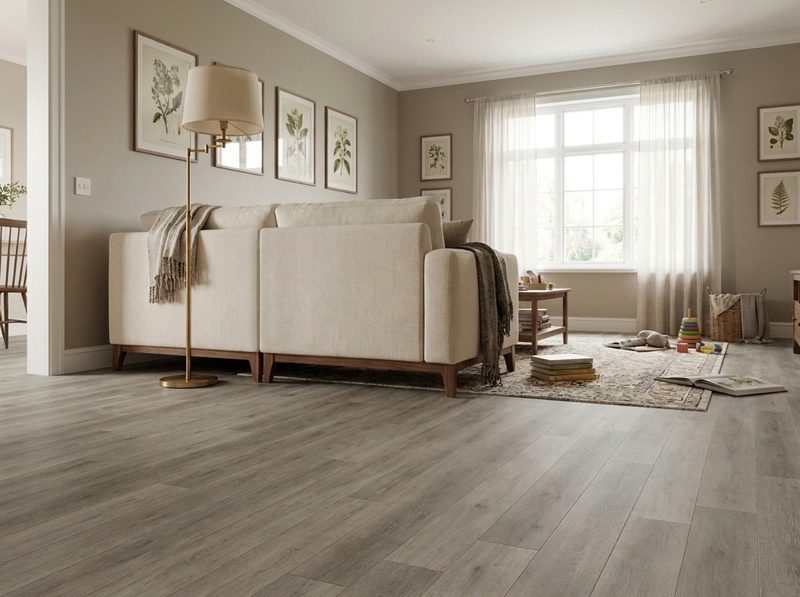
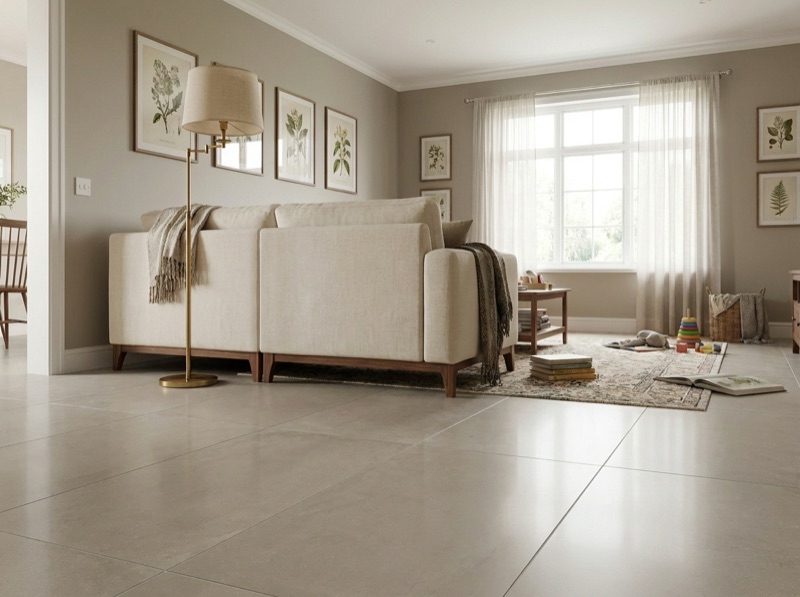
A photo or a description of your rug and your floor only goes so far, because grip depends on the actual texture of both surfaces meeting, which a screen cannot show you no matter how good the picture is. Bring the rug, or even just a corner or a folded section of it, to the showroom and set it on a few different floor samples on the counter. You will feel immediately how differently it grips tile versus luxury vinyl plank versus a lower-pile carpet, which tells you more in a minute at the counter than any general rule can from a distance.
What else people ask about rugs and floors
Grippers versus a full pad, how often to check one, and why a sliding rug is a real hazard rather than a minor annoyance.
636-332-0654Yes, considerably. Smooth, hard surfaces like tile and luxury vinyl plank give a rug almost nothing to grip on their own, so a pad matters more there. Carpet already has texture and pile that a rug's backing can grab onto, so a lower-pile rug on carpet often passes the hand test even without a pad, though a heavier rug still benefits from one.
They handle corners and edges, which stops curling and can help with a small rug, but they do not address the middle of a larger rug the way a full pad does, and tape residue can be its own problem to remove later on a finished floor. For anything larger than a small accent rug, a full pad is the more reliable fix.
There is no fixed schedule, since it depends on foot traffic and the pad's own construction, but a pad that has gone thin, brittle or crumbly has lost most of its grip and its cushioning. Rerunning the hand test periodically, especially in a rug that gets daily traffic, catches a failing pad before it becomes an actual fall risk rather than a minor annoyance.
It is a genuine fall risk, not just a nuisance, particularly at the top of stairs, in a hallway, or anywhere someone moves quickly through a room. A rug that travels or bunches under a foot is one of the more common and most preventable causes of an indoor fall, which is exactly why the hand test is worth running rather than skipping.
Feel the grip on the actual floor
Bring the rug, or a folded corner of it, into the showroom and set it on the samples we carry. You will feel how differently it grips tile, vinyl and carpet in person, which no photo or description gets across.
Free estimate
636-332-0654