 Flooring Correct

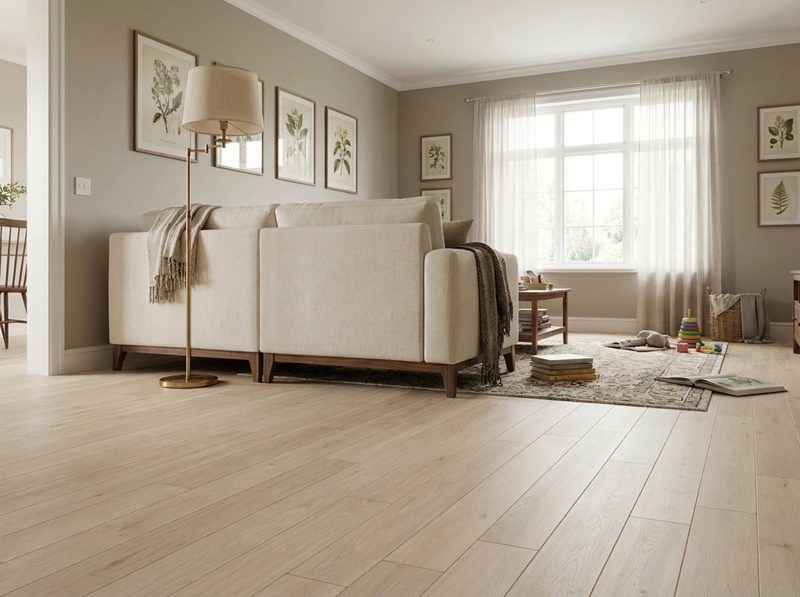
Should you use a steam mop on laminate?
No. A steam mop forces hot moisture onto the surface, which the sealed wear layer briefly resists. That moisture finds the seams between planks, where the edges are not sealed the same way, and reaches the wood fiber core underneath. The core swells, the locking profile pushes apart, and the seam peaks or lifts in a way that cannot be sanded out afterward.
Follow what a steam mop actually does to a laminate floor in order, because the answer is not the field of the plank. It is the seam next to it, and that single detail decides the whole outcome.
Step one: heat and moisture hit the surface
A steam mop turns water into vapor and pushes it onto the floor under a heated pad, which is a very different load than a damp cloth. For the first fraction of a second, that moisture lands on the melamine wear layer that every laminate plank carries, and a sealed wear layer genuinely resists a brief pass of surface moisture. Judged only on that first contact, laminate looks fine.
Step two: the moisture finds the one place that is not sealed
It never stays only on the field of the plank. Steam spreads across the surface and pools, however briefly, in the low points, and the lowest point on a laminate floor is the seam where one plank locks into the next. That joint is not covered by the same continuous wear layer as the rest of the board. It is where two cut edges meet, and a cut edge exposes the wood fiber core underneath in a way the sealed face of the plank never does.
Step three: the core does what wood fiber does with water
The core of a laminate plank is high density fiberboard, which is wood fiber pressed under heat and pressure, and wood fiber absorbs moisture the way solid wood does, only faster at an exposed cut edge. Heat from the steam accelerates that absorption. Once moisture gets into the fiber at a seam, it starts to swell, and it keeps swelling for as long as moisture is present, which with a steam mop happens repeatedly over the life of the floor rather than once.
Step four: the seam is the step that decides the outcome
Swelling fiber has to go somewhere, and the locking profile that clicks one plank into the next is the thing standing in the way. Pushed from the inside, the joint either lifts into a visible ridge along the seam or the interlock itself deforms and loses its grip. This is the step that actually decides whether a laminate floor survives a cleaning routine. Everything upstream of it, the wear layer, the surface finish, can take a beating. The seam cannot.
Step five: why it cannot be undone
Laminate cannot be sanded and refinished the way solid hardwood can, because the wear layer and the printed image beneath it are thin by design. A peaked or lifted seam is not a surface problem a light sanding fixes. The fix is replacing the affected plank, and most manufacturer warranties exclude steam damage specifically, which means the repair usually comes out of pocket rather than a claim. Keeping a spare box from the original run, the same advice that applies to any accidental gouge, is what makes that repair realistic rather than a hunt for a matching print years later.
What actually cleans laminate without the risk
None of this argues for cleaning laminate less often. It argues for the right method. A damp, well wrung mop with a cleaner made for laminate does the same job a steam mop is reaching for, lifting grime off the surface, without ever putting enough standing moisture down to find its way into a seam. The difference is contact time and volume, not effort. A quick pass with a properly wrung mop dries in minutes. A steam mop puts down more moisture than the surface can shed before some of it settles into the low points.
More on laminate care and cleaning
What to use instead, how much one mistake actually costs, and whether every seam is equally at risk.
636-332-0654A damp mop with a cleaner made for laminate, wrung out enough that it leaves no standing moisture on the surface. Sweep or vacuum on a hard floor setting first, since grit is what actually dulls the wear layer day to day. The goal is contact time, not heat, so the moisture never has a chance to work its way toward a seam.
Usually not on its own. One brief, well drained pass is a very different exposure than a routine of repeated steam cleaning, and most floors shrug off an isolated mistake. The risk builds with repetition, because each pass gives moisture another chance to reach the seams, which is why manufacturers exclude it from the warranty as a category rather than judging each incident.
Not quite. A tighter, well fitted lock with a properly sealed edge treatment resists moisture longer than an older or lower grade product, and a floating floor installed with a full moisture barrier holds up better than one without. None of that makes steam safe. It only changes how long it takes for the same swelling to show up.
If steam mopping is non-negotiable
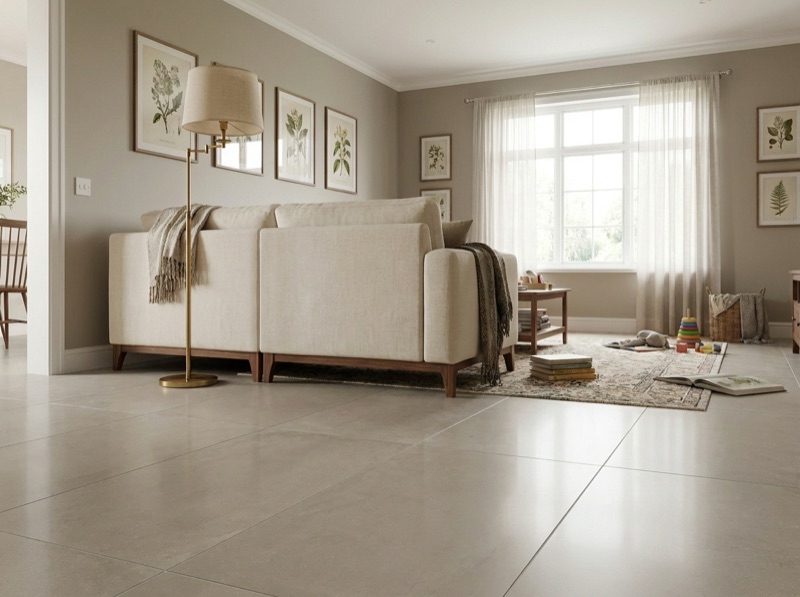
Tell us that at the counter and we will steer you toward a material built for it. A fired, glazed tile body is not a wood fiber core, so heat and moisture do not swell it. Grout is its own question and turns on whether it is sealed, which is worth settling before you commit to a steam routine.
Ask the showroom
636-332-0654