 Flooring Correct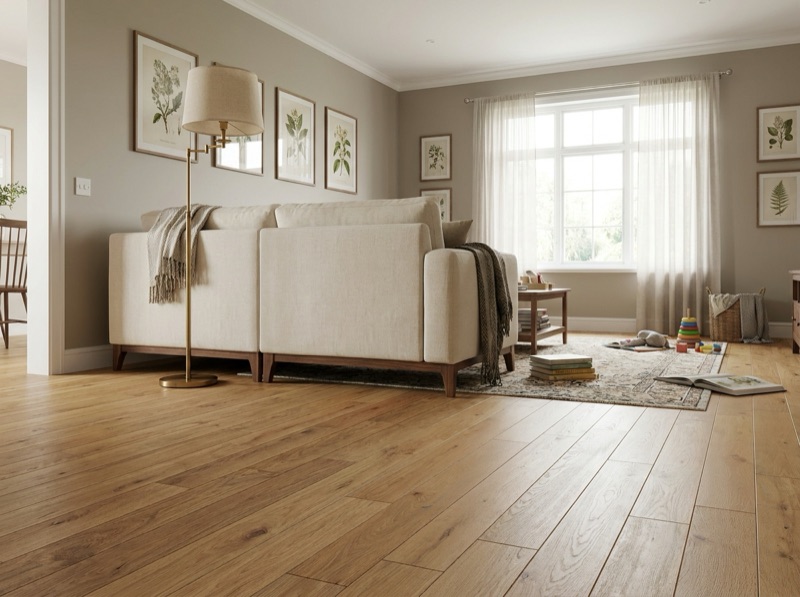

How do you refresh dull hardwood without refinishing?
Most dull hardwood is not worn out, it is coated in residue, oil soap and wax buildup that scatters light instead of reflecting it cleanly. A cleaner made for wood, used consistently, restores the shine in a lot of cases. Where the finish itself is thin in a traffic lane rather than just dirty, a screen and recoat abrades and refreshes it without sanding the wood.
What people assume, and why the assumption exists
The assumption is understandable. Hardwood is the one floor that visibly can be sanded and refinished, so when it looks dull, tired or gray, the mind jumps straight to that conversation, the dust, the cure time, the whole floor coming back to bare wood. Refinishing is real and it works, but it is also the largest possible response to a problem that is usually much smaller than it looks.
Dullness reads as damage because it changes how light bounces off the floor, and a healthy finish and a hazy one really do look different from across the room. But a change in how light behaves is not proof the wood itself has been reached. It is proof something changed at the surface, and the surface is not the wood.
The correction: dull almost always starts as a coating problem
Two things sit on top of a hardwood finish over time, and either one alone can make a floor look dull. The first is residue, a slow buildup from oil soap, wax based cleaners or a cleaner not actually made for wood, layered on with every mop and never fully removed. It leaves a hazy film that scatters light instead of letting it reflect cleanly, and it shows up as an even dullness across the whole room rather than one spot. The second is genuine wear, where the finish itself has thinned in the traffic lanes from years of foot traffic and grit, and it shows up as a lane rather than a haze, the same pattern that shows up in carpet for a different reason.
Those two causes need different fixes, and mixing them up means putting the effort into the wrong one. Residue comes off with the right cleaner and does not need anything more aggressive. Thin finish in a traffic lane is a real, if smaller, wear problem, and that is where a screen and recoat comes in rather than a full sand.
The accurate version, and what follows from it
A screen and recoat abrades the existing finish just enough to give a new coat something to grip, then adds fresh finish on top without removing any wood. It is a fraction of the work of a full sand precisely because the wood is never touched, and it is the right tool for a finish that is worn thin but has not been breached down to bare wood. A full refinish, by contrast, is the answer for wood that has genuinely been exposed, scratched through to raw grain, or damaged in a way a new coat of finish cannot hide.
Before committing to either service, switching what the floor gets cleaned with is worth ruling out first, since it takes nothing but a different bottle. A cleaner made specifically for wood, used sparingly with a damp rather than wet mop, does not leave the film that oil soap and all-purpose cleaners build up over months. Our hardwood page covers the full living-with-it routine, including what to sweep with and how humidity moves the boards seasonally.
Telling the two apart in your own house
Run a soft cloth with a dab of a wood-safe cleaner over a small dull patch and look at it dry a few minutes later. If the shine comes back and the haze lifts, residue was the problem and a cleaner switch or a full wipe-down solves the rest of the room. If the patch stays flat and dull no matter what you clean it with, and especially if you can see or feel a texture change where the finish has actually worn away, that is a finish problem, and it is worth talking through in a traffic lane rather than guessing at a fix. Sun exposure changes the picture too, since what direct light does to a finish over time is its own answer, separate from residue and separate from foot traffic.
What to bring up when you call
Whether a screen and recoat or a full refinish is the right move for a specific floor depends on things we cannot see over the phone: how deep the wear actually goes, what finish is already on the floor, and whether the boards are prefinished or were finished on site. Tell us what the traffic lane looks like, whether the dullness is even across the room or concentrated in one path, and what you have been cleaning it with, and we can tell you plainly which category you are dealing with before you commit to either fix.
What else people ask about dull hardwood
Vinegar and all-purpose cleaners, doing a recoat yourself, and how prefinished wood behaves differently.
636-332-0654It can, over time, even though a single use rarely does visible damage. Vinegar is acidic and can dull or etch some finishes with repeated use, and many all-purpose cleaners leave a residue similar to oil soap. A cleaner made specifically for wood floors is the safer default, and the manufacturer's own care sheet or warranty is the final word on what a specific finish tolerates.
Some products marketed for the purpose exist, but getting an even result across a whole room without leaving visible lap marks or missed spots takes practice most homeowners have not had. It is worth asking whoever handles the work what it involves before deciding, since a poorly done recoat can look worse than the dullness it was meant to fix.
Not always the same way as site finished wood. Prefinished boards carry a factory-cured finish, often aluminum oxide, that is harder and behaves differently under an abrasive screen than a finish applied and cured in the house. Whether a recoat is the right approach on a prefinished floor is worth confirming before starting, since not every factory finish accepts a new coat the same way.
There is no fixed timeline, since it depends entirely on traffic volume, what walks in on shoes, and how the floor gets cleaned week to week. A rarely used formal room can look the same for years, while a kitchen path or a front hallway can show haze within a much shorter stretch. Watching the traffic lanes specifically, rather than the room as a whole, catches it earliest.
Tell us what the traffic lane looks like
Describe whether the dullness is even across the room or concentrated in one path, and what you have been cleaning it with. That is what actually settles whether a different cleaner solves it or the finish itself needs attention.
Free estimate
636-332-0654