 Flooring Correct
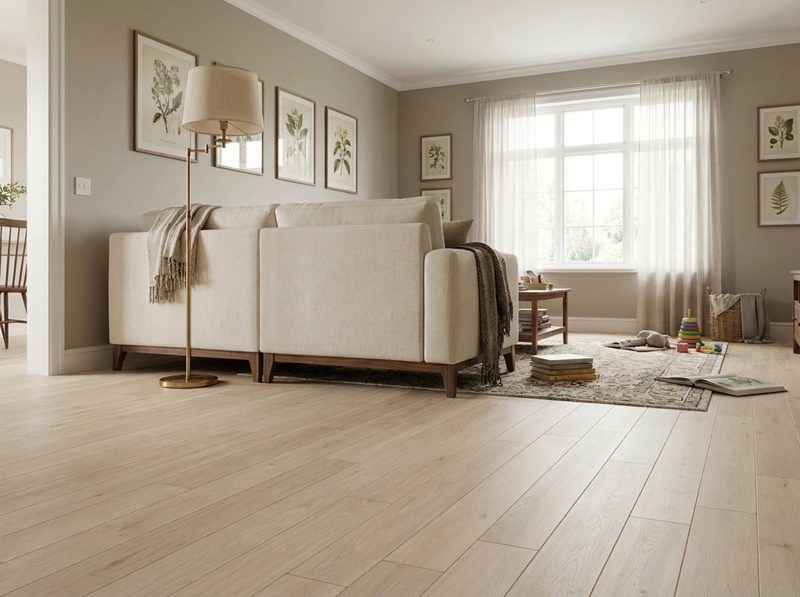
What sunlight protection do floors need?
The outcome gets decided at the window, before light ever reaches the floor, because UV exposure changes a floor's color layer permanently and there is no undoing it afterward. Blocking or filtering UV at the glass, then rotating rugs and furniture so the fading stays even, is the sequence that actually protects a floor. Trying to manage it at the floor alone is always too late.
It starts at the window, not at the floor
Ultraviolet light passes through ordinary window glass largely unfiltered, and by the time direct sun is landing on a floor, the damage sequence has already started somewhere else in the room. That order matters, because everything downstream of the window is either slowing the effect or evening it out. Nothing downstream reverses it. Treating the floor as the place to solve this problem is treating the last step in the chain as the first one.
Next, the finish takes the first hit
A wood floor's finish is built with some UV resistance, and a factory-cured finish generally holds up longer under sun than an older or thinner site-applied coat. But UV resistance in a finish is a delay, not immunity. Over years of daily direct sun in the same spot, the finish itself can dull or micro-crack ahead of anywhere in the room that gets shaded, which is one reason a sunroom or a bay window wall wears its finish differently than the hallway leading into it.
Then the color layer changes, and this is the step that decides the outcome
Underneath the finish is where the real, permanent change happens. Natural wood pigments shift under sustained UV exposure, and different species move in different directions. American cherry is known for darkening and reddening with light exposure over time, while walnut tends to lighten, and the change is gradual enough that nobody notices it happening day to day. Printed materials are not immune either. The color layer under an LVP wear layer can shift with enough direct, sustained UV, though it generally resists it better than a natural wood pigment does. This is the decisive step in the whole sequence, because once that layer has changed, no cleaning product, refinishing schedule, or rug placement brings it back to its original tone. Everything that happens before this point is prevention. Everything after it is just managing what already happened.
Rugs and furniture create the visible proof, not the cause
The moment this becomes obvious to a homeowner is usually when a rug or a piece of furniture gets moved after sitting in one place for a long stretch, and the floor underneath is a visibly different shade than the floor around it. That contrast is not new damage. It is the surrounding floor having changed while the covered section did not, which means the shielded section is actually the original color and the rest of the room caught up to a different one. It reads as the rug having protected the floor, and in a narrow sense it did, but it also created the mismatch that makes the change visible in the first place.
What actually helps, in the order it helps
UV-filtering window film or UV-rated glass is the single most effective step, because it addresses the part of the sequence that is otherwise irreversible, cutting the ultraviolet light before it ever reaches the finish. Blinds or curtains closed during the harshest midday and afternoon hours do the same job less completely, as long as somebody actually remembers to close them. After that, rotating rugs, runners and furniture every so often keeps whatever change is happening spread evenly across the room instead of concentrated in a hard-edged shape, which is the difference between a floor that has mellowed gradually and one with an obvious rug outline burned into it.
None of that changes what happens in a room that gets serious daily sun no matter what you do at the window, and for those rooms the material itself is worth choosing with that in mind before installation. How LVP specifically handles sunlight has its own answer, and for hardwood, a species and finish that shift less dramatically under light is a better fit for a sun-facing room than one chosen purely for the color it shows on day one in the showroom.
Tell us how much direct sun the room actually gets, morning, afternoon, or both, and we will point you toward species and finishes that hold their look better under that exposure rather than ones that only look good under showroom lighting. Call 636-332-0654.
What else people ask about sunlight and floors
Window film and daylight, rug outlines that already showed up, and whether carpet fades the same way.
636-332-0654Good UV-blocking film is built to filter ultraviolet wavelengths without noticeably dimming visible light, so a well chosen film should not make the room feel darker day to day. Lower-grade reflective or heavily tinted films can change the look of the glass itself, which is worth checking a sample of before committing to a whole window wall.
The outline itself will not reverse, but you can stop it from getting more pronounced by adding UV film or closing blinds during peak hours from that point forward, and by rotating the rug periodically so the rest of the floor gradually catches up in tone rather than the line staying sharp forever.
Yes, dye in carpet fiber is also affected by sustained UV exposure and can visibly lighten in a sun-heavy room over time, following the same window-first logic as any other material. The fix is the same too: reduce UV at the source and rotate what sits on top of it when that is practical.
Sun-facing room? Tell us before you choose
Morning sun, afternoon sun, or both changes which species and finishes hold their color best. Tell us what the room actually gets and we will steer you toward materials that handle it.
Free estimate
636-332-0654