 Flooring Correct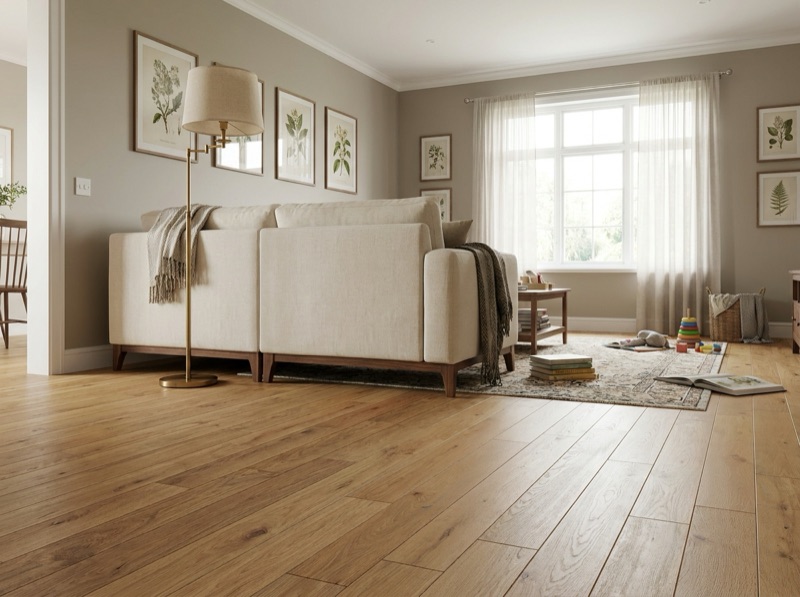
What flooring goes with oak cabinets?
Not necessarily another oak floor. The instinct to match wood species assumes two wood surfaces have to relate the way two paint colors do, but what actually has to agree is undertone, a warm gold or pink cast against a cooler, quieter one, and value, how light or dark each surface reads. A different species with a compatible undertone beats a matching species with a clashing one.
The belief: the floor has to match the cabinet species
The first instinct with an oak kitchen is to go looking for a floor in the same wood, meaning the same species name. It is a reasonable place to start, because two wood surfaces in the same room feel like they should relate the way two fabrics do, and species is the label most homeowners already know from the sample tag. The trouble is that species tells you almost nothing about whether two wood surfaces will actually look right together.
Why the belief exists
Cabinet doors and flooring samples both get sold by species name, oak, maple, hickory, so it is natural to reach for the same label on both. Older kitchens compound it, because a lot of oak cabinetry installed years ago carries a strong, warm, almost orange cast that is hard to describe except by pointing at it, and matching wood-to-wood feels like the safe way to avoid a clash with something that assertive. Species becomes shorthand for a much more specific problem, which is undertone.
The correction: undertone and value are what actually agree or fight
Undertone is the underlying cast a wood or wood-look surface carries once you look past its main color, warm and gold-leaning, warm and pink-leaning, or cool and quiet. Red oak, for one real example, carries a distinctly warm, pink-leaning undertone even before staining. White oak runs cooler and quieter by comparison, with a straighter grain and less of that pink cast. Two boards that are both technically oak can still disagree with each other on undertone, and two different species can agree perfectly. That is the piece the species-matching instinct misses entirely.
Value, meaning how light or dark a surface reads at a glance, is the second half of it. A cabinet with a lot of visible grain and a strong undertone reads as busy, and a floor at a similar value with the same undertone family tends to blend into that busyness rather than compete with it, while a floor several shades darker or lighter creates a clean break that lets both surfaces read as distinct choices rather than an accident.
What follows once you are looking at the right thing
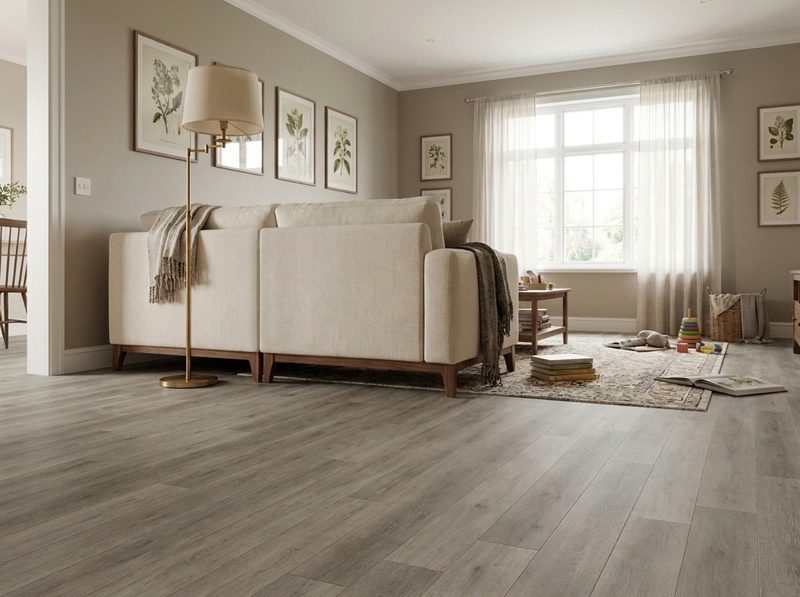
For a strongly warm, golden-toned oak cabinet, a cool, gray-leaning floor is the pairing most likely to fight the cabinet, because the two undertones pull in opposite directions across the same sightline. That clash is <a href="/answers/are-gray-floors-going-out-of-style/">covered from the floor's side here</a>. A warm mid-tone floor, wood or a wood-look material, in a similar undertone family generally settles the room without either surface fighting for attention. For a quieter, straighter-grain white oak cabinet, the undertone is close to neutral already, which opens the floor decision up considerably, including options with more contrast in value since there is less of an undertone clash to manage.
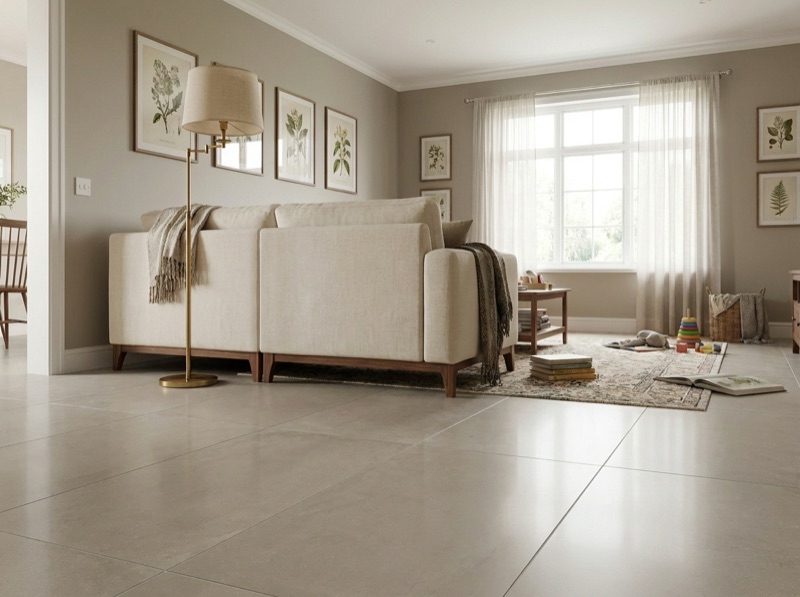
None of this locks you into wood at all. Luxury vinyl plank and wood-look tile carry undertone the same way real wood does, in the print or the glaze, and the category page covers how that print is built. The undertone question applies whether the floor is solid hardwood or a material that never touches a tree.
Where the measure settles it
Undertone reads differently under a kitchen's overhead lighting than it does under the showroom's, so a sample that looks right at the counter can shift once it is standing on your own subfloor at night. Bring the actual cabinet door, not a photo of it, and we will set full-size flooring pieces against it in more than one light before anything is ordered. That comparison is exactly what the free in-home measure exists to settle, in the room where the cabinets and the floor actually have to live together. Call 636-332-0654 with the door in hand.
More on undertone, wood species and mixing materials
Mixing species on purpose, strongly warm oak specifically, and how close an undertone match actually needs to be.
636-332-0654Yes, and most houses already do it without anyone noticing, because a cabinet, a floor and a piece of furniture rarely share a species to begin with. What keeps a house from feeling disjointed is undertone consistency between the surfaces that sit in the same sightline, not a single species carried everywhere. Two different woods with the same warm or cool cast read as coordinated.
That is usually the specific case people mean when they say oak cabinets are hard to match, and it is a real undertone rather than a flaw to disguise. A warm floor in a similar family tends to settle the room, while a distinctly cool, gray-leaning floor sets up the sharpest disagreement of any pairing available to you. Bringing the actual cabinet door in for a side by side check removes the guesswork.
Close is usually enough, and an exact match can actually look accidental rather than intentional. What causes visible tension is a genuine mismatch, a warm cabinet against a distinctly cool floor or the reverse, not a small variation within the same warm or cool family. A little contrast in value, floor lighter or darker than the cabinet, reads as a deliberate choice once the undertone family agrees.
Bring the cabinet door, not a photo
Undertone shifts under different light, so a picture will not settle it. Bring the door itself to the showroom or the in-home measure and we'll check it against full-size samples in your own kitchen light.
Free estimate
636-332-0654