 Flooring Correct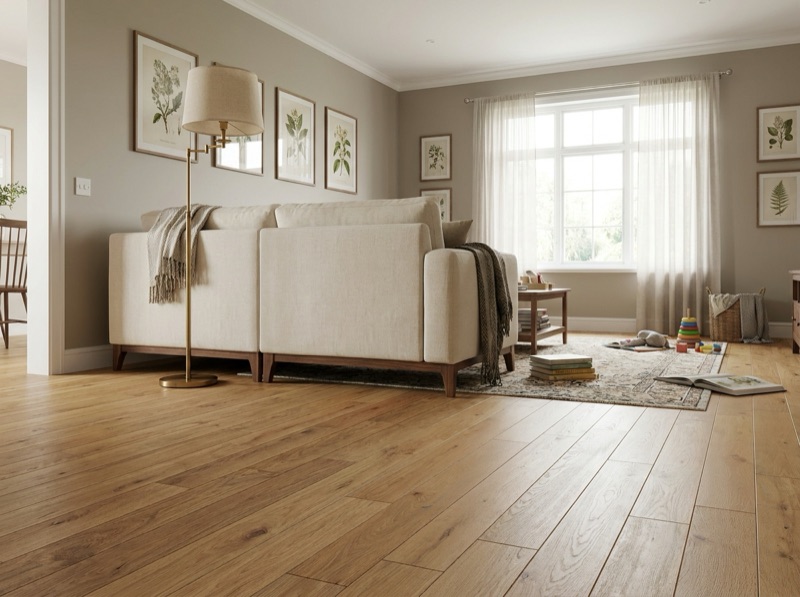
What flooring stands up to big dogs?
Start with weight, not claws. A large dog's landing compresses soft wood and flattens pile in a way a small dog's does not. From there, luxury vinyl plank, tile or a textured engineered wood handle the load, but the finish decides the outcome more than the material family. Matte, textured surfaces and dense, low pile hide marks best.
Start with the weight, not the claws
A big dog changes the math before fiber or finish ever comes up. A running jump off a couch or a fast turn down a hallway lands a bigger, more concentrated load than a small dog produces, and that load is what compresses a soft wood surface or crushes carpet pile flat over time. Our hardwood and dogs page walks through that denting mechanism in general, and with a large breed it is the first cut to make, not the last. The real starting question is not what your dog scratches. It is what your dog's weight compresses when it lands.
Then narrow the wear-surface class
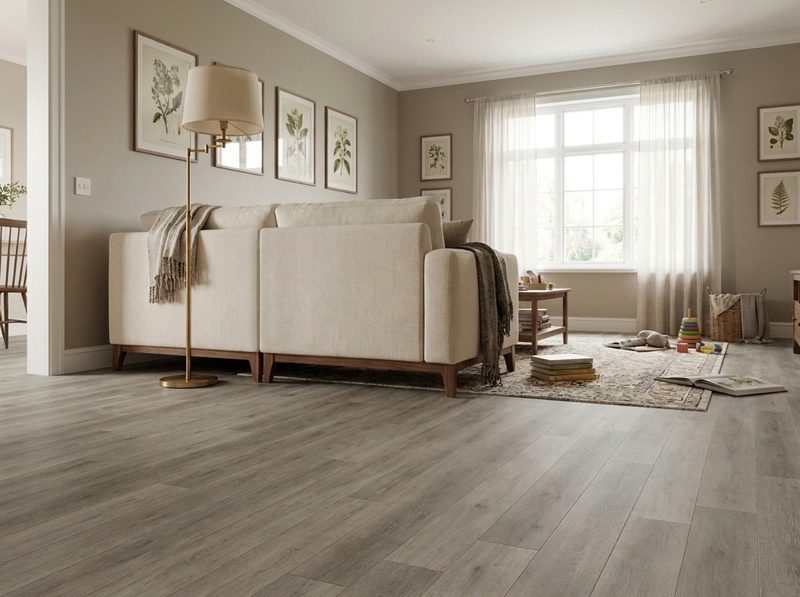
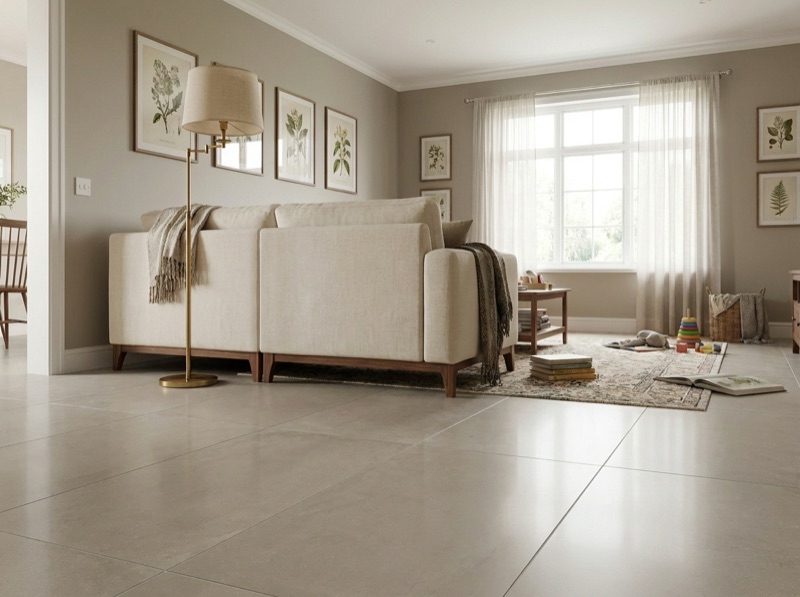
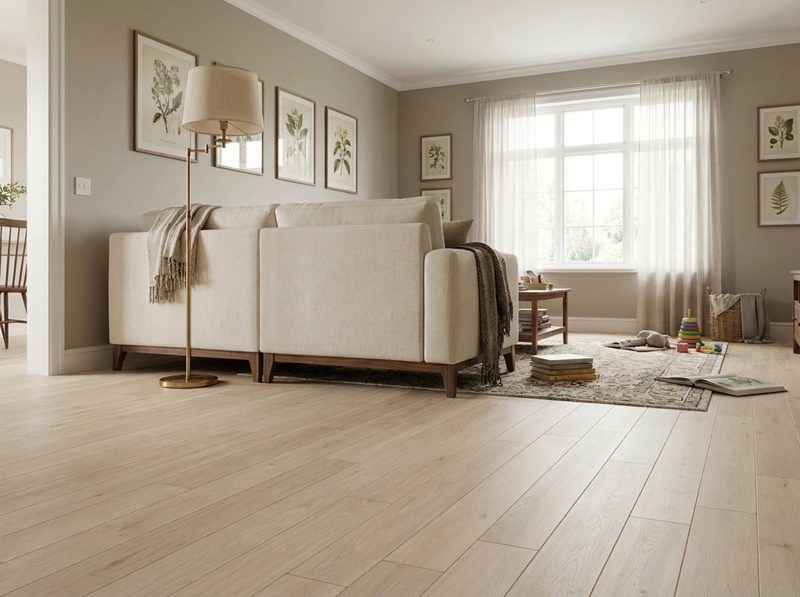
Once weight is the filter, a few families rise to the top. Luxury vinyl plank with a rigid core and a real wear layer shrugs off a compression load better than most solid wood, which is why it is often the answer we point big-dog households toward. Tile is the hardest surface of all against a point load, at the cost of being unforgiving underfoot for the same dog on a bad landing. Engineered hardwood and a textured hardwood species both hold up better than a smooth, soft species, and laminate carries a genuinely hard wear surface against scratching, though a very heavy dog's landing still compresses what is under that surface. Carpet still belongs in a big-dog home, just aimed at the room the dog rests in rather than the lane it runs through.
The step that actually decides the outcome
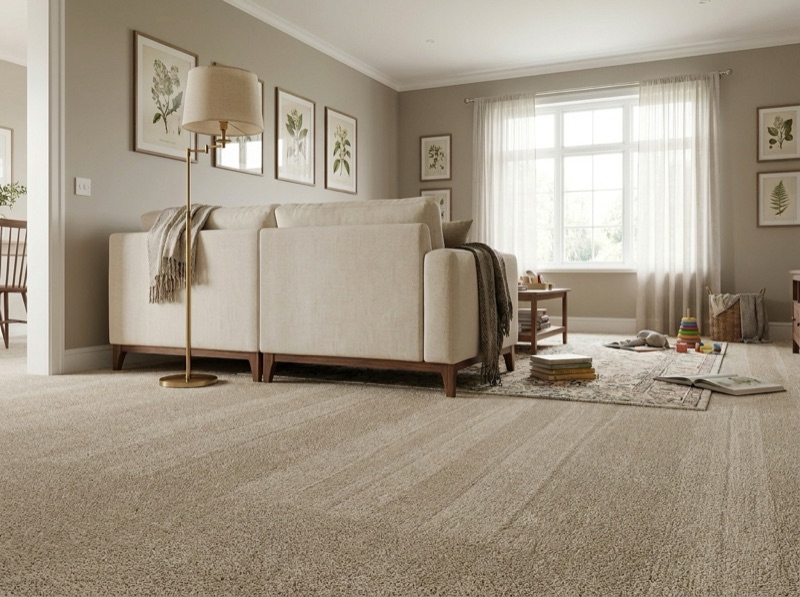
Whichever family you land on, texture and construction decide how the floor looks in a few years more than the species or the brand printed on the box. On a hard surface that means a matte, wire-brushed or embossed face rather than a smooth glossy one, because a broken-up surface gives fine claw marks nothing clean to stand out against. On carpet the same logic runs through pile construction: a cut pile has nothing for a claw to hook, where a loop pile gives a big dog's larger claws something to catch and pull into a running line. A dense, low pile also resists flattening in a favorite nap spot longer than a plush one does. That single specification, texture and construction over species and brand, is worth more attention than anything else on this list.
Split the house instead of upgrading all of it
A big dog concentrates its damage in a few predictable places rather than spreading it evenly, and that page names those places and what belongs on each one. The choice this page is about sits one level above that. Nothing says a single material has to cover the whole house, and in a big-dog household it usually should not. A hard, textured surface earns its keep along the route the animal actually travels, the door it comes in through and the open floor it crosses at speed. The room it sleeps in can stay soft, because a resting dog puts a slow, steady load on a floor rather than a violent one. Splitting the house that way lets each room take the surface that suits what happens in it, and it moves the transitions between those materials onto the list of things to settle at the measure rather than after the floor is down.
More on flooring and dogs
Tile traction, carpet fiber choices, and whether engineered wood really outlasts solid under a heavier dog.
636-332-0654For surface durability against weight and moisture, yes, tile is hard to beat. The tradeoff is comfort: tile is cold and unforgiving underfoot for the same dog, and a slick glazed finish can be difficult for a large dog to get traction on. A textured or matte tile is the safer version of that choice for a big-dog household.
Not a different construction, the same cut-pile, solution-dyed, moisture-barrier logic applies to any pet household. What changes is how far you lean into it. A big dog's claws and weight reward the denser, lower end of whatever fiber you choose, more than a small dog's would.
A concentrated landing compresses the wear layer of either construction similarly. Engineered hardwood's advantage is a cross-layered core that resists moisture and seasonal movement better than solid wood, not extra resistance to the impact of a jump. The finish still does most of the cosmetic work either way.
Narrow the material with the dog in the room
Tell us the breed, the size and where the dog sleeps and jumps. We will pull the wear surfaces and pile constructions that hold up at that weight and measure the rooms it actually uses.
Free estimate
636-332-0654