 Flooring Correct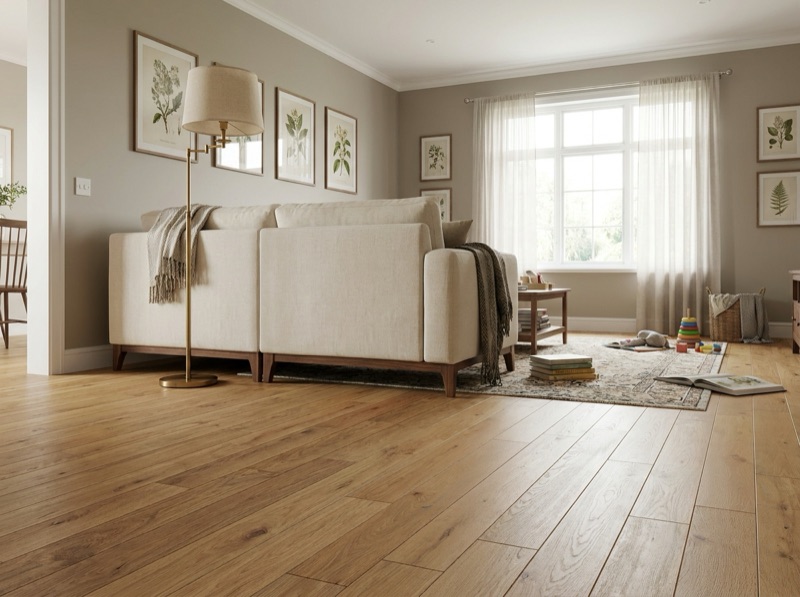
How do you protect hardwood floors from dogs?
Keep the nails short, put a mat where the dog comes in and a rug where it lands, keep the water bowl on a tray, and get accidents up fast. Claws scratch the finish rather than dent the wood, so a matte sheen with texture and grain movement hides the damage best. No wood floor is dog proof. A solid one can be sanded back.
Three kinds of damage, and only one of them is serious
A dog does three different things to a wood floor and they are worth separating, because owners worry about the first one and get hurt by the third.
- Fine surface scratching from claws. It happens in the finish, not the wood. Cumulative and cosmetic, and worst wherever the dog changes direction at speed.
- Denting. A big dog jumping down from a couch lands a concentrated load, and that compresses the wood itself. This is where the species hardness rating actually earns something.
- Water and urine. The only one that damages the floor structurally. It swells board edges, and urine that gets under the finish stains the wood dark from below. That is a sanding problem, sometimes a board replacement problem, and never a cleaning problem.
The nails are most of the scratching story
A dog's nails should not click on a hard floor. If you can hear them, they are long, which means the dog is dragging nail tips across the finish with its weight behind them. Long nails also change the angle of the toe, so the dog pushes off the tip instead of the pad, and the push off is where the deeper marks come from. Trim on a schedule rather than when you remember, and smooth the tips afterward, which does more than the trim alone.
The fur between the pads matters just as much. A dog with slick, overgrown paw fur cannot get purchase on a finished floor, and one panicked scramble in a hallway does more damage in two seconds than a month of ordinary walking. Keeping that fur trimmed is floor maintenance as much as grooming.
The finish is the front line
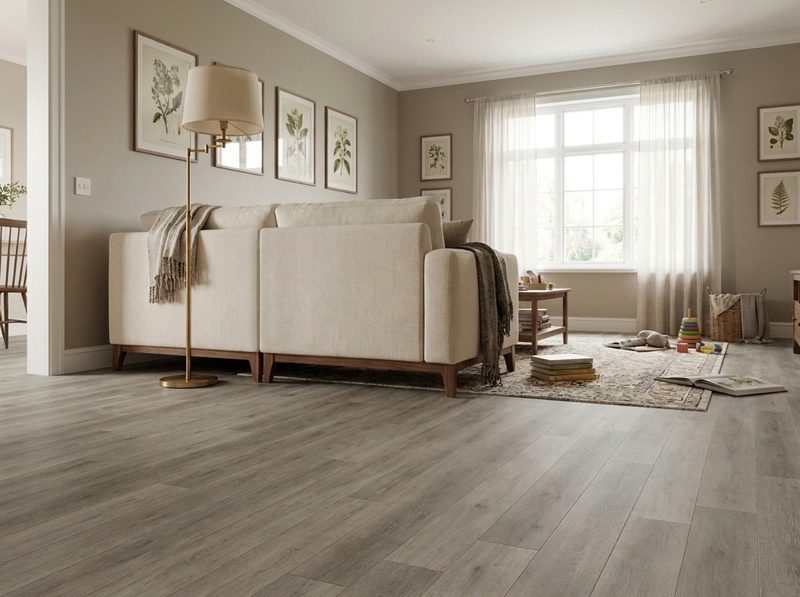
Since claw marks live in the finish, the finish and the sheen decide what you see. Matte and satin scatter light and swallow fine scratching. A higher sheen acts like a mirror and reports every mark on the floor. A wire brushed or textured surface breaks up the reflection and hides claw marks better than any smooth board at the same hardness. Color does the same work: a mid tone with real grain movement conceals far more than a very dark, very smooth floor, which is the hardest combination to keep looking new in a house with dogs. Which species carry that camouflage naturally is covered in the species comparison.
The finish also decides how damage gets repaired. A hardwax oil penetrates the wood and lets a scuffed area be touched up without redoing the room. A factory cured aluminum oxide coating is harder to mark in the first place, and when it does mark, the fix is a recoat or a sanding across the whole room rather than a patch. Neither is right for everybody, and the solid hardwood page lays out the options.
The three places worth defending
You do not need to armour the whole house. Three spots take almost all of the damage.
- The door the dog bolts through. A mat outside and a mat inside. Grit tracked in on paws is what actually cuts a finish, and the mat gives that first stride something to grip.
- The lane between the door and the bowl. A runner down it takes the running traffic off the wood entirely.
- The landing spot. Wherever the dog jumps down, put a rug on a pad made for hard floors, since some rubber and latex backings can discolour a finish over time.
Water bowls and accidents
The bowl belongs on a tray with a raised lip, not on a towel that wicks water outward and holds it against the boards. Wood has one true enemy and it is water sitting in a seam with nowhere to go, and a bowl area is wet a little every single day rather than once in a crisis.
Accidents are a race. Blot rather than wipe, so the liquid is not spread into more seams, then dry the seam itself. Urine that soaks in leaves a dark stain no cleaner will reach, because the damage is in the wood beneath the finish. Puppies and older dogs are the two stages where this becomes a planning question, and it is worth deciding which room they spend the night in. One more rule, and it is absolute: no steam mop on a wood floor, ever. Steam drives moisture straight through a finish.
The honest limits
No wood floor is dog proof and anybody who says otherwise is selling something. A dog will eventually mark a wood floor, and the question is what you get in exchange. With solid wood you get a repair path nothing else offers: the floor can be sanded back and finished again, so a decade of a dog can be undone rather than replaced.
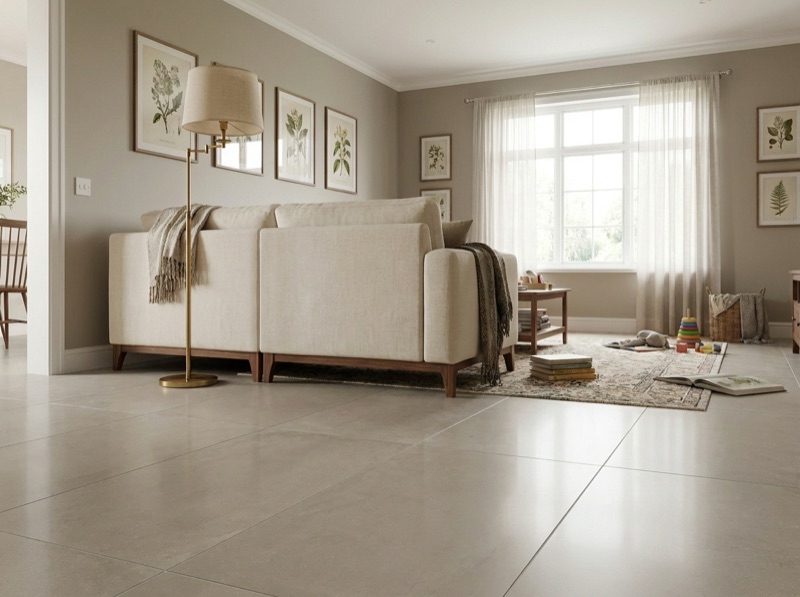
If what you want is a floor a dog cannot mark at all, we will tell you plainly that it is not wood. Luxury vinyl plank handles claws and water in a way no finish on wood can match, and it is the honest recommendation for some households. And if the room in question is where the dog sleeps, the soft surface side has its own answer in the best carpet for pets.
Bring the dog into the conversation
Tell us the breed, the size and where the dog spends its day, because that changes which samples come off the rack. It is a normal conversation at our counter and it saves people from picking a beautiful floor that will not suit the animal living on it. Estimates are free, the in-home measure checks the subfloor before an order goes in, and the samples are waiting at the Wentzville showroom. Call 636-332-0654.
What else dog owners ask us
Nails against a factory finish, urine stains and where the bowl belongs, answered straight.
636-332-0654Yes, given time. A factory cured aluminum oxide coating is hard and it resists scuffing well, but no finish is scratch proof and claws are working on it every day. What changes the outcome is not finding a tougher coating. It is short, smooth nails, mats catching the grit that does most of the cutting, and a matte, textured surface that keeps the marks from catching the light.
It depends how deep they went. Urine caught quickly and dried at the seam usually leaves nothing. Urine that soaked in reacts with the wood and leaves a dark stain sitting below the finish, which no cleaner reaches because the damage is not on the surface. Sanding can sometimes get under it, and sometimes the board is replaced. Fix the source and dry the area before anybody assesses the wood.
On a tray with a raised lip, ideally in a spot you are willing to put a mat under as well. A towel is the common choice and the wrong one, because it holds water against the boards and wicks it outward into the seams. The bowl area gets a little wet every day rather than once in a crisis, and daily is what wood struggles with.
Pick a floor that suits the dog
Tell us the rooms, the breed and where the dog spends its day. We will pull the finishes and surfaces that hold up, and measure in your house before anything is ordered.
Free estimate
636-332-0654