 Flooring Correct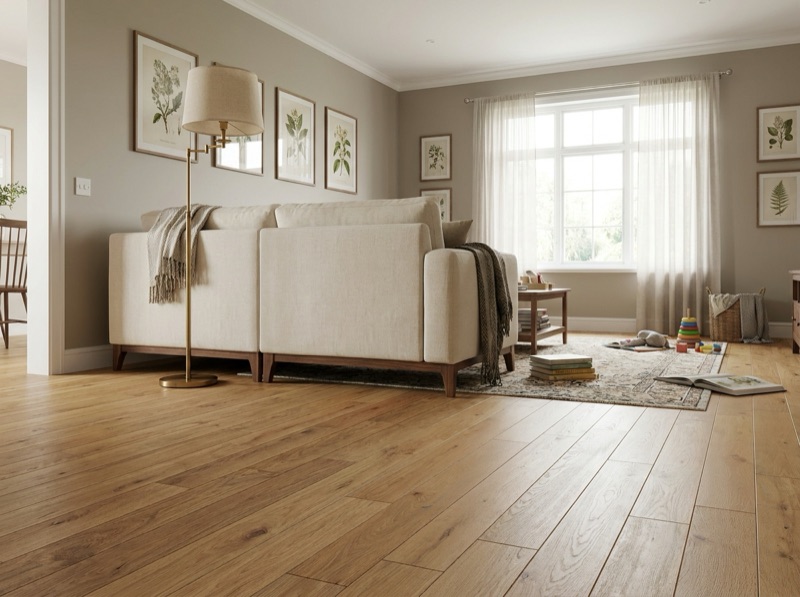
What is the most durable hardwood species?
Hickory is the hardest of the common domestic species, with maple and white oak close behind it, red oak a step below and walnut softest of the group. Some imported species rate higher still. In a real house, though, the most durable floor is usually the one whose grain and color hide wear, not the one with the highest hardness rating.
The rough ordering among the woods on a showroom rack
Start with the ranking, because it is short. Of the domestic species a showroom like ours actually stocks, hickory sits at the top. Maple and white oak come next and land close together. Red oak, the wood everything else gets compared against, is a step below them. Walnut is the softest of the group by a clear margin, and several imported species rate above every one of these. Hardness gets rated on the Janka scale, and the figure for any given product is printed on its own spec sheet, so ask for it rather than trust a number quoted from memory.
That ordering is real, and it is also the least useful thing on this page, because it predicts exactly one kind of damage. What a hardness rating does and does not tell you is worth reading before you let the number choose your floor.
Hardness resists damage. Grain hides it.
Two separate properties decide how a wood floor looks after a decade of a working household. The first is how well the wood resists being dented, which is what hardness measures. The second is how well the face of the board conceals the damage it does take, which comes down to grain, color variation and surface texture. Owners judge a floor on the second one, because a mark you cannot see from standing height is not a mark anybody complains about. That is why the hardest species on the rack is regularly not the most durable choice for a house.
How each of the common species takes wear
- Red oak. Open, strongly figured grain with a warm pink cast. The pattern is busy enough that small marks disappear into it, which is most of its reputation. It is also the most common wood floor in the country, so blending a repair board years from now is easier with red oak than with anything else here.
- White oak. Rates above red oak, with a straighter, quieter grain in a neutral to faintly cool tone. Nearly all of the pale and greige floors people show us on their phones are white oak. The calmer figure conceals slightly less than red oak does, and a matte or wire brushed surface closes that gap.
- Hickory. Hardest of the common domestics and the most restless to look at, swinging from near white sapwood to deep brown heartwood board to board. That swing is the best camouflage on the rack. It is also why plenty of people rule it out on sight, and it makes a single replacement board harder to blend.
- Maple. A fine, even grain over a pale cream face. It rates hard, and that smooth pale surface gives a scratch nowhere to hide, so a maple floor often reads as more worn than a softer oak taking the same traffic. It also blotches under stain, so it is usually kept near natural or bought already finished.
- Walnut. It arrives dark on its own, a deep brown that needs no stain at all. It is softer than the oaks, it dents more readily, and a dark floor shows dust and pet hair between cleanings. People choose it for the color knowing all of that, and they are not wrong to.
The imported species that rate higher
Several imported hardwoods rate well above anything domestic, and that hardness is genuine. The catch sits somewhere else. Some species shift color noticeably under daylight across the first year or two, so a rug moved after two years can leave a lighter or darker ghost of itself on the floor. Ask what is actually on the rack, and what its color does in a room with south facing windows.
What the floor looks like after ten years
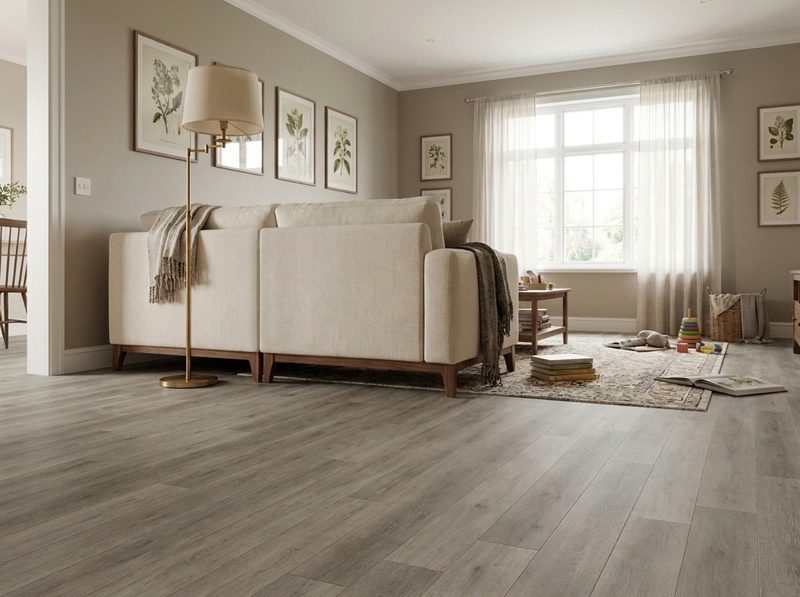
Put the same household on two floors of different species and the wear does not arrive the same way. Hardness decides how many dents there are. Color, grain, sheen and texture decide how many of them you can see. A dark, smooth, higher sheen floor is the most demanding combination to keep looking new no matter which log it came from, and a mid toned, textured, matte floor with visible grain movement is the most forgiving. The solid hardwood page lays out the finish and sheen options in full.
The parts of durability that species does not decide
A species choice sits inside decisions that matter at least as much. Plank width changes how much each board moves with the seasons. The Missouri humidity swing is what opens gaps in a finished floor, and it does not care which wood you picked. A room over a slab is not a solid wood room at all, whatever species you like the look of. And in a house with a large dog, the finish and the nail routine do more for the floor than the species ever will.
One thing holds across all of them. If it is solid wood, it can be sanded back and finished again, and how many times that can happen depends on the thickness of the board rather than the hardness of the wood.
Stand on the samples before you decide
Showroom lighting flatters every species on this page, and not one of them will look the same in your rooms. Take boards home, stand them against your own walls, and look again after dark. Put a chair leg on one. Drag a shoe across another. That tells you more than any rating will. Once it is narrowed down, ask for a free estimate, and the in-home measure settles the subfloor, the transitions and the moisture readings before an order goes in. The rack is at the Wentzville showroom, or call 636-332-0654.
What else people ask about species
Households with dogs, refinishing intervals and the imported woods, answered straight.
636-332-0654Look for camouflage before you look for hardness. Hickory and red oak both carry enough grain movement and color variation to swallow the scratching a busy household produces, and a matte or wire brushed surface on either one hides more than a jump up the hardness scale would. Very smooth, very dark and higher sheen is the combination that shows the most, whatever the species underneath it.
Less than people expect. What wears out first is the finish, not the wood, and finish wear is driven by grit, traffic and sheen rather than by how hard the species is. A softer species will collect dents sooner, which is a different problem. When a full sanding does come due, the number of sandings available is set by the wood above the tongue, not the species.
They are worth understanding rather than defaulting to. The extra hardness is real and it buys dent resistance. What comes with it is color that can shift under daylight over the first year or two, denser wood that behaves differently under a site applied finish, and a harder job matching a single board years later. Ask what is stocked and what its color does in a bright room.
Compare the species in person
Tell us the rooms and who lives in them. We will pull the boards worth comparing, send samples home with you, and measure in your house before anything is ordered.
Free estimate
636-332-0654