 Flooring Correct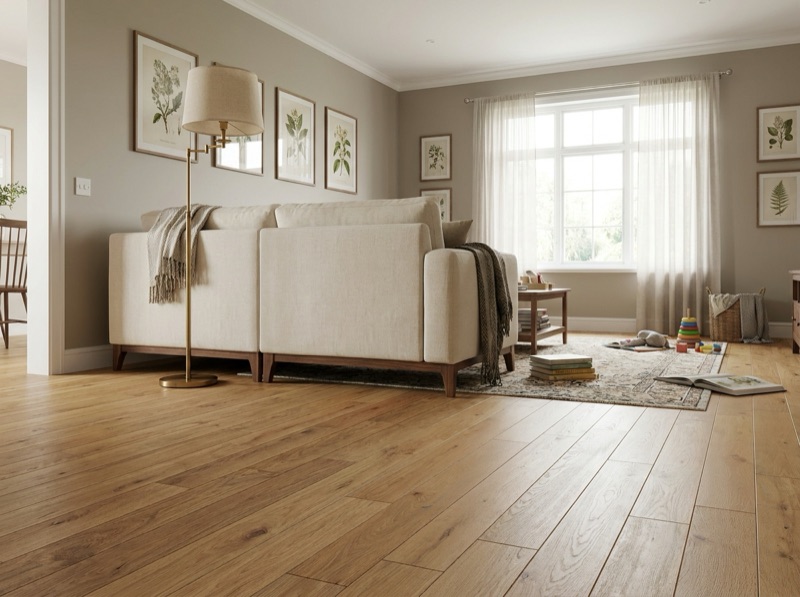
Salon Floors,
Chosen For Color,
Hair And Water
A salon floor is swept a dozen times a day, dripped on with products designed to remove color, stood on for nine hours and photographed constantly. Very little else in a building has that job description.
Luxury vinyl and tile already cover how each material is built and what it is good at. A salon needs something narrower. The products at the station are formulated to remove color, and that chemistry, more than traffic, is what decides the styling floor, the shampoo bowls, the pedicure stations and the treatment rooms. What follows is that decision, the honest cost on each side, and the case for doing less than a full replacement. Call 636-332-0654 or see commercial flooring.
Lightener and developer are what actually ruin a salon floor
Every other business on the commercial side of this site worries about wear. A salon has a second problem that arrives faster than wear does, because the products at the station are formulated to lift color out of things. A drip of lightener that sits while a client is being finished is not a stain in the ordinary sense. It is a chemical change to the surface, and it does not come out with a better mop.
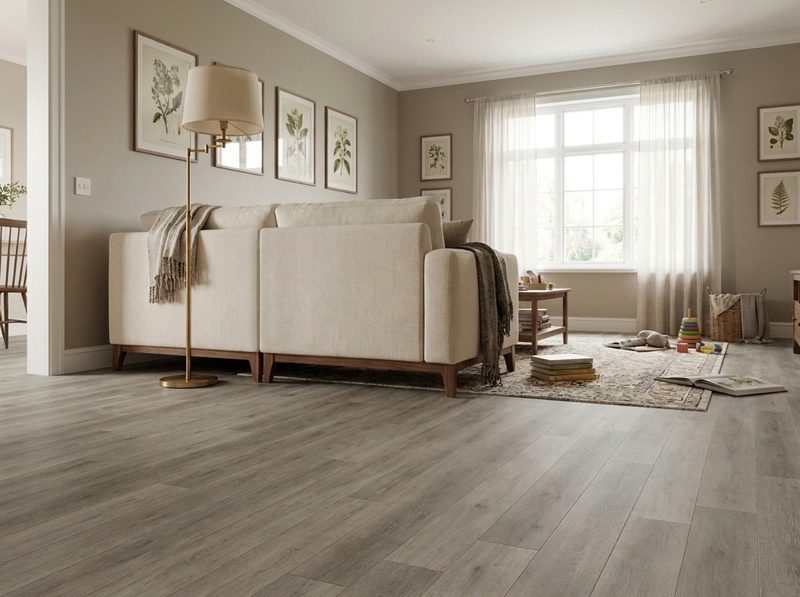
That shapes the specification more than traffic does. A light, uniform floor shows every drop of dark product. A dark, uniform floor shows dust, lint and every pale drip. A mid tone with real movement in the print or the tile face hides both, which is why working salons end up there rather than at the extremes that photograph well in a catalog. Low sheen helps twice: it hides marks, and it does not throw a ring light straight back at the camera.
Hair sweeps off a smooth floor and hides in a textured one
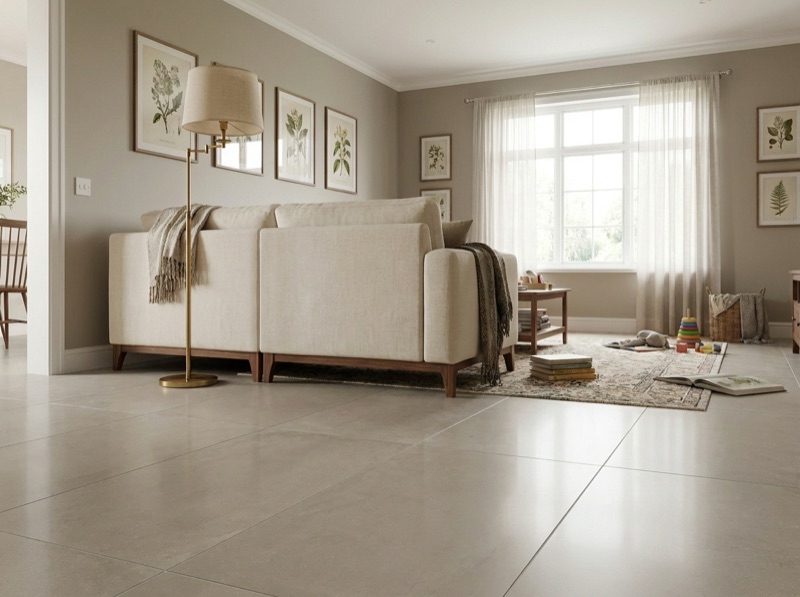
This is the tension nobody warns a new owner about. Deep embossing on a plank and a heavily structured tile face both give a wet shoe grip, and both give clipped hair somewhere to sit. Grout joints do the same at a smaller scale, so a floor of small tiles with many joints is more sweeping than a large format floor with few. A smoother surface releases hair to a broom in one pass, and is more slippery when that broom has just gone past a splash from a bowl.
The resolution is usually spatial rather than a single compromise. Keep the smoother, easily swept surface where hair falls and the floor stays dry, and put the grippier, water tolerant surface where water actually lands. That is a two material floor, and the line between them should be one somebody chose.
The shampoo bowls are a wet room in the middle of a dry one
Water at the bowls is not an occasional spill. It is a daily volume of warm water and product hitting the same square yard, running down the back of the cabinet and finding whatever it can. The floor there has to tolerate standing water and stay safe underfoot while wet, and the joint between the bowl cabinet and the floor deserves a plan of its own, because that gap is the route water takes.
Where the transition falls is a design decision. Landing it at the natural break between the bowl area and the styling floor makes the change look deliberate. Running one material up to a line that exists only because the order came up short is the version people notice for years.
Pedicure stations and treatment rooms are not the styling floor
A pedicure area handles more water than the bowls do, plus sanitation between clients, and it usually sits beneath chairs with plumbing run to them. A wet treatment room in a spa adds heat and humidity. Neither is a good place for whatever serves the styling floor, and both are where a hard, water tolerant surface with a face rated for wet grip is the straightforward answer. The rating lives on the sample tag and the tile page explains what it governs, so ask for it by name rather than judging a face by eye.
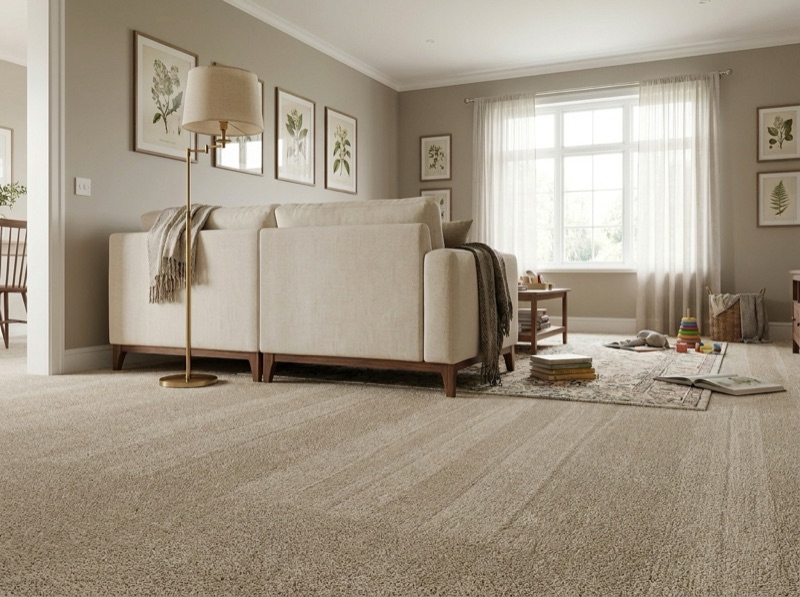
Quiet rooms cut the other way. A treatment room where somebody is meant to relax benefits from a floor that does not amplify footsteps from the corridor, which argues for the warmer and softer of the two candidates wherever water allows it.
Nine hours behind the chair
Stylists stand in one place for most of a shift, and hardness is felt in the legs and the back rather than seen in the floor. A cushioned or warmer surface is easier to spend a day on than a hard mineral one, and that is one of the genuine advantages vinyl holds over tile in the rooms where water is not forcing the issue.
Anti fatigue mats at the stations are the usual supplement, and there is a trap in them. Rubber backed mats can discolor a vinyl floor over time and leave a permanent shadow exactly where the mat sat. Ask for a mat rated safe on vinyl, and move mats occasionally instead of leaving them in one position for years.
The ring of wear around every station
Wear in a salon is not spread evenly. It arrives as a ring around each station, where the stylist pivots, the chair base swivels and a rolling cart travels the same short arc all day. Those rings show before anything else in the room looks tired. A commercial wear layer and a surface with movement in it will delay them. Nothing prevents them, which is an argument for a floor whose damaged pieces can be replaced, and for keeping spare material from the original run in the back room.
When the right answer is a smaller job
Not every salon floor conversation should end in a full replacement. If the styling floor is sound and the problem is a bleached patch at two stations, replacing those pieces from stock is the proportionate answer. If the trouble is at the bowls, where water has already got under the existing floor, that area is the job and the rest can wait. In a suite or booth rental setup, where every station operator runs their own schedule, a whole floor replacement is a coordination problem before it is a flooring one, and doing the shared floor while leaving the rooms is often the sensible split.
And if casework, plumbing or a bowl replacement is coming, the floor should follow that work rather than lead it.
Installing between appointment books
A salon that closes is a salon where several people lose a working day, and where chairs are rented that day is somebody's own income. So the work gets sequenced: half the floor at a time, stations relocated across the room, the bowl area on the day the fewest chairs are rented, and a surface that is walkable by the end of the shift. Cure time is scheduled honestly at the start rather than discovered on the second morning.
What a salon floor shows us before we quote it
Walking the space supplies most of what the quote needs. Where the previous floor has already failed, and whether it failed at the bowls, in a doorway or in the ring around a station. Whether water has been underneath it. What the slab is doing, since a bonded floor wants a flat and dry one. How the stations are spaced and whether the layout is about to change. Where the light comes from, because a floor that reads calm under showroom lighting can glare under the fixtures over a styling mirror. Estimates are free and the measure comes to the salon. Mid tone samples are on the floor at the showroom if you want to start there.
“Amazing, quick, easy experience. My floors look great!! ... I couldn't be happier with deciding to go with his suggestions!”
What owners ask between appointment books
Color spills, sweeping, wet bowl areas, and the days a chair cannot sit empty.
636-332-0654Lightener and developer can, because they are built to remove color. The practical defenses are a mid tone with movement in the pattern, a low sheen surface, wiping drips quickly rather than at the end of the day, and choosing a floor whose damaged pieces can be replaced from stock kept back from the original run.
The bowl area is the one part of a salon where water arrives daily in volume, so a hard, water tolerant surface with a face that grips when wet is the straightforward call there. It does not have to run through the whole salon. Change material at the natural break and plan the joint at the cabinet.
Usually, in halves. Stations move across the room, the bowl area gets done on the day the fewest chairs are rented, and the surface has to be walkable when the next appointment arrives. Cure time is scheduled at the start rather than discovered partway through.
Neither extreme survives a working salon. A flat dark floor shows every pale drip and every swept miss, and a very light floor shows dark product. A mid tone with movement, in a low sheen finish, photographs well and hides what a busy Saturday leaves behind.
Some do. Rubber backed mats can discolor vinyl over time and leave a shadow where the mat sat. Ask for a mat rated safe on a vinyl floor, and move it now and then rather than leaving it in one spot for years.
It changes the sequence. Anything anchored or plumbed is either detailed around or scheduled with the equipment work, and a floor put down before that work is finished is a floor that gets cut into. We note what is fixed and what moves at the measure.
Measure the styling floor and the bowl area on one visit
We look at where water has already got under the old floor, how the stations are spaced and which days the chairs can be empty, then quote the wet areas and the dry floor as separate lines.
Free estimate
636-332-0654