 Flooring Correct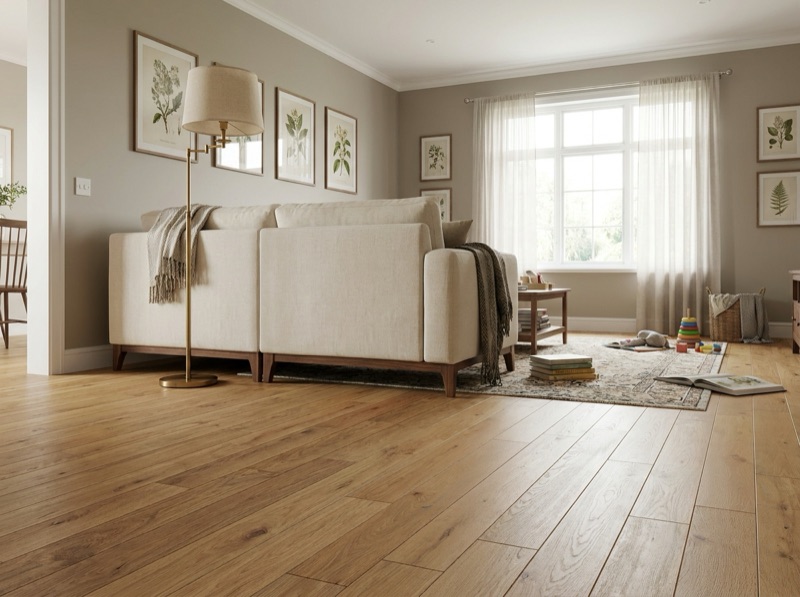
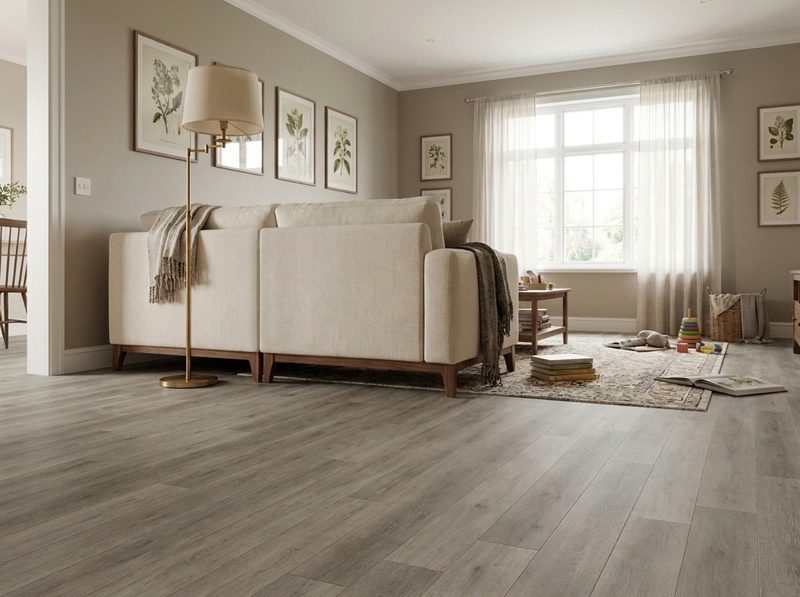
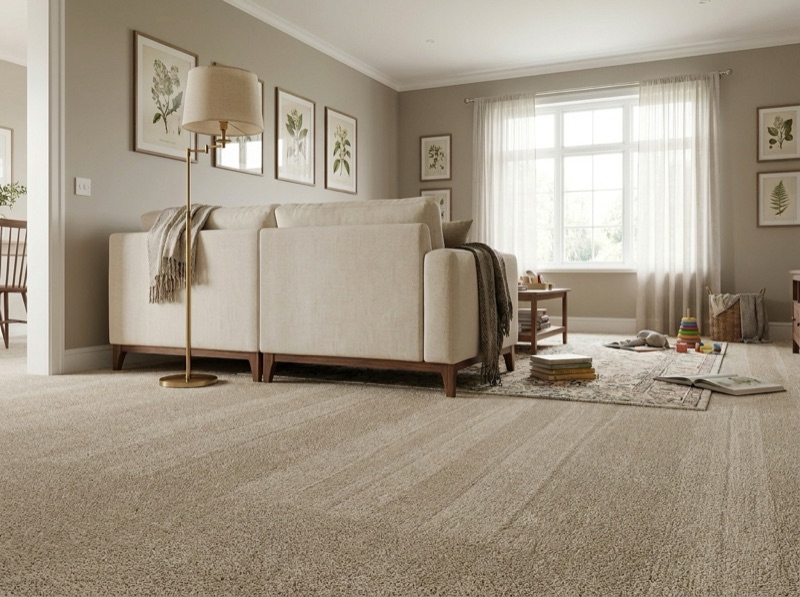
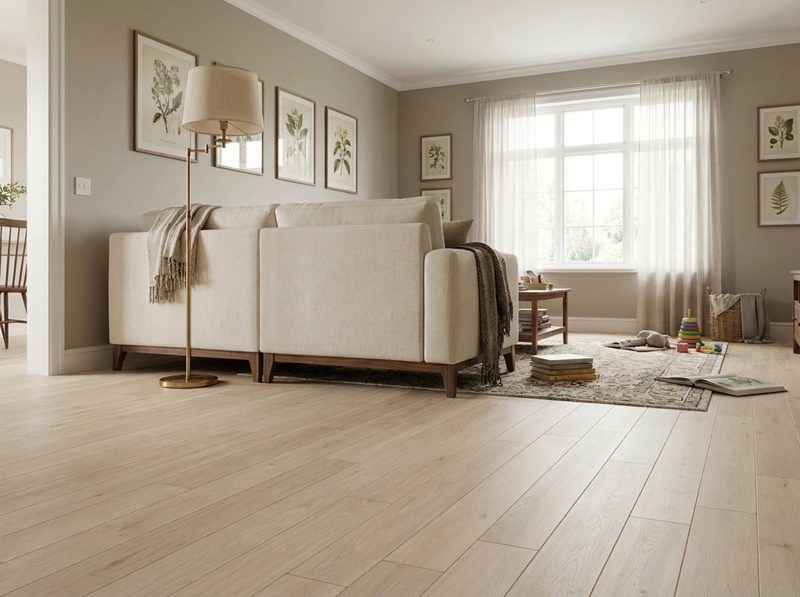
A wood surface that ages,
or a plank that never worries.
These two get recommended for the same rooms, over the same concrete, for the same reasons. What separates them is not where they go. It is what each one does after five years of your particular household walking on it.
The two categories overlap almost perfectly on paper. Both float, both go over a concrete slab, both come in wide planks in the same colors, and both get suggested for the same basement or the same open main floor. Engineered hardwood explains its cores and wear layers, and luxury vinyl plank explains its mils and rigid cores. Neither page can tell you which one belongs in your house, because the deciding factor is not the room. It is your household, your tolerance for maintenance, and how long you intend to own the floor.
Real wood or a picture of it, and who can actually tell
From standing height, a good vinyl plank with genuine embossed texture and a low sheen fools nearly everybody, including people who work with floors. It gives itself away in three places. Pattern repeat, where the same knot turns up twice within a few boards. The edge, where a printed bevel is a shape rather than a milled profile. And the hand, because a slice of oak and a printed film feel different at a fingertip and always will.
The bigger difference shows later. Engineered has a real wood surface, so it takes on character. Vinyl has two states, new and worn, and no third one in between. Some households want the patina. Some want a floor that looks the same in year eight as it did the day it went down. That preference decides more of this than any spec on the box.
The household is the deciding variable, not the room
Picture the week. A dog in wet off the yard four times a day, a mudroom door opening straight into the kitchen, children who spill and do not report it, no room in the schedule for maintaining anything. That household should be on luxury vinyl. A quieter house, adults, no water history, someone who notices a scuff and does something about it, gets the most out of real wood.
Be honest about the second one. Engineered hardwood is genuine wood at the surface, which means it dents, and a dent is a wood problem rather than a finish problem. If you will put a decade of hard use on a floor and never once recoat or refinish it, you are paying for the properties of wood and using them like vinyl.
Millimeters against mils, and how to read across two scales
Both categories have one number that matters and they are measured differently on purpose, so the first thing to do is stop trying to convert them. The engineered number is a wear layer in millimeters, and what it buys is refinishes. The vinyl number is a wear layer in mils, a thousandth of an inch each, and what it buys is years before the print starts to show. Ask for both, then ask yourself which currency you actually want.
The rungs on each ladder sit where they belong, on engineered hardwood for the millimeters and on luxury vinyl plank for the mils. What neither spec sheet says out loud is that the two numbers answer different questions. One asks how many times this floor can be made new again. The other asks how long it can go without needing to be. A household that will never schedule a refinish is buying the wrong currency at any thickness.
The dog, the chair legs and the grit off the driveway
Scratch resistance on vinyl comes from the clear wear layer and the surface finish, never from the image printed below it, which is why a matte plank with real texture hides daily life better than a glossy one. Engineered arrives with an aluminum oxide finish cured at the factory, harder than anything brushed on in a house. Both resist scratching. They fail differently: vinyl goes dull where people pivot, wood takes a dent that shows through a perfectly good finish.
The prevention list is identical either way. Felt under every chair leg, mats at the doors that face the driveway, claws kept trimmed, grit swept before it gets ground in. What differs is what you do after the damage, and that is the next section.
What happens the day one plank is ruined
On a floating vinyl floor, a wrecked plank comes out and a new one goes in without touching the rest of the room. That is the strongest practical argument in the category, and it comes with a condition, which is that you kept a spare box from the same run, because lots shift. On a glued down floor the same repair is real work.
Engineered goes the other direction. A single board is awkward to replace once the floor is down, but if the wear layer is thick enough, the whole room can be sanded back and finished again, which erases every scratch at once rather than one at a time. Thin wear layer and no spares is the worst of both worlds, so pick your repair path at the counter and buy the specification that supports it.
The slab, the basement and the radiant loop
Both belong over concrete, so the slab does not settle this by itself. What settles it is what the room has done in the past. A basement that has taken on water, ever, is a vinyl room and we will not pretend otherwise, because engineered hardwood is more moisture tolerant than solid wood, not waterproof. A dry basement over a slab that simply breathes moisture is open to either, with the slab tested rather than assumed and a vapor retarder or moisture control adhesive underneath.
Radiant heat is where engineered has the stronger claim, since a cross laminated plank is built to stay put over a heat source a solid board would fight. It comes with rules: a maximum surface temperature commonly in the low eighties, heat brought up gradually over several days, thinner planks preferred, and the installation method the product specifies. Vinyl over radiant has its own limit, published by the manufacturer, and the spec sheet carries the number.
If you are moving in a few years, and if you are not
Whether a floor moves an offer is not a question anybody can answer honestly, so here is the one we can: these two reward different lengths of stay. Wood is a long horizon material, and its advantages, refinishing and patina, arrive in year twelve rather than year three, so a short stay never collects on them.
Vinyl pays off immediately and keeps paying: nothing to maintain, nothing to worry about when a tenant or a teenager does something inconvenient. For a rental unit, a short hold, or a house full of people who will not baby a floor, the plank is the rational purchase. For the house you plan to be old in, wood is the one that gets better.
When neither one is what the room needs
If the room sits above grade on a wood subfloor, you want a genuine wood floor forever, and you are willing to keep the indoor air steady through a Missouri year, solid hardwood is the better version of the thing you are after. Engineered exists to solve problems solid wood cannot, and if you do not have those problems you do not need the compromise.
At the other end, a shower, an entry taking road salt all winter, or a laundry room with a washer hose in it are better served by tile or by a seamless sheet floor than by any plank. The rest of our matchups take those apart in turn.
What the measure settles before you choose
A slab gets tested for moisture rather than assumed dry, and checked for flatness against the tolerance the product actually requires. We measure height at the dishwasher, the refrigerator and the door casings, because both floors change the elevation of the room and appliances have to come back out someday. We look at the stair nosings and the transition into the next room.
Then we bring samples of both into the room, in daylight and again in lamplight, because a warm engineered oak and a cool printed one look identical on the showroom wall and nothing alike beside your cabinets. Book the free in home measure and we will do the slab, the heights and the samples in one visit.
“We loved the service we received from Audra and Jonah during the process of choosing, ordering and installing our flooring and carpet. They kept us updated on the process every step of the way. ...”
What gets asked once both samples pass the eye test
By this point in the conversation the look is a tie and the questions turn practical. Call 636-332-0654 if yours is not answered here.
636-332-0654Standing up, in a finished room, most people cannot. Kneel down and it separates fast: the repeat of the printed pattern, the shape of the bevel, and the feel of the surface under a fingertip. Over years it separates further, because wood takes on character and vinyl only looks new or looks worn.
Over a slab that has been tested for moisture, prepared flat, and given a vapor retarder or a moisture control adhesive, yes. That is the room the category was built for. The limit is honest: engineered is more moisture tolerant than solid wood, not waterproof. If that basement has taken on water before, we will point you at vinyl instead.
It settles most of it. Nails and wet feet are constant, and vinyl absorbs both without a thought. Wood can live with a dog if the finish is a factory aluminum oxide, the sheen is low, the grain is busy enough to hide a mark, and claws stay trimmed. What wood will not absorb is a puddle nobody found until the next morning.
That depends entirely on the wear layer, which is printed on the spec sheet in millimeters. Under a millimeter, there is nothing to sand and the floor is a replacement when it wears through. Two millimeters gives you one careful pass. Three or more gives you two or more, which is a genuinely long life. Ask for that number before you compare anything else.
It leans toward engineered, because a cross laminated plank is built for a heat source underneath it. It does not end the conversation. Both categories publish a maximum surface temperature and an approved method for radiant, and both want the heat brought up gradually. We read the instructions for the product you like before anything is ordered.
On a floating vinyl floor, that plank comes out and a new one goes in, provided you kept a spare box from the same run. On engineered, replacing one board is awkward, but a floor with enough wear layer can be sanded and refinished across the whole room, which fixes everything at once.
Bring both spec sheets and let us read them against your slab
Bring us the two spec sheets and we will read the numbers that decide this before we read the room: the millimeters on the engineered and the mils on the vinyl. Then we take the slab moisture reading, which is the single test that can rule one of them out on the spot. Call 636-332-0654.
Free estimate
636-332-0654