 Flooring Correct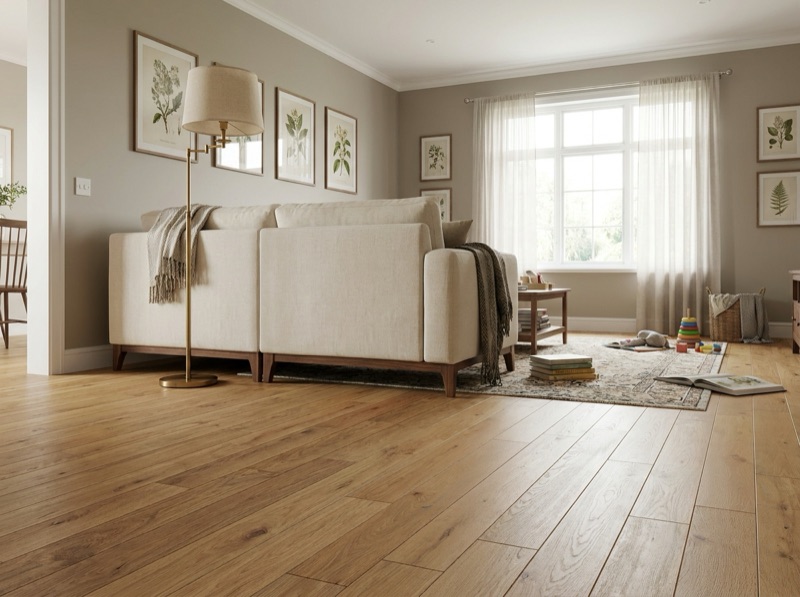
Light Or Dark,
And What Each One
Shows By Friday
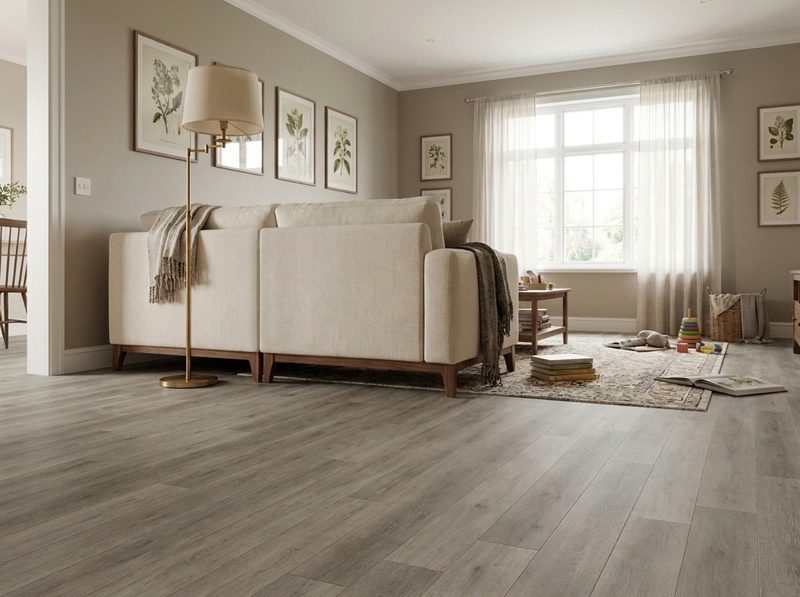
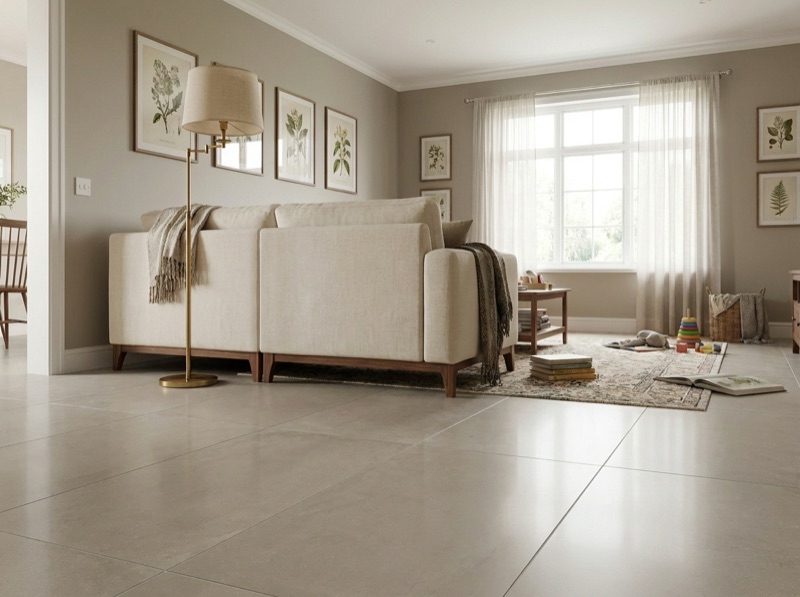
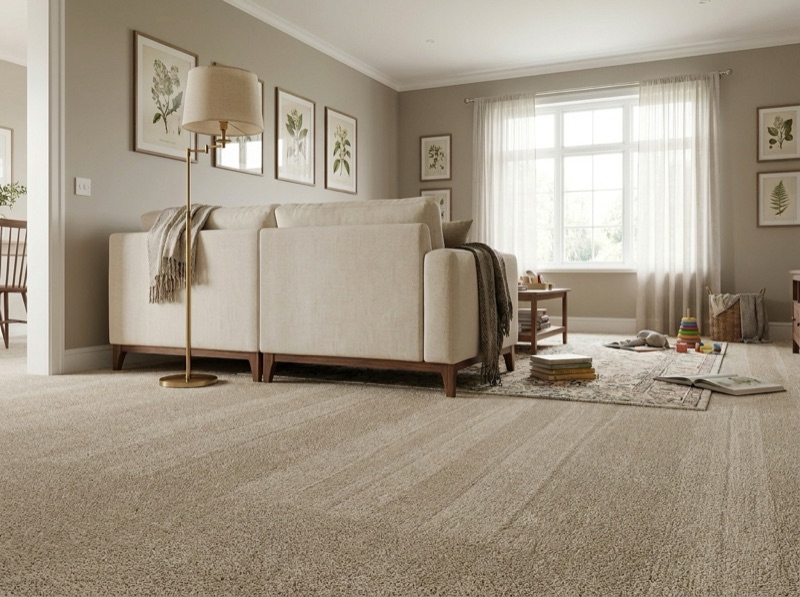
Every floor shows something. Dark floors show dust, lint and every pale scratch. Light floors show mud, dark hair and anything that soaks in. The only useful question is which of those two you would rather be looking at.
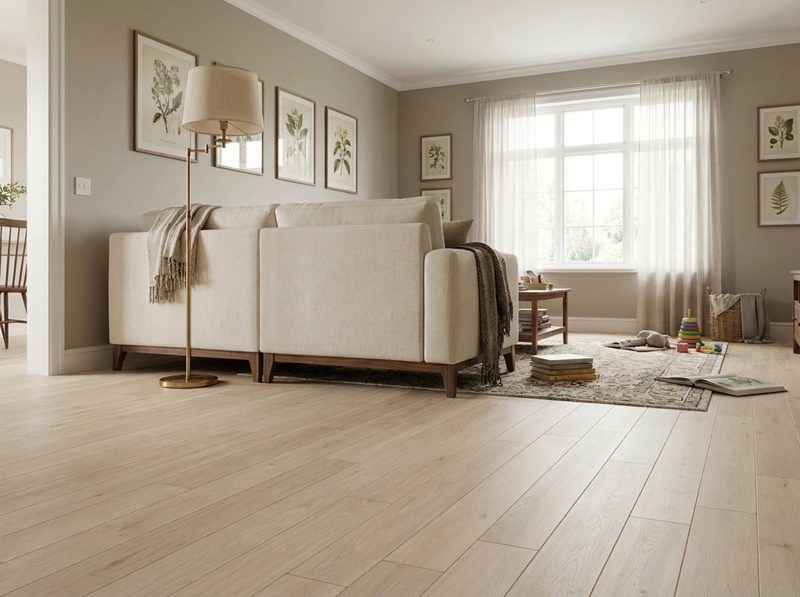
Species, undertone and how a vinyl plank is built belong to the hardwood and luxury vinyl plank pillars, and this page will not repeat them. This page settles the color argument, from an angle most showrooms never raise. Light against dark is not really a style question. It is a question about what your household drops, tracks and sheds onto a floor, and about how the same color behaves differently depending on whether it is wood or a printed plank.
Begin with what walks across it, not with the photograph you saved
Take an honest inventory before you look at a sample. A pale floor hides dust, crumbs, sand and the light hair of a golden retriever, and it displays mud, dark hair, coffee and anything that stains. A dark floor does the reverse: it swallows spills and dark hair and reports dust, lint, paw prints and the dry footprints of anyone in from a driveway.
So the deciding fact in most houses is embarrassingly simple. What color is the dog. What comes off the driveway in February. Whether shoes come off at the door. Answer those three and the color has usually chosen itself.
A dark stain on oak scratches pale. A dark species does not.
This is the single most useful thing on this page and almost nobody is told it. There are two ways to get a dark wood floor. You can stain a pale species, usually oak, or you can buy a species that is dark all the way through, which is what walnut is: deep chocolate brown straight from the tree, needing no stain to be dark.
Those two floors age in opposite directions. On stained oak the color is a thin layer over pale wood, so a deep scratch exposes what is underneath and reads as a bright line across a dark surface. On walnut the wood below is the same brown as the wood on top, so damage is far less conspicuous. If you want dark and you have a large dog, dining chairs on wood, or children, that is a species decision rather than a stain decision.
In vinyl it is the flat dark print that shows everything
Vinyl behaves differently again, and where a plank's scratch resistance actually comes from is set out on the luxury vinyl plank pillar. What changes the color argument is that on a printed plank the color is not in the material. A scuff scatters light and reads pale, so a flat uniform dark plank keeps a net of light scratches that a mid tone with grain movement swallows.
So dark vinyl is not off the table, but it has to carry genuine variation in the print, real embossed texture, and a matte face rather than a glossy one. If the only dark plank you like is flat and shiny, go lighter or go more varied, because that floor will not stay looking the way it does in the box.
Light floors hide the dog and report the driveway
Pale floors have been popular a while and the reasons are real: they hide dust between cleans, bounce daylight around a room, and take the edge off a house with small windows. In a household with a light coated animal they are hard to beat, because a week of hair is essentially invisible.
What they report is everything arriving from outside. Missouri winters put salt and grit on every shoe, spring puts mud on them, and a pale floor keeps a running record of both. It also shows anything that soaks in. The mitigation is unglamorous: a serious mat at the door facing the drive, somewhere for shoes to live, and prompt attention to spills. If none of that will happen in your house, move toward the middle of the range.
Small rooms, low ceilings and the daylight you actually get in January
Color changes how big a room feels, and the effect is strongest where people are least able to test it. A dark floor absorbs light, so a small room with one north window feels heavier and a low ceiling feels lower. A light floor returns light upward and does the opposite. In a bright open space with tall windows, dark reads as grounded rather than cramped, which is why it works in the photographs that sell it.
The trap is that the photograph was taken in a room with more glass than yours. Judge this in your own house, in the darkest month you can, under the lamps you actually own. That is how you will see the floor most often through the winter.
The trim, the doors and the stairs get decided at the same time
A floor outlasts paint by decades, so the floor comes first and everything follows it. A dark floor against white trim is a hard graphic contrast that turns every baseboard and doorway into a drawn edge, which can be exactly right or can make a busy plan busier. A light floor against white trim is soft and continuous, and asks the walls to do more work.
Stairs make it concrete. Treads in the floor color with painted risers is a different look from a staircase in one tone, and dark treads show dust that a surface at eye level cannot hide. If your stairs are open to the main room, decide their color with the floor rather than three weeks later.
Undertone is the decision hiding inside the decision
Most disappointed floor buyers did not get the wrong lightness. They got the wrong undertone. Pale is not one color: it runs from cool and greige through to warm honey, and which one you land on depends on the species more than on the stain sitting on top of it. White oak carries a neutral to slightly cool tone and is the species behind most of the light and greige looks people bring us photographs of. Red oak has a warm pink undertone, and a cool gray stain over it is a fight rather than a finish.
The same holds at the dark end. A dark floor can be a cool near black, a warm espresso or a red toned brown, and each makes a different demand of your walls and furniture. Bring the paint chip and the cabinet door and put them on the sample together, because undertone is what you live with long after lightness stops registering.
When the upstairs and the basement should not match
Plenty of households want wood on the main level and vinyl in a basement or kitchen, then try to make the two colors identical. A near match is the poorest outcome available, because the eye reads it as a failed attempt rather than a deliberate change, and the materials will not age together: wood drifts with sunlight and coatings, and a printed plank does not.
The better move is to relate them instead of matching them. Keep the undertone family consistent so the house feels coherent, and let the tone step. A basement with little natural light is also a good argument for going lighter down there than upstairs, whatever the main level is doing.
Where households actually land, and why it is usually the middle
- Dark coated dog, shoes off at the door, good daylight: a light floor, and the hair stops being a daily conversation
- Light coated dog and a back door onto grass or gravel: a mid to dark tone with variation, so the mud is not on display
- Small north facing room with one window: light, because a dark floor takes away what little light the room has
- You want dark wood and the room takes real traffic: a dark species rather than a dark stain, so a scratch stays brown
- White trim and a lot of doorways in a busy plan: a lighter floor keeps the room continuous, where a dark one draws an edge at every baseboard
- Nobody in the household can agree: a mid tone with visible grain movement, which forgives more than either extreme
The sample has to sleep at your house first
Floor color is the one decision showroom light cannot settle, because the light is wrong, the room is wrong and the neighboring colors are wrong. Take real samples home and lay them where the floor is going rather than on a table. Look in morning light, in the afternoon, and after dark with the lamps on. Walk past them until you stop noticing them, which is the state you want for the next twenty years. Then come back to the showroom with a decision and book the free in-home measure. The rest of these arguments sit on the comparison hub.
“... They kept us updated on the process every step of the way. The installation was completed to our satisfaction and the end result is awesome! I highly recommend this local business for all your flooring needs! ...”
What people ask after the samples have been home a week
Dust, dog hair, undertones, stairs and whether the basement has to match.
636-332-0654It is a decision rather than a mistake, and a common one. Dark hair on a pale floor is visible, so you will sweep more often. What tips the balance for many households is that hair is easy to remove while mud and stains are not, so if you like the pale floor, keep a good vacuum handy and buy it.
They make it feel lower and more enclosed, which most people read as smaller. In a bright room with tall windows that is grounding and looks excellent. In a small room with one north facing window it removes light you cannot spare. Test the sample in that particular room in the darkest month you can, not in the showroom.
Dark, easily, and it is the surprise most often reported by people who chose dark without expecting it. Dry footprints are dust, and dust is pale, and a higher sheen makes it worse. If you want dark, choose a low sheen and a surface with variation in it.
We would rather it did not. A near match reads as a failed attempt, and the two materials will not age in step, since wood drifts with light and coatings while a printed plank stays where it started. Keep the undertone family consistent, let the tone step, and consider going lighter downstairs where there is less daylight.
Mostly a species. White oak has the neutral to slightly cool tone that greige depends on, so the pale contemporary floors people bring us photographs of usually start there. Putting a cool gray stain over red oak means fighting a pink undertone the whole way, and the result rarely looks like the photograph.
Neither extreme. A mid tone with visible grain variation hides more than a pale floor and far more than a flat dark one, which is why so many households end up there once they have looked at samples in their own rooms for a week. If you want an extreme, pick it because you love it, not because you think it will be easier.
Put the sample on your own floor, next to your own trim, after dark
Color is the one decision a showroom cannot settle, so the measure comes to the house, looks at the rooms in their real light, checks where wood should stop and vinyl start, and counts the stairs while it is there.
Free estimate
636-332-0654