 Flooring Correct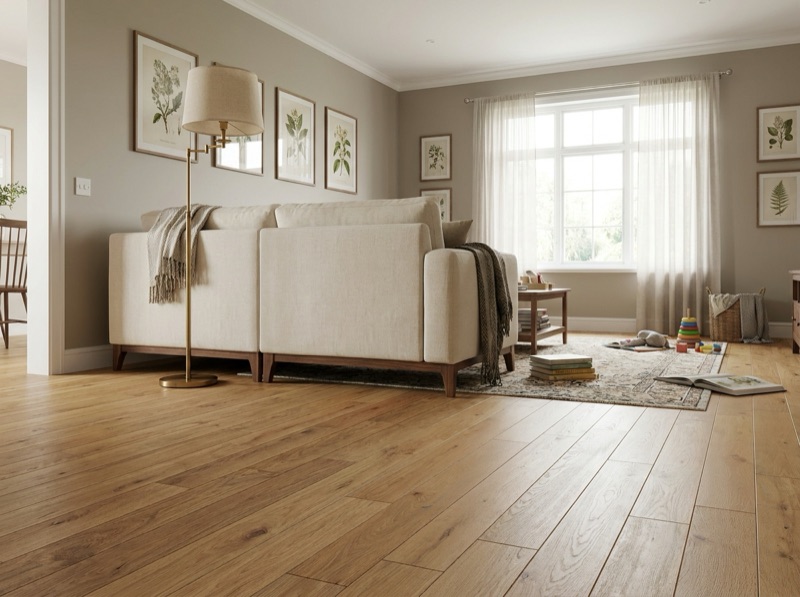
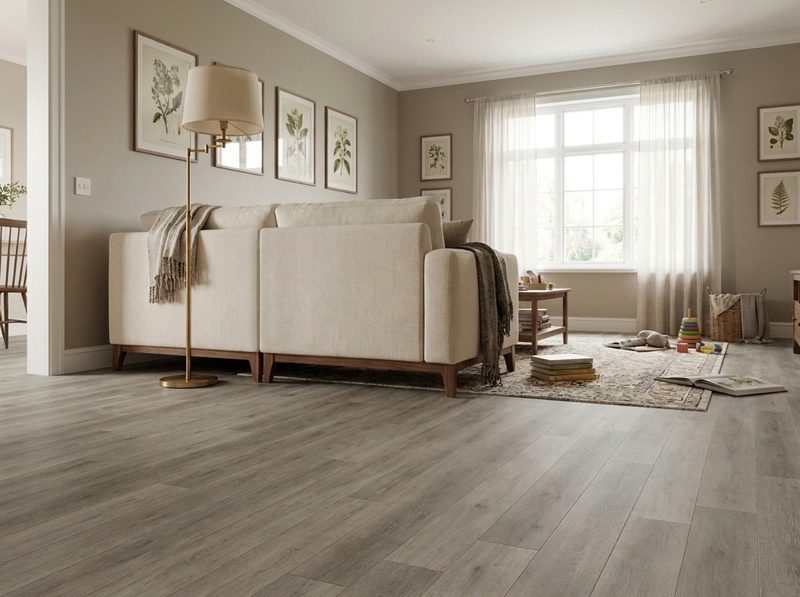
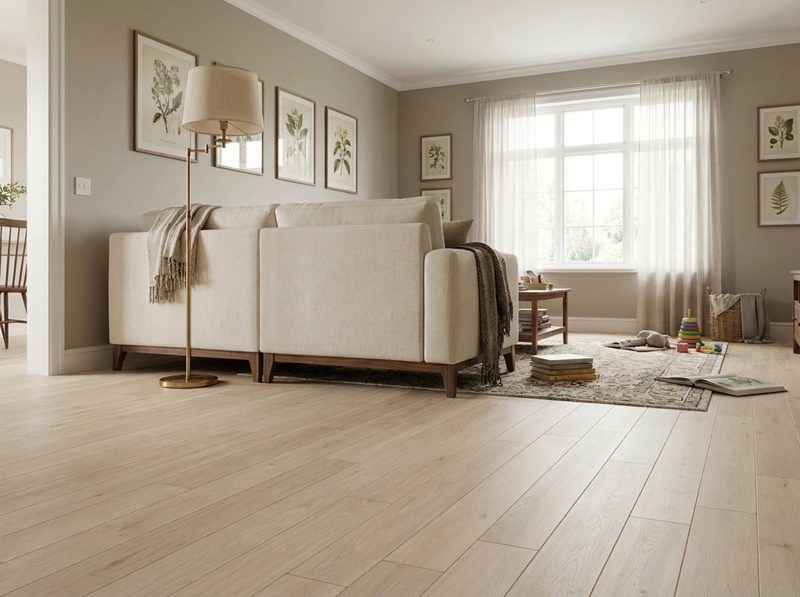
LVP vs Laminate:
The Straight
Answer
The most asked question in our showroom, and the one with the most misinformation around it. The short answer: vinyl where the water is, laminate where the traffic is.
These two materials compete for the same rooms, sit near each other on price lists, and photograph almost identically, which is why this is the comparison people arrive with most often. We sell both, so nothing here is positioning. The honest headline is that each one wins clearly in specific rooms, and the mistake is not choosing the wrong material so much as putting either one in the wrong room. Call 636-332-0654.
What each one actually is
Luxury vinyl plank is plastic through and through: a printed design layer and a clear wear layer over a vinyl core, rigid or flexible. Because every layer is synthetic, water is simply not an event for the material itself. Laminate is mostly wood by weight: a dense fiberboard core made of compressed wood fibers, with a printed design layer and a clear melamine wear layer on top. That core is the source of both its greatest strength and its one weakness.
The strength is solidity. High density fiberboard is stiffer and denser than a vinyl core, which is why laminate feels more substantial underfoot and sounds closer to wood when walked on. The weakness is that compressed wood fiber swells if it stays wet, and once a core has swollen at an edge, no amount of drying returns it to flat. Modern water resistant laminate has pushed that threshold a long way out. It has not abolished it.
Water: vinyl wins, and precision matters
Spills that get wiped up in reasonable time are a non-event for good modern laminate, and anyone telling you otherwise is describing a product from years ago. The cases that separate the materials are the ones nobody plans: the dishwasher that seeps for weeks behind its kick panel, the pet bowl that gets sloshed daily in the same spot, the wet boots that drip on the same square yard every January evening.
In those slow, repeated, unnoticed cases, vinyl does not care and laminate eventually does. That is the whole argument for vinyl in kitchens, laundry rooms, full baths and below grade, and it is why our answer in those rooms is vinyl even though we would happily sell you either. The distinction between water resistant and waterproof is not marketing at this point in the decision. It is the decision.
Scratches and wear: laminate wins, visibly
The melamine wear layer on laminate is genuinely harder than the urethane wear layer on vinyl plank, and the difference shows in the life a floor actually lives: dog claws, grit walked in from the driveway, chairs dragged rather than lifted, toys with corners. Laminate shrugs off surface scratching better than vinyl does, and it is not close enough to call a tie.
This is the fact the vinyl boom has buried. A dry, busy family room full of children and animals is laminate territory on the merits, and plenty of households choosing vinyl by default would be better served the other way. Vinyl's wear layer is good, and thickness matters within it, but if surface abuse is the main threat in the room, laminate is the tougher face.
Feel, sound and the sense of quality
Walk on both with your eyes shut and you can tell them apart. Laminate's dense core gives a firmer, more wood-like footfall and a lower, more solid sound. Vinyl, especially flexible formats, can feel slightly softer and sound slightly thinner, though rigid cores with attached pads have closed much of that gap. Underfoot warmth is similar; both are warmer than tile.
How much this matters depends on the room. In a formal living or dining space where the floor is part of the impression, laminate's solidity reads as quality. In a mudroom nobody is auditioning the acoustics. It is exactly the kind of difference that does not survive a photograph, which is why we keep full pieces of both on the floor to be walked on back to back.
The verdict, room by room
- Kitchen: vinyl, because of the slow-leak problem. Laminate is defensible for confident households, but vinyl is the safe honest answer.
- Laundry, full baths, below grade: vinyl, and not as a close call. This is what the material is for.
- Family room, living room, halls, dry busy spaces: laminate on the merits, for scratch resistance and feel. This is the room the vinyl default gets wrong most often.
- Bedrooms: either works; a dry room removes laminate's one weakness entirely. Carpet is still worth considering first for comfort.
- Open main level that includes the kitchen: one material has to carry it all, and the kitchen usually forces the vinyl answer for the whole run.
- Powder room: modern water resistant laminate is genuinely fine here; there is no standing water source. Either.
Cost factors, without numbers
The two categories overlap heavily, and either can be specified above or below the other depending on wear layer, core, brand and format. What moves a quote is mostly the same on both sides: the grade you choose, the amount of floor, the state of the subfloor and the transitions involved. Neither material carries a systematic installation premium over the other in a typical room. In other words, this is not a decision the price list makes for you, which is rather freeing: pick by room, then pick the grade that suits the traffic.
What we carry on each side
On the vinyl side our lines run across Mohawk, Casabella, National Flooring Products, ProGen, Bruce, Audacity, Armstrong, Portercraft, Adleta, Engineered Floors, PureGrain, FirmFit, MetroFlor, Paramount, Nextfloor, MSI and Tarkett. On the laminate side: Aquaproof, DreamWeaver, NextGen, Mohawk RevWood, Nextfloor, National Flooring Products and In Haus. Availability moves, so call 636-332-0654 before driving out if you want a specific line on the floor when you arrive.
The subfloor treats them the same
One thing this matchup does not decide: preparation. Both materials float, both follow the surface they are laid over, and both will eventually announce an uneven subfloor as a flexing spot or a stressed seam. Neither is more forgiving enough to skip the flatness conversation, so whichever side you choose, the preparation line on the quote stays the same and the in-home measure earns its keep either way. If a quote for either material arrives without anyone having looked at the floor underneath, it is missing the part that decides how the floor performs.
The one practical divergence: laminate always wants the right underlayment specified beneath it, both for sound and for moisture management from below, while many vinyl planks carry an attached pad that covers part of that job. It is a detail, it is solvable on both sides, and it is exactly the sort of thing that gets settled in the room rather than on a product page.
How to settle it in one visit
Decide which rooms are in scope first, because the verdict above may split your project: vinyl for the kitchen run, laminate for the family room is a common and entirely sensible outcome, with a transition planned where they meet. Then walk both materials at the showroom, in the grades appropriate to your rooms rather than the entry versions. Take one finalist of each home and stand them where they would live.
The free in-home measure settles the rest: subfloor flatness, which both floating formats care about equally, heights at doorways, and where any transition falls. The deeper category pages cover each side alone: luxury vinyl plank and laminate, and the kitchen and basement guides cover the rooms that force the answer. Other matchups live on the comparisons hub.
“Amazing, quick, easy experience. My floors look great!! Jonah steered my in the right direction with his expertise on several options I initially wanted to do different, I couldn't be happier with deciding to go with his suggestions!”
The questions this matchup always raises
Straight answers on water, scratches, feel and whether you can split a project across both sides.
636-332-0654By room, not overall. Vinyl wins wherever water can sit or seep: kitchens, laundry, full baths, below grade. Laminate wins in dry busy rooms on scratch resistance and a more solid, wood-like feel. Most whole-house projects sensibly use both.
Modern water resistant laminate handles ordinary spills easily. The risk is slow, repeated, unnoticed water, like a seeping appliance, because a swollen fiberboard core does not recover. Vinyl simply does not have that failure mode.
Vinyl. Laminate's melamine wear layer is genuinely harder than vinyl's urethane one, and in a house with dog claws and dragged chairs the difference is visible over time. If surface abuse is the main threat, laminate is the tougher face.
Laminate, mostly because its dense fiberboard core gives a firmer footfall and a more solid sound. Rigid vinyl with an attached pad has closed some of the gap. Walk both back to back and you will feel it immediately.
Yes, and it is often the best answer on the merits. The transition between them gets planned at the measure so it looks deliberate. Splitting a project across the two materials is normal, not a compromise.
The categories overlap heavily and either can be specified above the other. The quote moves on grade, area, subfloor condition and transitions, not on which of the two you picked, so the room should make this decision rather than the price list.
Yes, across multiple lines on each side, which is why this page can afford to be even-handed. Both are on the showroom floor to walk on back to back under the same light.
Vinyl in kitchens, baths and laundry for the water reasons, laminate in living areas if tenants have pets, because claws are the main threat there. Either turns a unit around quickly, and the same room-by-room logic applies as anywhere else.
Let the rooms decide
Tell us which rooms are in scope. We measure in your home, tell you which side of this matchup each room wants, and quote from real numbers.
Free estimate
636-332-0654