 Flooring Correct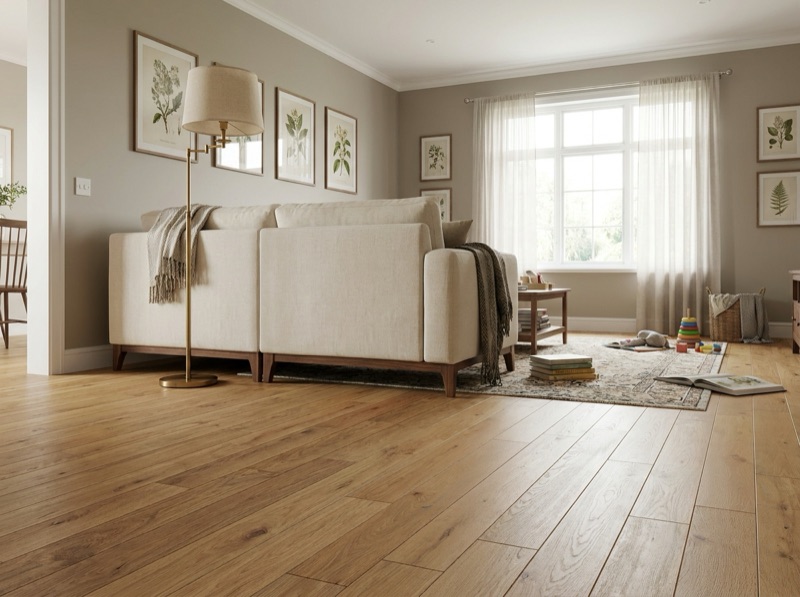
Basement Flooring:
Below Grade
Done Right
Everything below grade starts with the slab, and the slab is doing something even when the room looks and feels perfectly dry. That is the whole story of basement flooring.
A finished basement fails more often than any other room when the material is chosen without understanding what is underneath it. The concrete is not neutral. It is a permanently damp mass of material in contact with the ground, and it moves moisture upward continuously. Call 636-332-0654.
Dry to the touch is not the same as dry
This is the point that catches most people, and it is worth stating clearly. A slab can be visibly dry, never have had standing water on it, and still be transmitting a steady quantity of water vapour upward through the concrete. It is not a leak. It is how a slab in contact with the ground behaves, and it happens every day of the year.
Materials react to that differently. Wood responds to sustained moisture by cupping, gapping or lifting, which is why solid hardwood is a poor bet below grade regardless of how good the room looks today. Anything with an organic core has a similar vulnerability. Materials that simply do not care about vapour are the ones that last down there.
What we recommend below grade
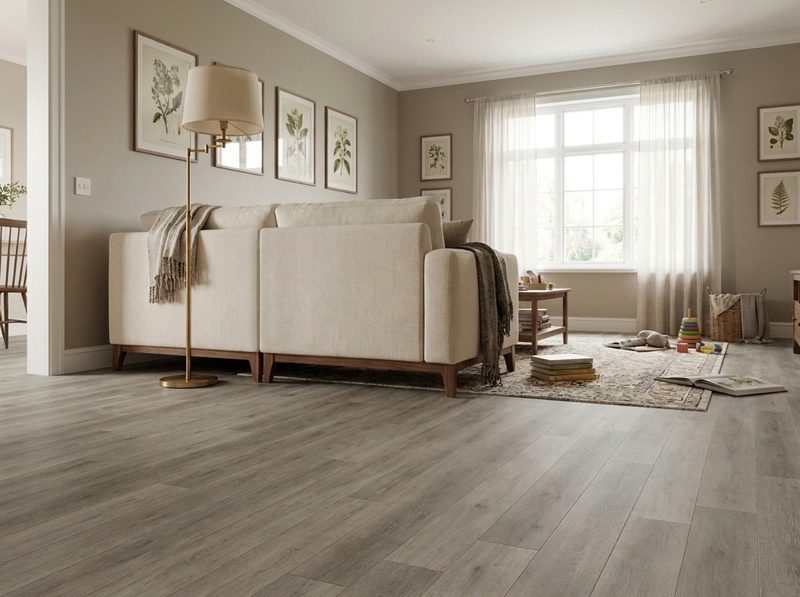
Luxury vinyl plank is the answer in most finished basements. It is unaffected by vapour, it gives a wood look in a room where real wood would be a gamble, and a rigid core version bridges the minor unevenness that slabs frequently have. If the room echoes, and basements almost always do, a plank with an attached pad makes an audible difference.
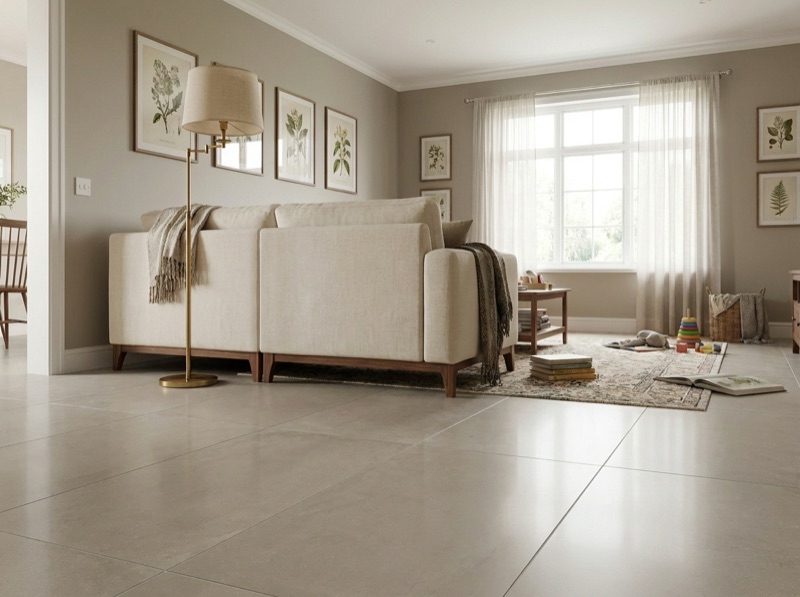
Engineered hardwood is the way to have genuinely real wood underfoot below grade, because its cross-layered core is far more dimensionally stable than a solid board. Tile is entirely happy on a slab and is the most durable option of all, at the cost of being cold and hard in a room you may want to be comfortable. Carpet tile is the underrated choice: modular squares mean that if something does go wrong in one area, you replace that area rather than the room.
Comfort matters more down here than people plan for
Basements are usually finished to become somewhere people actually spend time. A family room, a playroom, a place to watch something. That makes warmth underfoot and sound behavior real considerations rather than luxuries, and both are worse below grade than above it by default. Concrete is cold, and a hard surface in a room with hard walls and a low ceiling produces noticeable echo.
That is the practical case for an attached pad, for carpet tile, or for area rugs over a hard surface. It is also the reason we ask what the room is going to be used for before recommending anything, because a home gym, a guest bedroom and a media room in the same basement footprint want three different floors.
Flatness, and what is already down there
Slabs are poured flat, not precision flat, and years of settlement do not improve them. A rigid core plank bridges minor variation. It does not level anything, and a floor that is meaningfully out of flat will eventually announce itself as a seam that has moved or a spot that flexes. Where preparation is needed it goes into the quote as a line item rather than turning up on the day.
If there is already flooring down there, what it is and how it was fixed matters, and so does why it is being replaced. A previous floor that failed is useful information rather than an embarrassment: it tells us what the slab has been doing. Bring that up when we come out.
How we assess a basement before quoting
The free in-home measure in a basement covers more than dimensions. We look at the slab, at flatness, at how the room is used and where the moisture story points, at what is down now, and at the stairs and the doorway where the new floor has to meet something else. Basements also raise the question of what happens at the bottom step, which is worth deciding deliberately.
None of this is a reason to hesitate about finishing a basement. It is the reason to have somebody look before choosing, because the difference between the right material and the wrong one down here is not cosmetic. The work follows our installation process, and the other rooms are covered in our rooms guide.
“We are so pleased with our new floors! ... During installation, everyone was so professional, kind, and respectful. We will continue to use them for future flooring needs!”
Questions about below-grade floors
Straight answers on slab moisture, which materials tolerate it, and how to keep a finished basement comfortable.
636-332-0654Luxury vinyl plank in most finished basements, because slab vapour does not affect it and a rigid core bridges minor unevenness. Engineered hardwood if you want real wood, tile for maximum durability, carpet tile if comfort and repairability matter most.
Yes, and this is the point that catches people out. Visible water and vapour moving up through concrete are different things. A slab can be dry to the touch and still transmit moisture upward every day of the year.
Solid hardwood is a poor bet below grade because it responds to sustained moisture by cupping, gapping or lifting. Engineered hardwood is the way to have real wood down there, because its cross-layered core is far more stable.
By default, more than an upstairs room, because concrete is cold and hard walls in a low room produce echo. A plank with an attached pad, carpet tile, or rugs over a hard surface all make a genuine difference.
Sometimes. A rigid core plank bridges minor variation but does not level anything, and a floor meaningfully out of flat will eventually show as a moved seam or a spot that flexes. Any preparation needed is priced into the quote.
Usually because the material could not tolerate what the slab was doing rather than anything to do with the installation. It is useful information rather than an embarrassment, so tell us about it when we come out.
Price a basement floor
Tell us what the basement will be used for. We assess the slab in person, then recommend and quote from what we find.
Free estimate
636-332-0654