 Flooring Correct
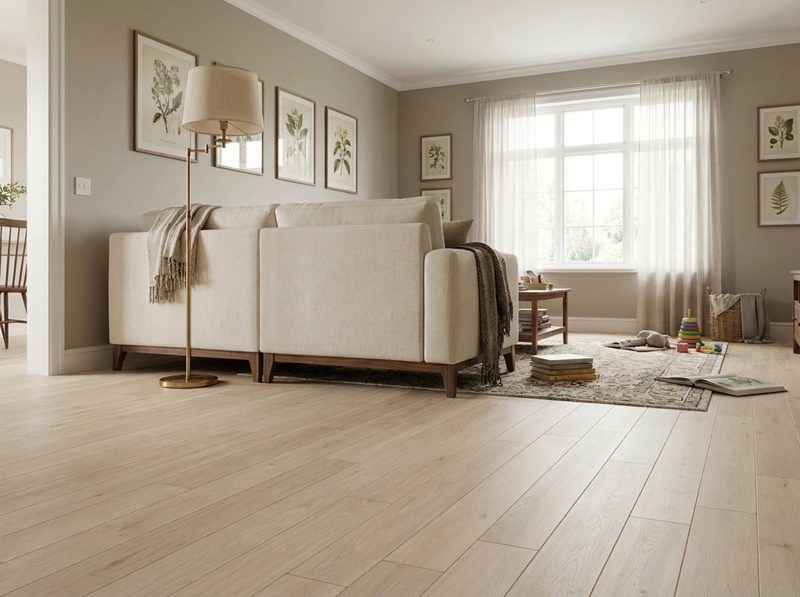
Luxury Vinyl Plank
vs Tile:
Warm Feet or Wet Rooms
Tile is close to permanent and does not care how much water lands on it. Luxury vinyl plank is warmer underfoot and covers a large open area with far fewer seams and transitions. Both claims are true, and which one should win depends entirely on the room.
Luxury vinyl plank and tile get cross-shopped constantly because they solve overlapping problems in different ways. Tile is essentially permanent and genuinely waterproof. Luxury vinyl plank is warmer to stand on and considerably faster to install across a large area. We sell both sides of this floor, so here is where each one actually wins. Call 636-332-0654.
What each side is actually offering
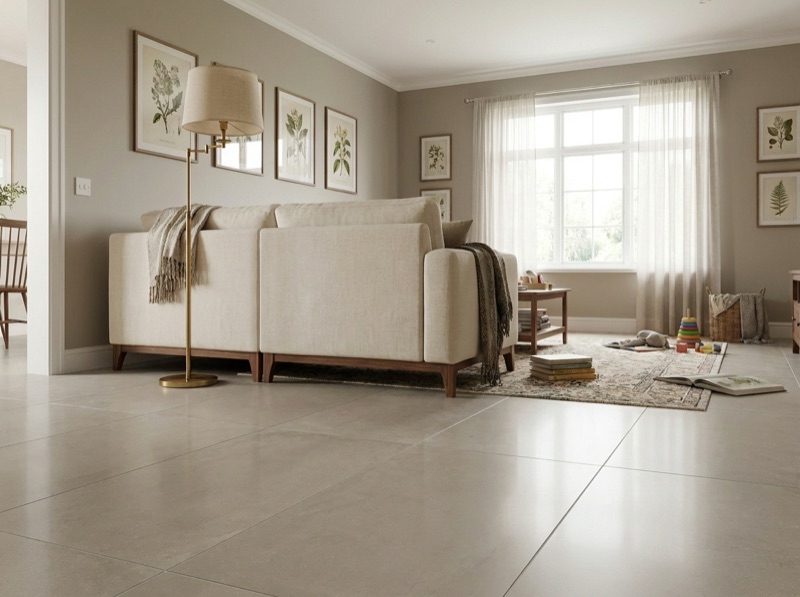
Tile's case starts with water. A properly installed tile floor is not just moisture tolerant, it is genuinely waterproof, and it stays that way indefinitely because the material itself, fired clay or stone, does not degrade the way a softer surface eventually can. It is also close to permanent: short of a cracked tile here or there, a tile floor from decades ago is often still the floor in the room today. And in a Missouri summer, plenty of people specifically want the cool, hard feel of tile underfoot rather than a warmer surface.
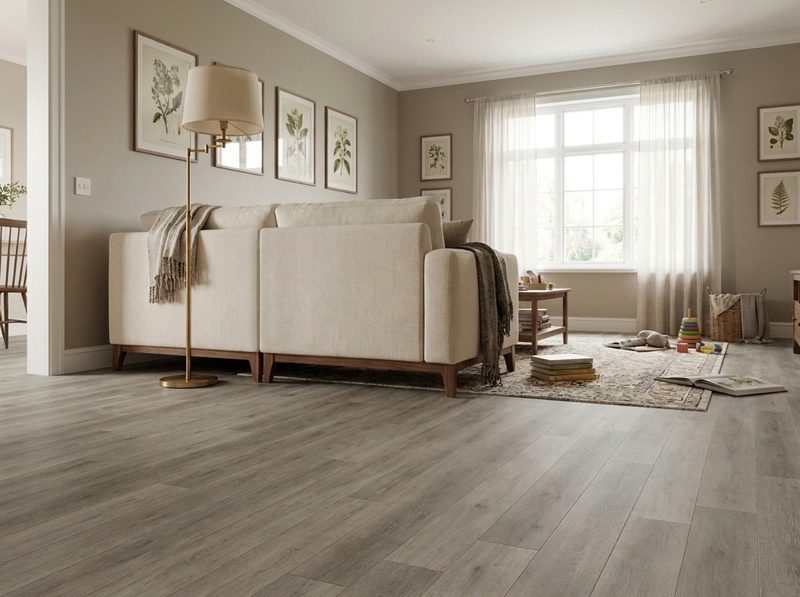
Luxury vinyl plank's case starts with comfort and speed. It is warmer underfoot than tile, all year, which matters more than people expect once they have lived with both. It installs considerably faster and with far less disruption, since there is no thinset to cure and no grout to seal. And across a large open floor plan it runs with fewer transitions and fewer seams than tile typically allows, which keeps a big room reading as one continuous surface rather than a series of tiled fields.
Where each one actually struggles
Tile's honest weaknesses are hardness and grout. It is unforgiving to drop anything fragile on, and it stays cold and hard on joints and on feet standing at a counter for long stretches. Grout lines, whatever the color, need periodic sealing and cleaning, and a cracked tile is a repair that can be difficult to match exactly if the original run is no longer available. None of that changes tile's case in wet rooms, but it is real to live with elsewhere in the house.
Luxury vinyl plank's honest weakness is that its water tolerance has a ceiling. It resists spills, splashes and everyday humidity well, but it is not in the same category as tile in a room where water sits rather than passes through, a shower surround or a floor that gets genuinely flooded on a bad day. It also cannot be refinished the way some hard surfaces can. A damaged plank gets replaced, not restored, and matching an older run exactly gets harder the longer you wait.
The verdict, room by room
- Bathrooms and shower surrounds: tile, without much debate. This is water at its most constant, and tile is built for exactly that.
- Entries and mudrooms: tile, for the wet boots, road salt and grit that a Missouri winter tracks in daily.
- Kitchens: either is defensible, and this is the room where the choice comes down to feel underfoot more than performance.
- Living rooms, bedrooms and hallways: luxury vinyl plank, for warmth and for running a large area without a field of grout lines.
- Basements: luxury vinyl plank, generally, since it installs cleanly over a slab and stays comfortable in a room people actually want to spend time in.
- Laundry rooms: tile if the room floods occasionally, luxury vinyl plank if it stays dry day to day and comfort matters more.
Where a third material crashes the comparison
This matchup rarely needs a third material the way carpet-adjacent comparisons do, because tile and vinyl plank already cover most of the house between them. The one honest exception is bedrooms, where carpet often beats both of these on comfort alone, especially for anyone who wants a soft floor first thing in the morning. If a slab and the look of real wood both matter somewhere in the mix, engineered hardwood is worth a look too.
Installation, honestly
Tile installation is a real project. It involves substrate preparation, thinset, setting time, grout, and sealing, and a room is generally unusable while it cures. Luxury vinyl plank installs in a fraction of the time, often with the room usable again the same day, which matters if the space in question is a kitchen or a main hallway you cannot easily live without. Neither speed advantage changes which material is right for a wet room, but it is a real factor in scheduling and disruption.
Underfoot, in every season
This is the difference people notice most and plan for least. Tile stays cool even in a heated house, which is exactly why some homeowners choose it deliberately for a sunroom or a kitchen where a cool floor in a Missouri summer feels good. Luxury vinyl plank stays closer to room temperature and never feels like stepping onto stone first thing in the morning. Neither answer is universally right. It is worth standing on both, in the season you actually live in most, before deciding for a room you use daily.
Large open areas, without the grout grid
In a big open concept main level, tile's grout lines multiply visually in a way that reads busier the larger the room gets. Luxury vinyl plank runs with fewer, better hidden transitions, which is part of why it has become a default choice for large open floor plans even in houses that use tile heavily in the wet rooms. This is a look and feel argument as much as a performance one, and it is worth seeing both across an actual room sized sample before committing either way.
What we carry on each side
On the tile side our lines run across Virginia Tile, DalTile, MSI and Emser. On the luxury vinyl plank side: Mohawk, Casabella, National Flooring Products, ProGen, Bruce, Audacity, Armstrong, Portercraft, Adleta, Engineered Floors, PureGrain, FirmFit, MetroFlor, Paramount, Nextfloor, MSI and Tarkett. Both sides are on the same showroom floor at 15570 Veterans Memorial Pkwy in Wentzville, so you can stand on each within a minute of the other and feel the temperature difference for yourself. Call 636-332-0654 before the drive if you want a specific line pulled.
The mixed answer is usually the right one
Very few houses should be entirely tile or entirely vinyl plank. The pattern that keeps working: tile in the rooms where water is constant, luxury vinyl plank across the rooms where people actually spend time standing and walking, and a deliberate transition strip planned at the doorway between them rather than left to chance. Planning that seam at the measure, not on install day, is what keeps the transition from becoming the one detail that bothers you every time you cross it.
Settling it
List your rooms, apply the verdicts above, and the choice usually gets easy fast, since wet rooms and living spaces rarely argue with each other. For the rooms that are genuinely close, especially kitchens, the free in-home measure lets you stand on both under your own lighting before committing. Related reading: luxury vinyl plank versus laminate if warmth and easy replacement are what you are really chasing, and the comparisons hub for every other matchup.
“Floors are PERFECT! ... Installation was a breeze and EVERY person was helpful and hardworking. ...”
The questions this matchup always raises
Straight answers on waterproofing, temperature, installation time and the rooms where the choice is genuinely close.
636-332-0654No, not in the same sense. It resists spills and everyday humidity well, but tile is built for water that sits rather than passes through, which is why bathrooms and shower surrounds stay tile's job.
Fired tile holds room temperature rather than warming to it the way a plank does, which is exactly why some homeowners choose it deliberately for a cool feel in a Missouri summer.
Luxury vinyl plank, by a wide margin. Tile needs thinset, setting time, grout and sealing, while a plank floor is often walkable the same day it goes down.
Both are generally spot repairable, though matching an older run gets harder the longer you wait on either material, so keeping a few extra pieces from the original job helps.
Kitchens are the closest call on this page. Both hold up well there, so the decision usually comes down to whether you want a warmer plank or a cooler tile underfoot more than which one performs better.
Yes, several lines of each, on the same showroom floor at 15570 Veterans Memorial Pkwy in Wentzville. Call 636-332-0654 and we will set both underfoot for you.
Split it by room, not by trend
Tell us your rooms. We will say which want wet-area permanence and which want warmth underfoot, measure in your home, and quote from real numbers.
Free estimate
636-332-0654