 Flooring Correct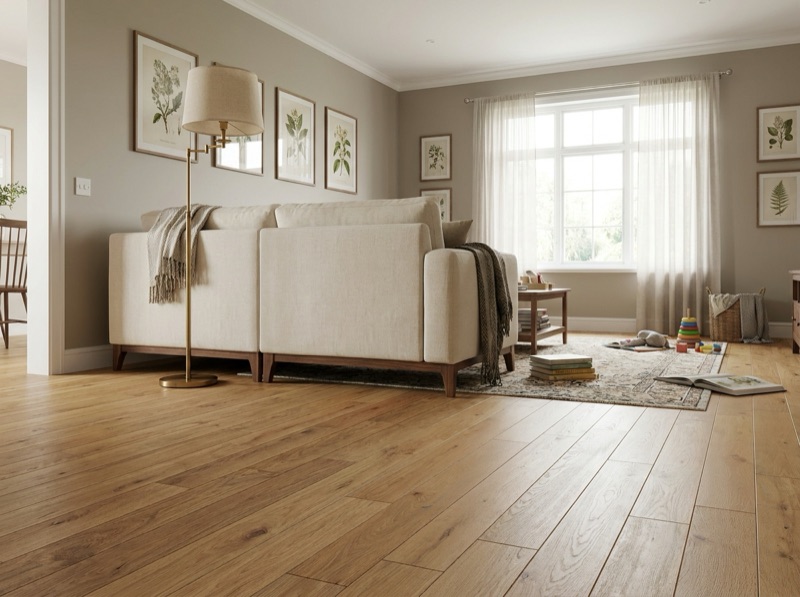
Matte Or Glossy,
And What The Window
Does To Both
Sheen is the one flooring decision you can judge from the doorway, and it is the one most often made from a photograph taken in somebody else's light, in somebody else's room, at somebody else's time of day.
Both pillars already say the mechanical part. The hardwood pillar notes that matte and satin hide dust, footprints and fine scratches while semi gloss shows every one, and the tile pillar covers what a sample tag means. This page decides. It picks a sheen for a specific room on a specific material, starting from the fact that gloss is not a grade of quality. It is an amount of reflected light, and how much light your room already has is the first question anyone should ask.
Sheen is a lighting decision before it is a taste decision
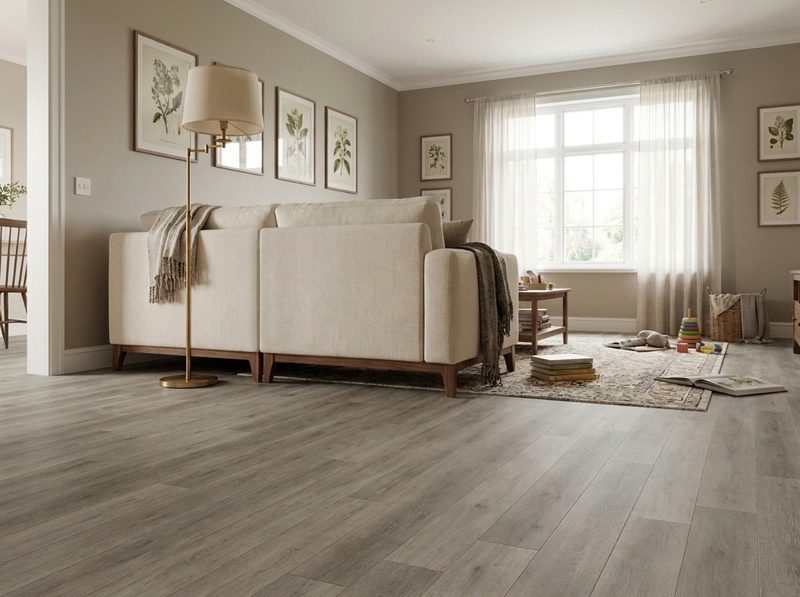
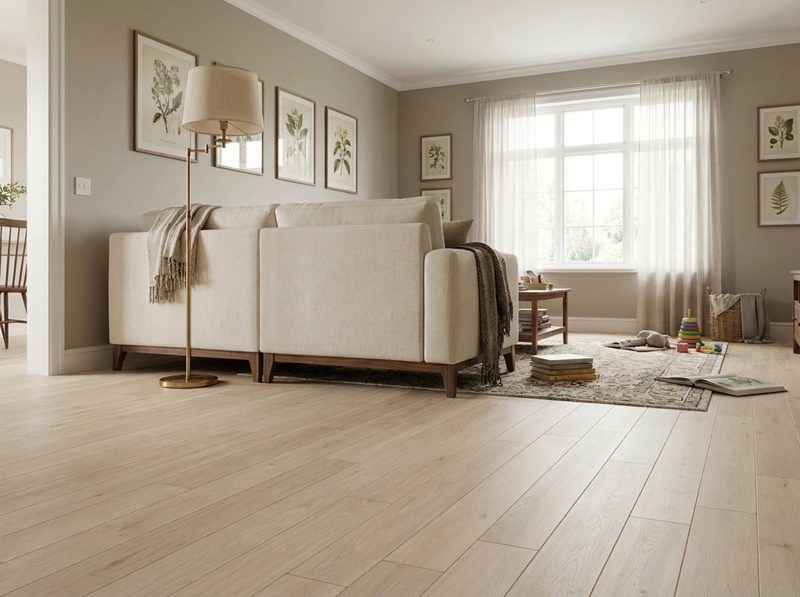
A high sheen surface returns light in one direction, like a mirror, which is why a glossy floor makes a dim room feel brighter and a bright room feel busy. A matte surface scatters the same light everywhere, so it reads as even and quiet and gives you back very little. Neither is more sophisticated. They are two tools, and the room tells you which it needs.
So begin with the room rather than the sample. Count the windows, note which way they face, and watch what the light does late in the day. A north facing room with one small window is a real argument for some shine. A room with a wall of west glass is an argument against it.
On wood you can change your mind. On tile the sheen is permanent.
This asymmetry decides more of these conversations than anything else on the page, and hardly anyone knows it. A wood floor's sheen lives in the coating, and coatings get renewed. Lay a semi gloss floor, decide in six years that it is too busy, and a refinish in a lower sheen fixes it without replacing a board.
Tile is the opposite. A glaze is fired at the factory and stone is polished or honed before it reaches us, so the sheen is the tile itself, and there is no version of changing your mind that does not involve taking the floor out. On wood you may reasonably choose the sheen you want today. On tile, choose the sheen you can live with for as long as the floor lasts, which can be longer than the kitchen around it.
Raking light is the real test, and every room gets an hour of it
Every room gets a moment when the sun sits low and throws light almost flat across the floor. Under it, a glossy surface hands you an inventory: every footprint, every dust track, every scratch, the exact route your household takes from the door to the sink. A matte floor under the same light shows you the floor.
This is why people are unhappy with a floor they loved in a showroom: the showroom has overhead light and the room has a low window. Take samples home, put them where the floor is going, and look at the worst hour rather than the best one. That test settles most of these decisions.
What gloss genuinely buys, because it does buy something
It would be easy to write this page as a case for matte, and dishonest, because gloss earns its place. Shine gives wood grain depth, so a figured board looks richer under a higher sheen. In a formal room, a period house or a space with dark millwork, a satin or semi gloss floor reads as correct where a flat one reads unfinished.
On tile, a polished surface is the only way to get the glassy look some stone and marble effects depend on. A polished tile in a powder room, where nothing much walks and nothing much spills, is theater a matte tile cannot deliver. Buy it on purpose, in the right room.
On a tile floor the sheen argument turns into a wet argument
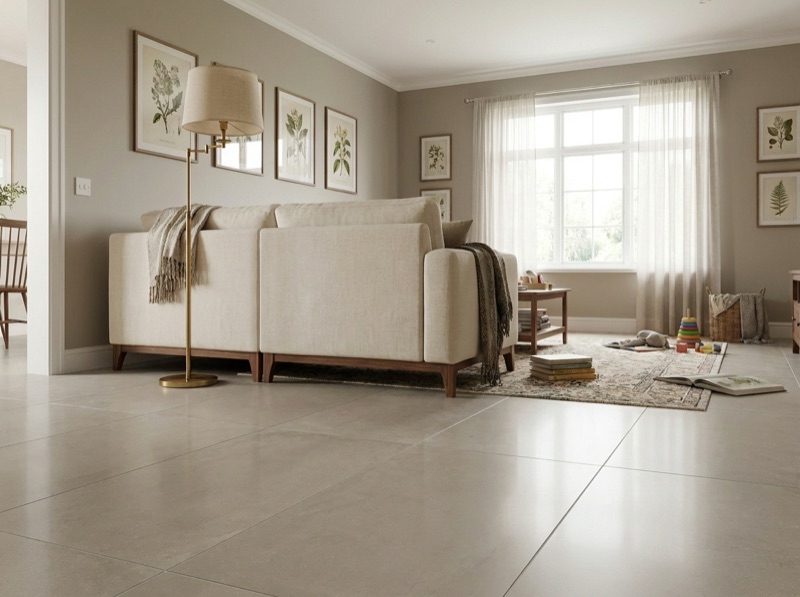
Here the two materials part company, and this is the part of the page that matters most. On wood, a high sheen costs you appearance. On tile, a polished floor in a room that gets wet costs you traction, which is a different category of decision. Wet slip resistance is measured and published, there is an accepted threshold for level interior areas that get wet, and the figure lives on the sample tag rather than in prose. Read it before a floor tile goes into a shower, a bathroom or an entry.
The consequence is blunt. A polished floor tile is a decision to keep that floor dry. A shower floor is not dry, and an entry in a Missouri February, with slush and salt arriving on everybody's boots, is not either. Those rooms want a matte or textured face, and the tile you fell for can often still appear on a wall in the same room.
Polished stone has a second problem and it is chemical
Natural stone adds a failure no glaze has. Marble, travertine and limestone are porous and reactive, and an acidic spill etches a polished surface no matter how well it was sealed. An etch is not a stain. It is a dulled spot where the polish has been chemically removed, and on a mirror finish it announces itself from across the room.
Honed stone, the matte version of the same material, etches in exactly the same way and shows it far less, because there is no gloss for the etch to interrupt. So if you want marble and you actually cook, honed is the answer and polished is a decision to accept a patina. The people who do not want that patina are usually happier with a porcelain printed from stone.
The matte floor that reads flat, and the fix that is not gloss
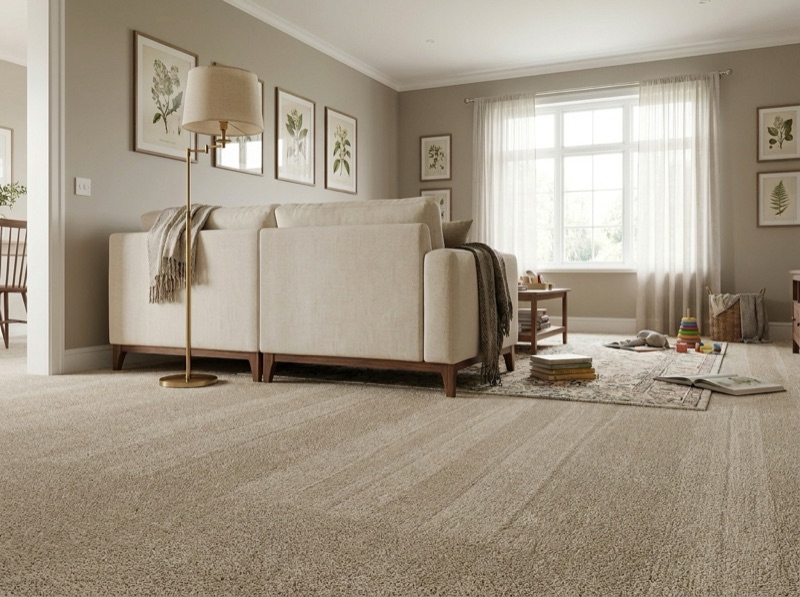
Matte has its own failure, worth naming since half this page argues for it. A flat, uniform, low sheen floor in a room with weak light can look lifeless, and people call it chalky or dusty even when it is spotless. The instinct is to add shine, and that is usually the wrong lever.
The better fixes are variation and light. On wood, a species with real grain movement gives the eye something to hold at any sheen. On tile, a grout color chosen to contrast rather than match draws the pattern and wakes the floor up. And a lamp in the corner of a dark room does more than a sheen upgrade ever will.
Cleaning: two surfaces, two entirely different things that show
Nobody gets a floor that never needs cleaning, so pick the mess you would rather look at. Gloss shows dust, footprints and dry haze, so it looks dirty quickly and perfect straight after a clean. Matte hides all of that and shows residue instead, so the wrong cleaner leaves a film that builds over months and reads as a dull patch in the traffic lane.
A textured matte tile face, which is exactly what you want underfoot in a wet room, holds mop water and cleaner in the texture, so it wants rinsing rather than wiping. It only goes wrong when somebody buys matte believing it is a floor that does not need cleaning.
Put the shine where nobody walks
The best resolution to most of these arguments is not a compromise sheen. It is putting the two finishes in different places in the same room. A glossy tile on a shower wall or a backsplash catches light beautifully and sits where nobody will ever put a wet foot. Underneath it, a matte or textured floor does the work.
The same trick works on wood: a satin floor with higher sheen millwork gives the room its highlights without putting them where the traffic is.
Where each sheen belongs when we have to commit
- Shower floor, bathroom or an entry that meets winter slush: matte or textured tile, and read the wet slip figure on the tag first
- Kitchen with a low west window and a long open run of wood: satin at most, because raking light is unkind to shine
- Formal front room, period trim, modest daylight: satin or semi gloss wood, where depth in the grain is the point
- Powder room with a polished stone look and almost no traffic: polished tile, chosen deliberately and kept dry
- Marble in a kitchen where somebody genuinely cooks: honed, so an etch has no polish to interrupt
- Shower walls and backsplashes anywhere: gloss, because nobody stands on a wall
Satin, and why so many rooms quietly end up there
The honest verdict on most projects is neither end of the range. Satin keeps enough reflection to give grain depth and to stop a dim room going flat, and stays low enough that footprints are not cataloged daily. It is the answer often enough that we will say so rather than let a room drift to an extreme because a photograph looked good. Stand over the samples at the showroom under one light, then book the free in-home measure so somebody sees your windows and your wet rooms first. Other decisions of this shape sit on the comparison hub.
“We are so pleased with our new floors! Everyone throughout the entire process was extremely nice and helpful. ...”
Sheen questions that only surface once the floor is down
Light, footprints, wet tile, etched stone and the one sheen you can change your mind about.
636-332-0654Matte, then satin, then everything above them. A scratch is visible because it breaks a reflection, so the less reflection there is, the less there is to break. Sheen is the simplest lever on this problem, which is why we raise it before anyone starts talking about harder coatings or surface texture.
It is the wrong instinct for a wet room. Wet slip resistance is a published figure with an accepted threshold, printed on the sample tag rather than left to opinion. Bring us the tile you like, we will read the tag with you, then find a matte or textured face in the same look for the floor.
It can, and the answer is usually not more shine. Add variation instead: a species with grain movement, a tile with real color depth, or a grout that contrasts rather than disappears. Then add a lamp. A glossy floor brightens a dark room by reflecting whatever light is there, and it reflects every footprint just as willingly.
Yes, and it is one of the better moves available. Walls take no foot traffic, so gloss belongs there, while the floor of the same shower gets a face you can stand on. Choose both in the same visit, because that is the only way to know they agree with each other.
No. Sheen on wood lives in the coating, so a refinish in a lower sheen changes it without touching a board. That is a real advantage of wood, and the reason we tell people to relax about sheen on wood and be careful about it on tile.
Neither. They advertise dirt differently. Gloss shows dust and footprints and looks flawless right after a clean. Matte hides those and shows cleaner residue instead, so it punishes the wrong product. Pick the failure you can live with rather than the one you assume is lower maintenance.
Stand in the room at four in the afternoon, then choose a sheen
The measure looks at where the windows are and which way they face, which rooms get wet, and whether the tile you love on a shower wall is one that can safely go on the floor of the same room.
Free estimate
636-332-0654