 Flooring Correct
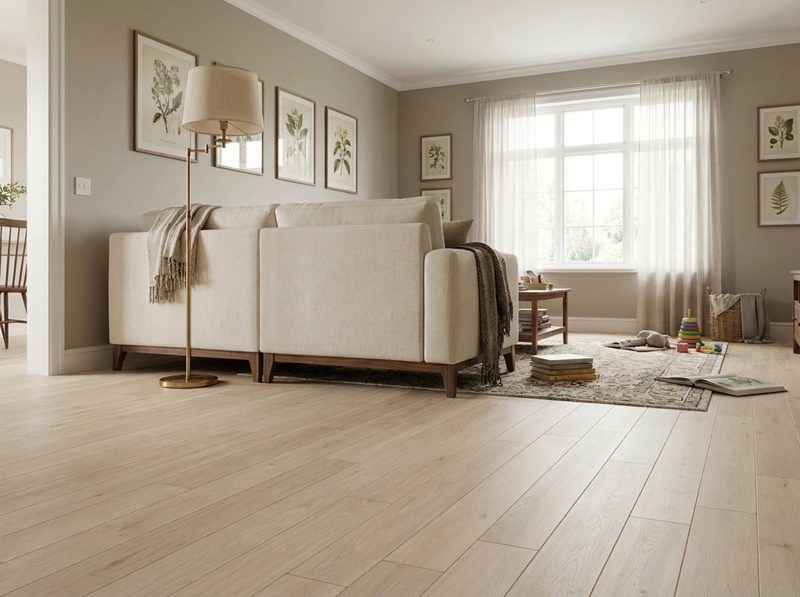
Tile vs Laminate:
Moisture-Proof
or Warm Underfoot
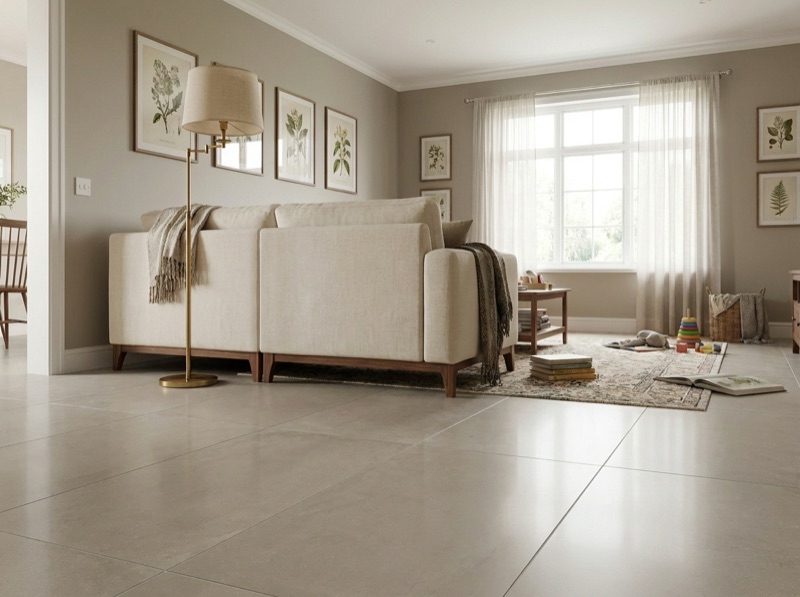
Tile does not care how much water lands on it and effectively never wears out. Laminate is warmer to stand on, faster to install, and easier to fix one plank at a time. Neither claim covers the other's room.
Tile and laminate rarely get cross-shopped for the same room, and that is the point of this page: they are honestly suited to different ones. Tile is moisture-proof and close to permanent. Laminate is warmer underfoot, generally a faster and less disruptive install, and easier to repair later, one plank at a time. We sell both sides, so here is where each one belongs. Call 636-332-0654.
What each side is actually offering
Tile's case is durability against water and time. Properly installed, it is moisture-proof, not merely resistant, and it does not degrade the way softer flooring eventually does. Decades-old tile is often still doing its job with nothing more than the grout showing its age. That combination, permanence plus a genuine indifference to water, is why tile keeps winning in rooms where the floor gets wet as a matter of routine rather than by accident.
Laminate's case is comfort, speed and easy repair. It is noticeably warmer underfoot than tile, it installs quickly with far less mess and disruption, since there is no thinset or grout involved, and if a single plank gets damaged later, that one plank can usually be replaced without redoing the room. For bedrooms, living areas and home offices, where the floor is walked on barefoot far more than it is splashed on, those are real advantages.
Where each one actually struggles
Tile's honest weaknesses are comfort and grout upkeep. It is hard and cold underfoot year round, unforgiving to drop anything fragile on, and the grout lines need periodic cleaning and resealing to keep looking sharp. None of that undermines tile's case where water is constant, but it is worth knowing before choosing it somewhere comfort matters more than moisture resistance.
Laminate's honest weakness is water, and this deserves a direct answer rather than a soft one: laminate is not a wet-area material. Its core is wood based, and sustained moisture, a slow leak, a flooded bathroom, standing water left too long, will swell and damage it in a way that is not repairable the way a scratch or a scorch mark is. A brand name in our laminate lineup happens to include the word Aquaproof, but that is one product's name, not a claim about laminate as a category. Genuinely wet rooms are tile's job, not laminate's, full stop.
The verdict, room by room
- Bathrooms: tile, without exception. This is water at its most constant, and laminate has no business here.
- Entries and mudrooms: tile, for wet boots, melting snow and the grit a Missouri winter tracks in.
- Bedrooms: laminate, for warmth underfoot and a quieter, softer feel than tile offers.
- Living rooms and home offices: laminate, where a faster install and an easy plank swap later matter more than moisture-proofing.
- Kitchens: tile if spills and standing water are a real daily risk, laminate only where that risk is genuinely low and the household is realistic about it.
- Laundry rooms: tile, since a laundry appliance failure is exactly the slow leak laminate cannot forgive.
Where a third material crashes the comparison
Kitchens are the room where this page's two options least deserve a monopoly. If moisture is a real concern but the warmth and installed feel of a plank still matter, luxury vinyl plank is worth comparing directly, since it tolerates spills far better than laminate while staying warmer than tile. And in a basement, where a slab rules out laminate's wood core entirely, vinyl plank or carpet tile are the realistic answers, not this page's two materials.
Installation and disruption, honestly
Tile installation takes real time: substrate prep, thinset, setting time, then grout and sealing, with the room generally unusable while it cures. Laminate installs as a floating floor over an underlayment, considerably faster, with far less mess and often a room you can walk on again the same day. If a room needs to come back into use quickly, that difference is not a minor convenience, it is often the deciding factor on its own.
The repair question, plainly
This is laminate's quiet advantage over tile in the rooms where it belongs. A damaged laminate plank, a burn, a deep scratch, a spot where something heavy was dropped, can typically be pulled and replaced individually, especially if extra planks were kept from the original job. A cracked tile can sometimes be replaced too, but matching grout color exactly years later is harder than matching a laminate plank, and the repair itself disturbs more of the surrounding floor. Neither is effortless, but laminate's repair is usually the smaller job.
Underfoot, honestly compared
Stand on both back to back and the difference is immediate. Tile stays cool and hard no matter the season, which some homeowners like in a sunroom or a warm climate kitchen and most do not like in a bedroom at six in the morning. Laminate stays closer to room temperature and has a bit of give underfoot that a rigid tile floor does not. That comfort gap is exactly why the room-by-room split above puts wet rooms on one side and everyday living spaces on the other.
What we carry on each side
On the tile side our lines run across Virginia Tile, DalTile, MSI and Emser. On the laminate side: Aquaproof, DreamWeaver, NextGen, Mohawk RevWood, Nextfloor, National Flooring Products and In Haus. Both are on the same showroom floor at 15570 Veterans Memorial Pkwy in Wentzville, so you can stand on each and feel the temperature and give difference for yourself. Call 636-332-0654 to check a specific line before the drive.
The mixed answer is usually the right one
Very few houses should run one of these two everywhere. The pattern that keeps working: tile in every room where water is a routine fact, bathrooms, entries, laundry, and laminate across the rooms where people live barefoot and want a warmer, quieter floor that is simple to patch later. Plan the transition strip between them at the doorway deliberately, rather than letting whichever installer arrives first decide it.
Settling it
List your rooms and sort them by one honest question: does water land here as a matter of routine, or only by accident. Rooms with routine water go to tile. Everything else is a fair fight laminate usually wins on comfort and ease. The free in-home measure confirms subfloor readiness for both. Related reading: luxury vinyl plank versus laminate for a warmer, more moisture-tolerant third option, and the comparisons hub for every other matchup.
“We loved the service we received from Audra and Jonah during the process of choosing, ordering and installing our flooring and carpet. They kept us updated on the process every step of the way. The installation was completed to our satisfaction and the end result is awesome! I highly recommend this local business for all your flooring needs! Thank you Flooring Correct!”
The questions this matchup always raises
Straight answers on moisture, temperature, repair and the one brand name that gets misread as a category claim.
636-332-0654No, not as a category. Its core is wood based and sustained moisture will damage it. One brand name in our laminate lineup includes the word Aquaproof, but that describes a single product, not a claim about laminate generally.
Because properly installed tile is genuinely moisture-proof and does not degrade with routine water exposure the way a wood-based core does. It is built for exactly the conditions a bathroom creates every day.
Laminate, clearly. It stays closer to room temperature and has a bit of give underfoot, while tile stays hard and cool regardless of the season or the thermostat.
Usually yes. A single plank can typically be pulled and replaced, especially if extra planks were kept from the original installation. It is generally a smaller repair than replacing a cracked tile and matching old grout.
Laminate, by a wide margin. It floats over an underlayment with no curing time, while tile needs thinset, setting time, grout and sealing before the room is usable again.
That is the closest call on this page. If spills are rare and cleaned up quickly, laminate can work, but where the risk is real, tile or luxury vinyl plank are the safer choices.
Split it by room, not by trend
Tell us your rooms. We will say which ones see routine water and which want warmth underfoot, measure in your home, and quote from real numbers.
Free estimate
636-332-0654