 Flooring Correct
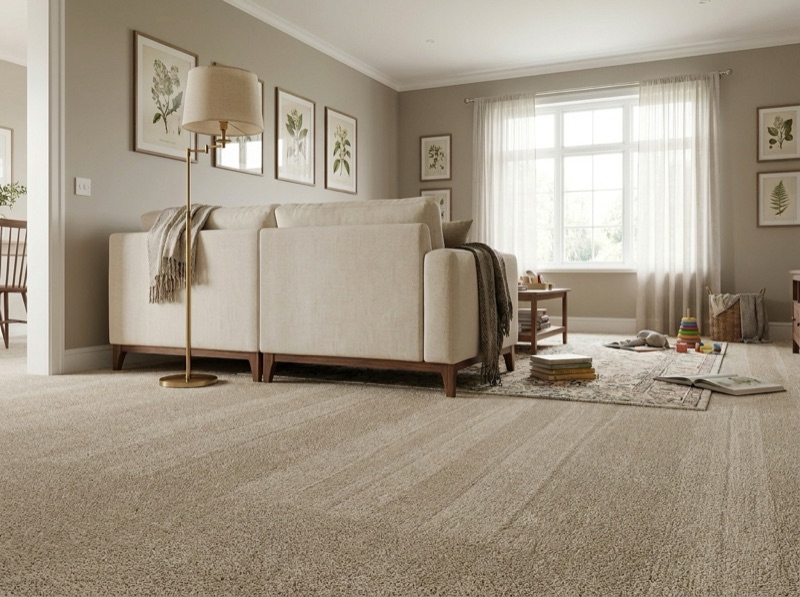
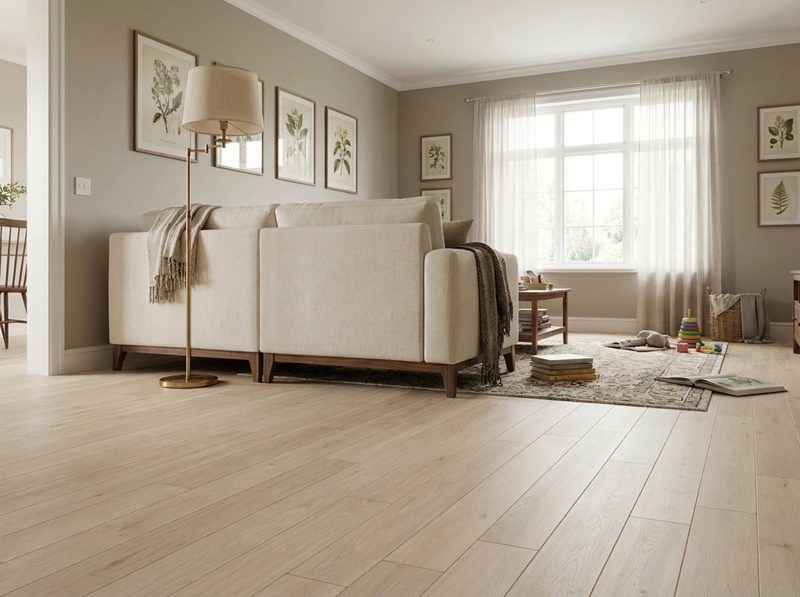
Triexta or nylon,
settled by how the house lives
These two sit in the same tier for resilience, which means the usual toughness argument does not separate them. What separates them is where the stain protection lives and what happens to it after a few years of being cleaned.
Most fiber comparisons are about which one survives traffic, and this one is not, because both of these survive traffic. The carpet pillar puts triexta and nylon in the same resilience tier on purpose. So a household choosing between them has to pick a different tiebreak, and the honest one is this: how many times is this carpet going to be wet cleaned before you replace it, and what does each fiber's stain protection look like after that many rounds. Answer that and the decision usually makes itself, room by room and household by household.
Stop comparing them on toughness. That column is a tie.
Both fibers spring back after a load, both hold a twist well enough for stairs, and both are sold in constructions dense enough to survive a hallway. Anyone arguing these two on resilience alone is arguing a column where they land close together. The construction in front of you matters more than the name on the tag: a thin triexta and a thin nylon will both crush, and a dense one of either will hold.
So spend your attention where the fibers genuinely differ. There are two places. One is where the stain protection sits, which is a fact about the strand. The other is what your household puts on the floor and how often somebody has to get it back out. Neither is visible in a photograph of a room.
Protection inside the strand versus protection on the surface of it
Triexta carries its stain resistance in the fiber itself rather than in a coating over the top, and everything useful about this comparison follows from that. Because the property is part of the strand, cleaning does not gradually remove it. You can scrub the same spot for years and the resistance you bought on day one is the resistance you still have.
Nylon's stain resistance is more often a treatment applied to the finished carpet. It works well when it is fresh. But it is a surface, and surfaces are what cleaning removes, so the protection curve slopes downward over the life of the floor. That is not a defect and not a reason to rule nylon out. It is a maintenance item, and a professional cleaner can reapply it. Somebody just has to know that and actually do it.
Stain resistance is not soil resistance, and the walkway is where people learn the difference
A stain is an event. Something red goes over, somebody blots it, and either the color releases or it does not. Soil is a slow accumulation of grit and oily film tracked in on shoes, and it settles into a walkway a little at a time until the lane reads darker than the room around it. No fiber on the market is immune to the second thing, and a fiber sold on the first thing can be quietly misread as immune to both.
The two problems have different fixes. Stains are answered by fiber chemistry and by how fast somebody gets to the spill. Soil is answered by vacuuming often and slowly, by a mat at the door and by a deep clean on schedule. Choosing triexta because the household spills is sound. Choosing triexta and then vacuuming half as often because it cleans easily is how a carpet ages faster than the one it replaced.
The two fibers diverge at about the third deep clean, not at the register
Think about the timeline rather than the showroom. In year one there is no visible difference between these two. Deep cleaning every twelve to eighteen months is what many warranties require, so by year four or five a household that has kept up has put the carpet through three or four wet cleanings. That is the point where a coated nylon that has never been retreated starts behaving differently from a triexta, which has not changed at all.
So the real question to ask yourself is how many cleanings this floor is going to see. A quiet house with adults and a no-shoes rule may go through very few. A house with a dog that comes in wet, two children under ten and a basement stair everyone uses will go through many. The more cleanings the floor is going to take, the more the triexta argument is worth, and the less patience the household has for tracking reapplication schedules, the more it is worth again.
Where we would still put nylon in the room
If the construction you want exists in nylon and not in triexta, that settles it, and it happens more often than the fiber debate suggests. Walk the rack with a twist level and a pile height in mind and check whether the texture you like is offered in both. A carpet you want to look at, in a fiber that is a close second on paper, beats one you settled for in the fiber that won a chart.
The other case for nylon is a household already on a maintenance rhythm. If a cleaner is coming twice a year regardless, reapplying protection is one line on an invoice and the downward curve flattens out. That household is not exposed to the weakness the coating creates, so it can choose on hand feel, on color and on what the room has to do.
Where triexta is the straightforward call
Young children, animals, a household that entertains, a finished lower level where drinks travel, a room that will be cleaned aggressively and often. In all of those the property you want is one that does not erode, and a fiber that keeps its resistance through repeated scrubbing removes a whole category of future regret. It is also the right call for anyone honest enough to admit they will never track when a topical treatment is due.
One more household lands here and it is easy to miss: the one buying a carpet they mean to keep a long time. The longer the intended life, the more cleanings the floor takes, and the further apart the two protection curves end up.
The failure both fibers share, and it has nothing to do with chemistry
Carpets rarely die of staining. They die of abrasion, which is grit working like sandpaper at the base of the pile every time somebody walks across it, cutting the yarn from below where nobody is looking. That is why vacuuming often and slowly matters more than any fiber decision made in a showroom. Grit left in the base of the pile keeps cutting long after the vacuum has moved on, and it is the one kind of damage neither fiber's stain chemistry touches. Both of these fibers were chosen for what happens on top of the yarn. This happens underneath it.
Both of these fibers reward a household that keeps up and punish one that does not, at almost the same rate. If the household in question is not going to vacuum and is not going to deep clean on any schedule, then the fiber argument is being had about the wrong variable, and a mid tone or multi tone color that hides day to day life will do more for the room than either name on the tag.
What neither fiber will fix for you
If the worry is pet accidents, the fiber is the wrong variable and the backing is the right one. It is a separate line on the order, it is chosen independently of triexta or nylon, and the carpet page says what it does. A household that agonizes over the fiber and then leaves the backing at the default has optimized the visible problem and skipped the one that actually forces an early replacement.
And sometimes the room is the answer. A bedroom that will never be scrubbed does not need either of these and is better off with a dense, soft polyester. A landing that gets scraped by boots twice a day may want a hard surface with a washable rug over it. We would rather say that out loud than sell a fiber upgrade into a room that cannot use it.
What we ask before pulling a single sample
Who lives here. What animals, and are they clawed or heavy or both. Who vacuums and how often does it honestly happen. Has a cleaner ever been in this house on a schedule. Which room is this and what is under it. Is there a stair in the plan, and does it turn. None of that is small talk. Every answer moves the decision, and several override the fiber question entirely.
Then we bend the samples together so you can compare density and twist rather than marketing, and we take the shortlist to the room it is going in, because showroom light and a north facing bedroom at four in the afternoon are two different places. The in-home measure is where the backing, the cushion and the seam plan get settled, and those three decide more about year seven than the fiber name does.
“... Jonah steered my in the right direction with his expertise on several options I initially wanted to do different, I couldn't be happier with deciding to go with his suggestions!”
What people ask once they know both fibers are resilient
The questions that come up when the toughness column ties and the decision moves to spills, cleaning schedules and what is under the pile.
636-332-0654In the same construction, treat them as peers. Stairs punish a carpet through the nosing, and what carries that load is a tight twist, a dense pile and a correctly specified cushion. Get those three right and either fiber will hold. Get them wrong and neither will.
That is the point of it. The resistance is part of the fiber rather than a layer over the top, so there is nothing to wear off and nothing to renew. It still needs the same vacuuming and the same deep clean on schedule as anything else, because cleaning is about soil and grit, not about topping the protection back up.
Yes, a professional can reapply a topical treatment, and on a nylon that has been through several deep cleans that is worth asking about. Ask what is being applied and when it should be done again, and put it on the same rhythm as the cleaning itself so it does not get forgotten between visits.
Neither, and that is the honest answer. Odor comes from what soaks through the carpet into the cushion and the subfloor, and it surfaces months later. The specification that addresses it is a moisture barrier backing, which is chosen separately from the fiber. Get the backing right first, then choose the fiber on how often the room will be cleaned.
It shifts it toward triexta, because a rental gets cleaned between tenants and nobody is going to track when a topical treatment was last renewed. Pair it with a mid tone or multi tone color that hides day to day life, a tight twist, and a cushion at the firm end of what the warranty allows.
You can, and plenty of houses should. Put the harder working fiber where the spills and the traffic actually are and let the quiet bedrooms be chosen on feel. Just plan the doorway transitions on purpose, because two carpets that meet without a deliberate transition look like an accident from the hallway.
Tell us what gets spilled here and who cleans it up
Bring the animals, the ages of the children and an honest answer about how often the vacuum comes out, and we will tell you whether the protection needs to live inside the fiber or whether a maintained nylon is the better floor for this house. Free measure, no obligation, 636-332-0654.
Free estimate
636-332-0654