 Flooring Correct
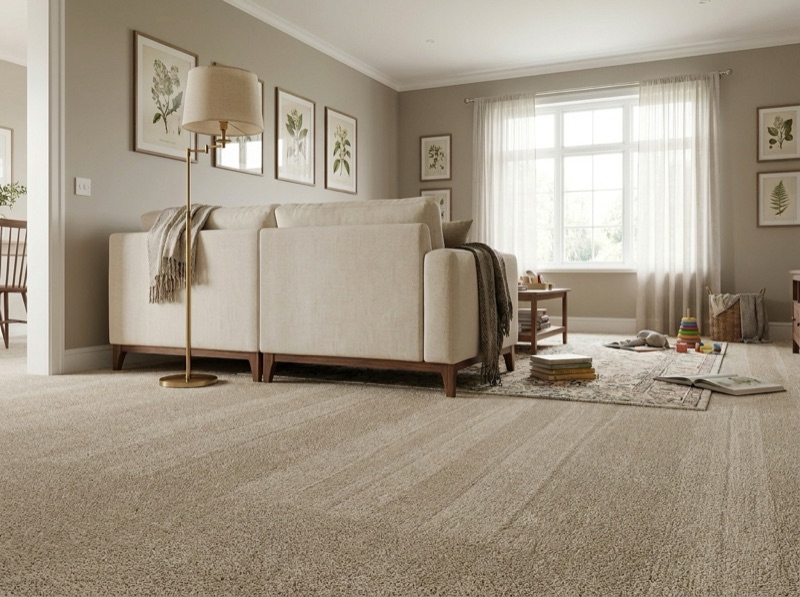
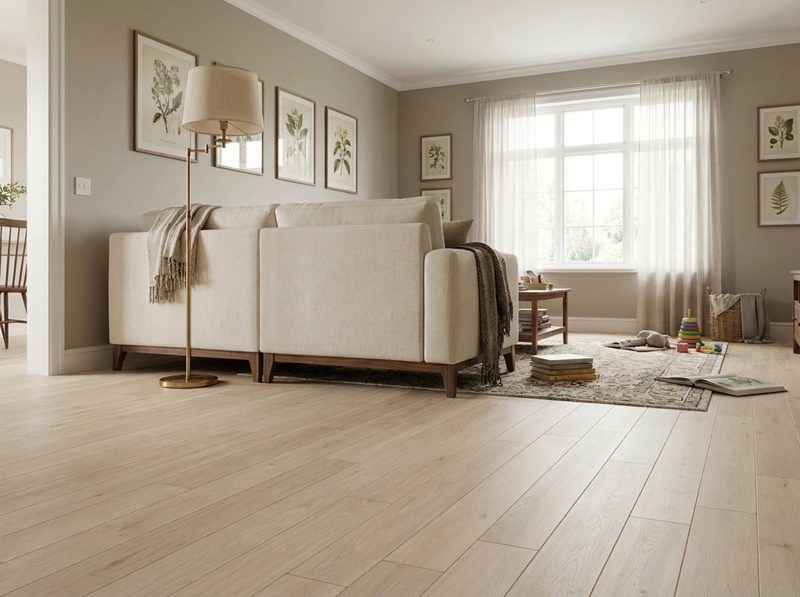
Waterproof, water resistant.
Two claims, not two words.
These sit on sample tags in the same font and mean different things. One is a property of the plank. One is a length of time before a spill starts to matter. Neither of them is a statement about your room, and your room is the thing that floods.
Most of the head to heads in this section put two things you can hold against each other. This one puts two claims against each other. They are printed on tags, and they do more work in a buying decision than almost anything else on the sample wall. Luxury vinyl plank explains the waterproof core it is built on. Laminate explains the treated core and sealed edges behind a water resistant claim. What neither can do from a distance is tell you which claim your room needs, so this page takes the words apart, names what still goes wrong under each of them, and tells you how to choose by where the water comes from.
Two different promises, printed in the same size type
Waterproof is a statement about material. A waterproof core will not swell, buckle or come apart when it gets wet, and that is true whether the water sits on it for an hour or a day. Water resistant is a statement about time. A treated core with sealed edges buys a window in which a spill is a nuisance rather than damage, and that window closes once the water stays.
The distinction matters because they answer different questions. Waterproof answers what the plank does. Water resistant answers how long you have to notice. Only one of those depends on who is home, and that is the reason two households can buy the same floor and have entirely different experiences of it.
What waterproof actually covers, which is the plank and not the room
A waterproof plank is exactly that, a plank. It is not a promise that the room beneath it is sealed. Water pooled at the perimeter or running under a floating floor from a supply line still has to be dried out, and the leak that produced it still has to be repaired. Any claim that sounds like it covers the room is a claim being read too generously.
What the word does buy is calm, and calm has real value. A dropped ice tray, a dog shaking off in the doorway, a kid running the sink with the sprayer pointed the wrong direction. None of that is an emergency, nobody has to sprint for a towel, and the floor does not care. That is worth a great deal in a busy house and it is the honest version of what you are purchasing.
What water resistant is genuinely good at
Water resistant is not a consolation prize, and treating it as one leads people to the wrong floor. A water resistant laminate carries a melamine wear layer loaded with aluminum oxide, harder than the finish on a site finished wood floor, which is why it survives claws, chair legs and driveway grit better than most surfaces in the house.
So in a hallway, a family room or a busy entry, the water resistant floor is often the one to choose, because the threat in those rooms is abrasion rather than water. Choosing waterproof for a room that never sees standing water can mean paying attention to the wrong risk and getting a softer surface in exchange.
The clock is part of the claim
Read a water resistant claim as a duration and it becomes useful immediately. The real specification is a quantity of water for a length of time, which makes the claim partly about your household. A kitchen with somebody in it all day is a room where spills are found in minutes. A basement visited twice a month is a room where a slow drip has a fortnight to work.
That is why we ask who is home during the day before we recommend anything. Same product, same room, two different answers depending on whether there is anybody there to catch it. If nobody is going to be there, buy the floor that does not need anyone.
Three ways a waterproof floor still leaves you with a repair
The first is the perimeter. Most of these floors float, with an expansion gap hidden behind the base trim so the floor can move with the seasons. Water that reaches that gap goes under the floor and onto the subfloor, where the waterproof claim has no jurisdiction at all. The second is the subfloor itself. Plywood, oriented strand board and even a slab hold moisture, and none of them dry quickly once a floor is lying on top of them.
The third is the one nobody expects. A floor that does not react to water also does not report it. A laminate floor swells at the edges and tells you something is wrong, sometimes before the drywall or the cabinet base does. A waterproof plank stays perfect while a supply line quietly ruins the room around it. Waterproof is not a leak detector, and a floor that hides a problem is not the same thing as a floor that solves it.
Warranty language, and the conditions living inside it
Both claims are warranty terms before they are marketing, and the coverage usually depends on conditions that have nothing to do with the plank. The right underlayment. A moisture barrier where the product calls for one. A slab tested rather than assumed. Installation to the manufacturer's written instructions rather than to whatever was quick that day.
So read what a warranty excludes as carefully as what it covers, and read it before the order rather than after the incident. We keep this documentation at the counter for the products we sell and we will go through it line by line with you, because the language is where these two claims stop being similar.
Four kinds of water, and which claim each one needs
The first kind arrives while nobody is home, out of a washer hose, an ice maker line or a water heater. That is not a claim problem, it is a room problem, and it wants a seamless sheet floor with nowhere for water to travel, or tile, plus a shutoff somebody can reach. The second kind arrives with a person attached: splash at a sink, a dripping coat, a wet dog. That is precisely the case water resistant was built for, and buying past it is buying the wrong protection.
The third kind is constant and low level. A slab breathing moisture up out of the ground year round is not a spill at all, no surface claim addresses it, and that room wants a waterproof core over a tested slab with the moisture barrier the manufacturer specifies. The fourth kind is a shower, which belongs in its own category, because a shower is a waterproofing job before it is a flooring job and the membrane behind the tile is what keeps the wall dry.
The rooms where neither word is the answer
If a basement takes water in a hard rain, the fix is outside the house: grading, gutters, downspouts and the drain system. Buying a waterproof floor for that basement is buying a floor that survives the next event while the room does not. We would rather say that plainly than sell material into a problem it cannot fix.
The same goes for a room that stays damp because a bath fan vents into the attic instead of outside, or a laundry that has already lost an appliance hose, where the real answer is a seamless floor and a drain pan rather than a plank of any kind. The other comparisons cover those choices, and none of them turn on a word printed at the top of a sample tag.
What we read together before you order
Bring the tag, the warranty and the installation instructions to the showroom counter, or look at ours for the same product, and we will read the three of them against each other. They frequently disagree in tone, and the instructions are the document that decides whether the coverage survives.
Then let us see the room. At the in home measure we test the slab for moisture instead of assuming, find out where the appliance lines and the shutoffs are, check what the perimeter gap will sit against, and look at whether the subfloor has already been wet once. That visit tells you which claim you actually need, which is a different question from which claim sounds better.
“The team at Flooring Correct is great to work with. I have known the owners for years and they are great people. I'm a repeat customer and will continue to be one.”
The questions a sample tag will not answer
These come up the moment somebody reads the fine print rather than the headline. Call 636-332-0654 and ask about a specific product.
636-332-0654The plank is. A waterproof core will not swell, buckle or come apart when it gets wet, and that part of the claim holds up. What it does not cover is the room. Water can still run past the expansion gap at the perimeter, sit on the subfloor underneath and need drying out, and the leak that put it there still has to be fixed.
In a powder room or a hall bath with a normal life going on around it, often yes, because the water in those rooms is splash that gets wiped up. In a full bath where somebody showers daily, or any bath where a floor sits wet, we would rather put you on a waterproof plank, a seamless sheet floor or tile.
Probably yes, and not because of flooding. A concrete slab moves moisture up out of the ground year round, which is constant low level exposure rather than a spill, and it is the case a waterproof core and a proper moisture barrier are built for. We test the slab at the measure rather than guessing, because that reading changes the recommendation.
No, and skipping it is one of the fastest ways to lose the warranty you paid for. Coverage on these floors typically depends on the specified underlayment, a moisture barrier where the product calls for one, and installation to the written instructions. The plank being waterproof does not release anybody from the assembly it is supposed to sit in.
The planks probably are. The question is what got underneath them and how long it sat there. Water travels along the perimeter gap and across the subfloor, so the floor needs lifting or drying at the affected edge, the cabinet bases need checking, and the leak needs repairing. A floor that looks untouched after an event is not proof that nothing happened.
It means the claim is partly about you. Water resistance is a quantity of water for a duration, so the same floor performs differently in a kitchen somebody stands in all day and in a basement checked twice a month. If nobody is around to catch a spill in that room, buy the floor that does not depend on anybody catching it.
Bring the warranty to the measure and we will read it in the room it applies to
A claim on a tag means one thing on a shelf and another in a basement with a slab under it. We take a moisture reading on the concrete, find where the supply lines and the shutoffs are, look at what the perimeter gap will sit against, and check whether that subfloor has already been wet once. Then the choice between these two words makes itself. Call 636-332-0654.
Free estimate
636-332-0654