 Flooring Correct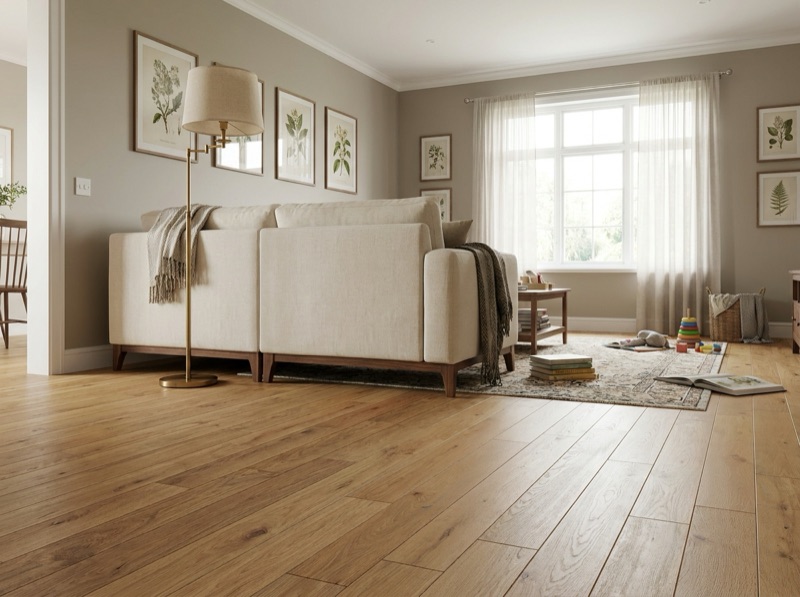
Dining Room Flooring:
Chairs, Crumbs
and Good Looks
No other room concentrates furniture movement like this one. Chairs drag in and out at every meal, in the same spots, for years. The floor either survives that or shows it.
The dining room is the most concentrated furniture-abuse zone in the house. Every meal slides chairs out and back across the same arcs of floor, under a table that never moves, in a room that also has to look like the occasion when the occasion arrives. Add food and drink arriving over the floor at every sitting, and you have a specific brief that not every beautiful material survives. Call 636-332-0654.
The chair problem, stated properly
A dining chair is a four-point load that gets dragged, not lifted, dozens of times a day in a family that eats at the table. The damage is not one event but accumulation: the same quarter circle of floor behind each chair takes pass after pass, meal after meal, year after year. On soft materials that arc crushes and wears. On hard surfaces it abrades the finish first, and on any floating floor it tests the joints in one concentrated zone.
Half the answer is the floor and half is honest housekeeping: felt glides on every chair leg turn the worst furniture behavior in the house into a non-event, and they wear out and need replacing, which nobody does. We say this to every dining room customer because it extends whatever material wins by years, and because a floor blamed for chair damage was usually a floor asked to absorb bare metal or plastic feet.
What food and drink actually test
Dining rooms see water rarely but food constantly, and food is a staining problem more than a moisture problem. Red wine, tomato sauce and oil test a surface's stain resistance and its texture: deep texture holds what smooth surfaces release, and grout lines hold what tile faces shrug off. This is a room where the practical cleaning question deserves an honest answer before the style question, because a floor you are nervous about at every dinner party fails the room's purpose.
None of the realistic candidates fail outright here, but they rank. Sealed hard surfaces wipe clean. Textured, hand-scraped wood holds crumbs in its valleys. Carpet in a dining room, which was standard a generation ago, asks for a fiber with built-in stain resistance and a certain family temperament, and it is honest to say most households have moved past wanting to manage that.
The materials that earn this room
Hardwood is the traditional dining room answer and still a superb one, with the chair caveat handled. Its finish takes the abrasion, not the wood, and a finish can be renewed. A busy grain in a mid tone hides the crumbs between sweeps and the wear between refinishes. Engineered hardwood makes the same case where the room sits over a slab or where wide planks are wanted, and its factory finishes are notably hard.
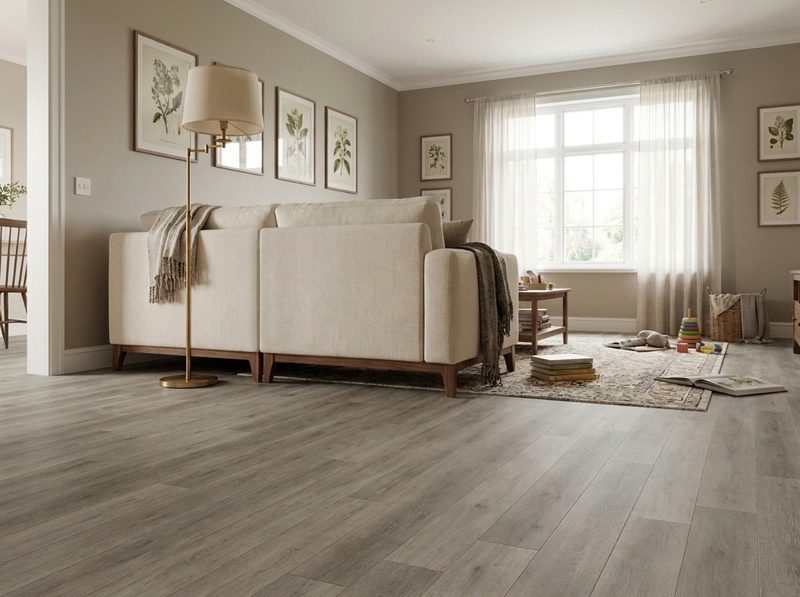
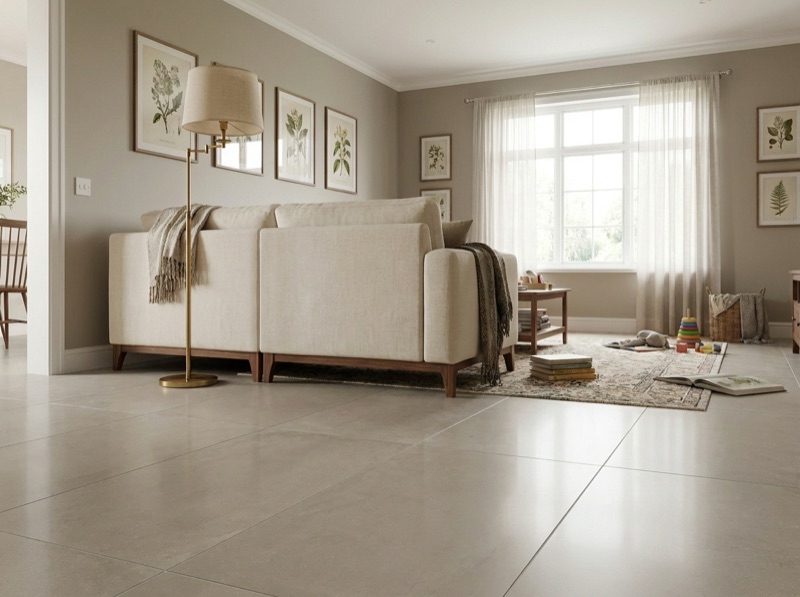
Laminate is arguably the technical best fit for a hard-used family dining room: its wear surface resists chair abrasion better than anything else we sell, it wipes clean, and a dining room's dry conditions remove its one weakness. Luxury vinyl plank joins the list when the dining space is open to the kitchen, carrying the kitchen's rules across the shared floor. Tile is the wipe-clean maximalist answer that some households love here, with its own honest costs: it is the hardest thing a dropped plate can meet, and the coldest surface under a long dinner.
Defined room or open plan: the fork in the decision
A separate dining room with a doorway is one of the few rooms left where the floor can be chosen entirely on its own merits, and even styled as a deliberate change from the rest of the house. That freedom is worth using: a defined dining room can carry a richer tone or a more formal material than the connected spaces would tolerate.
An open dining area attached to the kitchen or living space is the opposite situation: the floor is one decision shared across rooms, and the busiest or wettest space in the run sets the rules. Most newer housing in our area is built this way, which is why so many dining areas end up on the kitchen's vinyl or the living space's wood rather than on a dining-specific choice. That is not a loss, but the transition points and plank direction across the combined space deserve deliberate planning, which happens at the measure.
Rugs under tables, settled
The rug-under-the-table question divides households and we get asked weekly. The honest mechanics: a rug softens sound and anchors the table visually, and it also catches everything that falls, gets pinned under chair legs, and needs to be large enough that chairs stay on it when slid out, which is a much bigger rug than people expect. On a hard floor with felt glides, skipping the rug is the lower-maintenance answer. If the rug is wanted for looks, choose one that can be cleaned seriously, size it for the pulled-out chairs, and put a proper pad under it to protect the floor beneath.
Holidays, extensions and the loads nobody plans for
Twice a year the dining room becomes a different room: the table extends, borrowed chairs arrive, and twelve people concentrate over a floor that hosts four the rest of the year. It is worth choosing with that peak in mind rather than the average Tuesday, because the peak is when the room matters most to you. Extension leaves also mean table feet landing in new spots, and a floor with a few years of wear shows the difference between its protected and exposed zones precisely when the room is on display.
This is quietly an argument for materials that age evenly and refinish or resist, and against soft floors in rooms with big seasonal swings in use. It is also one more vote for the felt glides, which we will stop mentioning once everyone fits them.
The buffet line and the sideboard wall
Dining rooms have a second traffic pattern that only appears when it matters: the serving run. Between the kitchen door and the table, and along the sideboard wall where dishes land, the floor takes loaded-hands traffic, which means drips, drops and pivoting feet in a narrow band. It is worth naming because it changes where wear and staining actually concentrate, and because it is the strongest argument for keeping the serving path on a sealed, wipeable surface even in households tempted by softer floors. If the room carpet is staying anyway, a runner along the serving wall is the practical compromise, sized and padded properly so it stays put under traffic.
Choosing it properly
Bring a photo of the room with the table in it, a cabinet door if the space opens to the kitchen, and the wood tone of the table itself if you know it, because the floor and the table have to live together more closely than in any other room. We will set full size pieces beside them at 15570 Veterans Memorial Pkwy in Wentzville and talk through the chair question honestly. The free in-home measure settles the practical side, the living room guide covers the space this one usually adjoins, and the rooms hub holds the rest of the house.
“The team at Flooring Correct is great to work with. I have known the owners for years and they are great people. I'm a repeat customer and will continue to be one.”
Questions about the hardest-working formal room
Straight answers on chair damage, rugs, matching the kitchen and what actually survives a family table.
636-332-0654Hardwood or engineered hardwood for the room's presence, laminate for maximum chair-drag resistance in a family setting, vinyl plank when the space shares a floor with the kitchen, and tile for the wipe-clean households that accept its hardness and cold.
Felt glides on every chair leg, replaced as they wear. It is the single highest-value flooring habit in the house, turns chair dragging into a non-event, and extends any material you choose by years.
Only if you want it for looks and will size it properly: big enough that chairs stay on it when slid out. It catches spills and needs real cleaning. On a hard floor with felt glides, no rug is the lower-maintenance answer.
It was standard a generation ago and it is rare now for practical reasons. If you want its warmth and quiet here, choose a fiber with stain resistance built into the strand and accept a management job most households have opted out of.
If they share one open space with no break, one continuous material almost always looks better, and the kitchen's rules set it. A separate dining room with a doorway can differ deliberately, and that freedom is worth using.
Mid tones with active grain or pattern, in a matte or low-sheen finish. Crumbs, dust and fine scratches all read loudest on very dark, very pale and very glossy floors, and a dining room produces all three daily.
Often yes. Chair arcs usually wear the finish rather than the wood, and a finish can be renewed. It is one of the most common refinish patterns we see, and the fix lasts if the glides go on afterwards.
Behind the chairs, in the drag arcs, and along the serving run between kitchen and table. Those two zones age the room while the corners stay new, which is why felt glides and a wipeable serving path do most of the protective work.
It is the most durable and wipeable choice, and also the coldest and the least forgiving of a dropped plate. Households that love easy cleaning accept the trade happily; households that linger over long dinners often prefer wood underfoot. Both are right.
Price a dining room floor
Tell us about the room and the table. We measure in your home, plan the transitions, and quote from real numbers.
Free estimate
636-332-0654