 Flooring Correct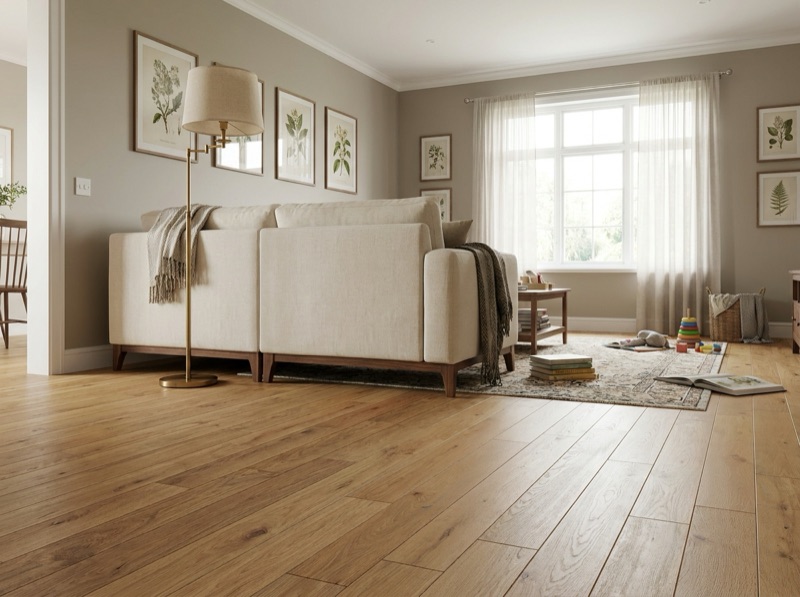
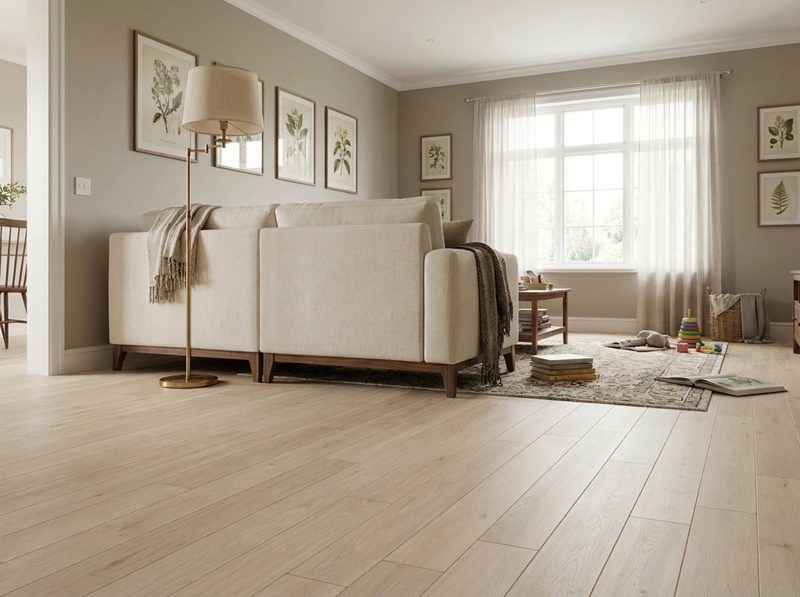
Living Room Flooring:
The Floor Your House
Is Judged By
Every guest who ever forms an opinion of your house forms part of it here. The living room floor is the most public surface you own, and it takes real traffic while being looked at.
The living room asks for two things that usually live in different materials: presence and endurance. It is the room guests see, the room listings photograph, and the room that carries the path between the front door and everywhere else. A floor that looks superb but wears its traffic visibly fails the job, and so does a bulletproof floor with no character. The good news is that several materials genuinely hold both ends. Call 636-332-0654.
What this room actually does all day
Watch a living room for a week and its real duties emerge. It is a corridor: the path from the entry to the kitchen or the stairs usually crosses it, which means a concentrated traffic lane that the rest of the room never sees. It is a furniture warehouse: sofas, media units and tables press point loads into the same spots for years. It hosts everything from a quiet evening to a full holiday crowd, and in most houses it flows into the dining space or kitchen with no doorway to separate the decision.
That last fact shapes the choice more than any preference. If the living room is open to the kitchen, the kitchen's water rules reach into the living room's material decision, because one continuous floor usually has to carry both. If the living room is its own defined room, the full menu opens up, including materials the kitchen would rule out. Name which situation you have before comparing anything.
The case for wood, made honestly
Solid hardwood remains the reference answer in a defined living room, and not out of nostalgia. It carries the main impression of the house better than anything else, it wears its age as character rather than damage, and when the character finally tips into wear, it can be sanded back and made new. Buyers respond to it, which matters if the house will ever be sold, and it anchors whatever style the room is dressed in.
Its honest costs: it is the loudest floor underfoot of the realistic candidates, it asks for felt pads and humidity discipline, and its finish will eventually need renewing in the traffic lane whether or not the rest of the room needs it. Engineered hardwood makes the same visual case with a stabler core, holds wide planks flatter through Missouri seasons, and arrives factory finished, which matters in an occupied house. Between the two constructions, the room's location and your plank-width taste decide more than the names do.
The case for the look-alikes, made just as honestly
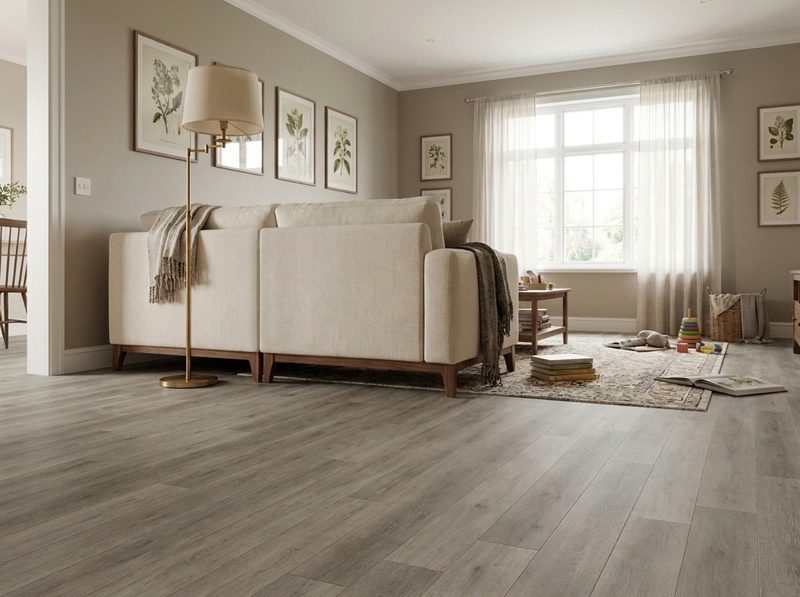
Laminate is the quiet contender for exactly this room, and it deserves the hearing it rarely gets. A dry, busy living space is where its strengths line up: the hardest wear surface we sell against scratches, a dense core that feels and sounds closer to wood than vinyl does, and current print and texture work that reads convincingly at standing height. If dogs, children and dragged furniture are the room's reality, laminate may honestly outlast the impression a softer-faced floor makes.
Luxury vinyl plank earns its place when the living room is open to the kitchen, because it is the material that carries a kitchen's water rules across a whole main level without compromise. In a defined living room with no water exposure, choosing vinyl mostly means trading laminate's harder face and firmer feel for waterproofing the room does not need. That is the even-handed version, and it is the same thing we say at the counter with both materials underfoot. Their full matchup is settled on our LVP against laminate page.
Where carpet still belongs in this conversation
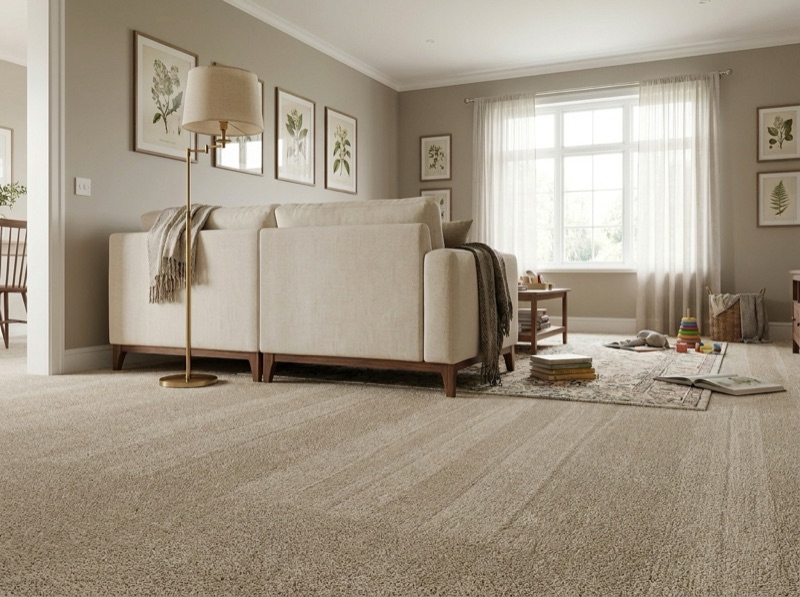
The hard-surface fashion has pushed carpet out of living rooms broadly, and for the main public spaces that instinct is usually right. But there are living rooms whose real job is comfort: a family room where people sit on the floor, a media room where sound absorption changes the experience, a formal sitting room walked twice a week. In those rooms carpet remains a legitimate first-class answer rather than a throwback, and the quiet it buys is something no hard surface offers at any grade.
The split answer works too: hard surface through the traffic path and main space, with a generously sized rug defining the seating area. That recovers warmth and sound absorption where people actually sit while keeping permanence underneath, and it lets the room change character later without changing the floor.
Direction, light and the long view
Living rooms have the longest sightlines in the house, which is where plank direction and format earn attention. Boards running toward the main window carry the eye and stretch the room; boards running across a narrow room widen it. Large windows also mean raking light, which is the harshest inspector a floor ever faces: it exaggerates texture, shows seams in carpet, and finds any unevenness in a floating floor. A floor that will live in strong window light is worth choosing from full size pieces laid in that light, not from a chip under showroom fixtures.
Color plays the long game here too. The living room floor is the one you will restyle around most often, as furniture and walls change over the years. Mid tones with moderate grain activity hide daily life and outlast trends; extremes of pale and dark are commitments that everything else in the room has to keep honouring.
The traffic lane is the real test
Whatever you choose, judge it against the corridor it will contain, because the traffic lane is where living room floors actually age. Ask how the material handles concentrated wear in one path: hardwood refinishes it away, laminate resists it longest, vinyl's answer depends on wear layer grade, and carpet needs a fiber chosen for recovery if the path crosses it. This single question sorts the finalists faster than any general comparison, and it is exactly what the free in-home measure maps: where the paths run, what the transitions meet, and what the subfloor needs before anything goes down.
Fireplaces, pianos and the heavy things
Living rooms hold the heaviest single objects in most houses, and they deserve a sentence each. A hearth needs the floor to meet it cleanly, and how that junction is trimmed decides whether the fireplace looks built-in or pasted-on; it is a detail we plan at the measure, not on the day. A piano or a loaded bookcase is a point load that soft floors dent and floating floors deserve load-spreading protection under. And furniture that will never move still matters: the floor under it ages differently from the floor around it, which argues for materials that age evenly and for rearranging occasionally if fade is in play. None of this changes the material choice often, but each has rescued a project from a small permanent annoyance.
Choosing it properly
Bring a cabinet door if the room opens to the kitchen, a photo of the room with its furniture, and a cushion or throw if the palette is staying. We will set full size pieces beside them at 15570 Veterans Memorial Pkwy in Wentzville, then send the finalists home with you to stand in that window light for a day. The dining room guide covers the room this one usually flows into, and the rooms hub holds the rest of the house. The work itself runs on our installation process.
“Floors are PERFECT! ... Only mistake we made was not replacing the old floors sooner! ... You can trust them to guide you but let you make the decision. ...”
Questions about the most public floor
Straight answers on resale, plank direction, open-plan rules and the traffic lane that actually ages the room.
636-332-0654In a defined living room, hardwood or engineered hardwood carry the room's impression best, with laminate as the tough, underrated contender. If the room is open to the kitchen, the kitchen's water rules usually push the whole run toward luxury vinyl plank.
More than any other single floor, because it is the room buyers photograph and tour first. Hard surface in good condition is what current buyers expect to see there, and condition matters more than which hard surface it is.
In the main public spaces, hard surface is the current default. In family rooms, media rooms and formal sitting rooms whose real job is comfort, carpet remains a legitimate first-class choice, and the quiet it buys has no hard-surface equivalent.
Usually toward the main window or along the longest sightline, which carries the eye and stretches the room. In a narrow room, running boards across the width visually widens it. It is decided at the measure, not on install day.
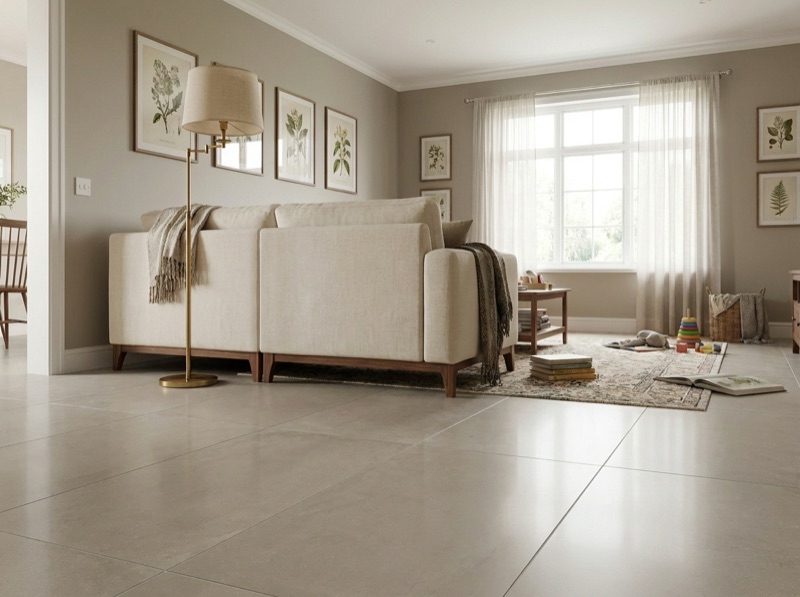
Choose for the harder-working room, which is the kitchen, and let the living room inherit the decision. That usually means luxury vinyl plank or a wood-look tile, and it is the honest price of open-plan continuity.
The traffic lane. Concentrated wear along one path ages the room while the rest still looks new. Materials that refinish, resist or recover in that lane are the ones that last here, and it is the first thing we map at the measure.
If they flow together with no break, yes, one material almost always looks better. If a doorway or a level change separates them, they can differ deliberately, and the transition is worth designing rather than defaulting.
They need planning more than special product. Point loads dent soft floors and deserve load spreaders on floating ones, and the floor under never-moved furniture ages differently from the walked floor around it. It all gets planned at the measure.
Mid-tone wood or wood-look planks in a matte finish, run toward the main window. They read warm without glare, and they are what buyers currently expect to see in the room the photos lead with.
Price a living room floor
Tell us about the room and what it opens onto. We map the traffic paths, measure in your home, and quote from real numbers.
Free estimate
636-332-0654