 Flooring Correct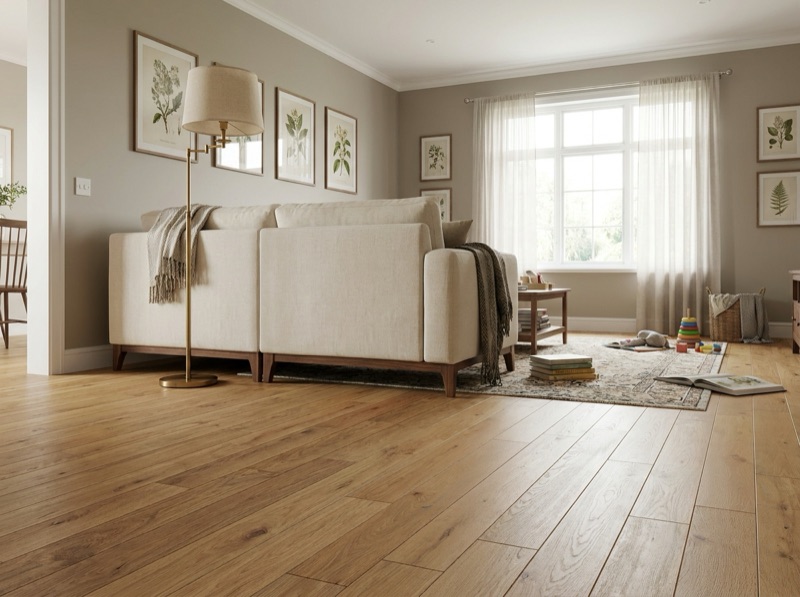
Do cats scratch flooring?
A cat's claws are retractable, so normal walking rarely marks a floor. Damage concentrates where a cat extends its claws on purpose: gripping for a fast pivot on a smooth surface, climbing a stair edge or a carpet transition, or working a favorite spot the way it would a scratching post. Construction and finish decide how visible that becomes, not whether it happens.
The claw is sheathed until it isn't
A cat's claws are not built like a dog's nails. They retract into a protective sheath and stay tucked away except when the cat chooses to use them, for climbing, gripping or scratching on purpose. Walking across a room is not one of those moments. A cat crossing carpet or a hard floor at a normal pace is moving on padded toes with the claw pulled in, which is the main reason cats do not put the kind of everyday wear on a floor that a dog's nails can produce simply by walking. The real question is not whether a cat's claws ever touch the floor. It is when a cat chooses to extend them, and what happens to be underneath in that exact spot.
Three moments a claw actually comes out
- A hard takeoff or landing. A cat sprinting from a dead stop, or landing from a jump onto a smooth floor, extends its claws for traction in the instant before or after the leap. What looks like a scratch afterward is closer to a skid mark than a deliberate mark.
- A climbing edge. A stair nosing, the corner of a rug, the leading edge of a carpet transition strip: anywhere a cat pulls itself up or over, a claw goes into whatever offers grip. Stairs already carry the most consequence of any surface in the house, and a cat's climbing habit is one more reason the material there matters.
- A deliberate scratch. Cats scratch on purpose to mark territory and condition their claws, the same instinct a scratching post is built to satisfy. A carpet edge, a door frame or a stair riser can become the target if nothing better is offered nearby.
What that means for carpet against a hard floor
On carpet, the risk is not the walking. It is whether the surface gives a claw anything to hook, which is why pile construction gets decided ahead of color in a household with an animal. Loop against cut pile, the barrier and the fiber are all settled on our best carpet for pets page. What is cat-specific here is narrower. A cat concentrates its clawing instead of covering a room, so that construction question matters most at a stair edge, a rug corner, or the patch under a favorite jump, and barely at all across the open middle of the floor. On a hard floor the same job falls to the finish and the wear layer instead of the fiber, and the vinyl page runs through those tiers in order.
The failure mode is one spot, not the room
A cat does not spread wear evenly across a floor the way foot traffic does. It concentrates at a handful of spots: the top of a favorite jump, one stair tread, the corner of a rug that gets pounced from on the way past. That is genuinely useful, because it means the decision that matters most is not what covers the whole room, but what sits under the two or three places the cat actually uses. Tell us where the jumping and climbing happens in your house and we can steer samples at that spot specifically, rather than the room in general.
Test a sample the way a claw would
You can get a rough read on any sample without waiting to find out the hard way. Drag a fingernail or the edge of a coin across a carpet sample at an angle, the way a claw catches rather than presses straight down, and watch whether the tuft holds or a loop starts to pull. Our carpet page lists what is on the rack if you want to know what you are holding first. On a hard surface sample, the same dragged edge shows whether a fine mark stays visible or disappears into the grain and texture. Bring the sample home from the Wentzville showroom and run the same test where your cat actually spends its day, under your own light, before you commit a whole room to it.
More on cats and floor scratching
Where the risk concentrates, whether a rug at the landing spot is worth it, and why a duller finish hides more.
636-332-0654No, and that is the useful part. A cat concentrates its clawing at a few specific spots, a jump landing, a stair tread, a favorite corner, rather than spreading wear across a room the way foot traffic does. A dense, resilient cut pile at those spots holds up far better than the same fiber does against constant walking traffic.
It genuinely helps, as long as it is the right rug and it stays put. A rug at the exact landing spot gives the claws something to grip, so they stop reaching for the floor underneath, and it takes the skid instead of the plank. Secure it, and pick a cut pile or a flat weave for the same reason you would pick one for the room.
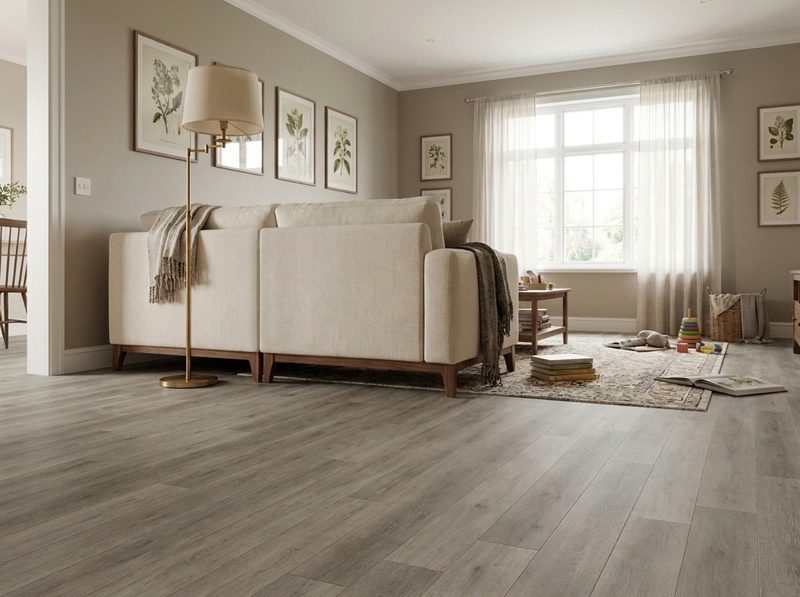
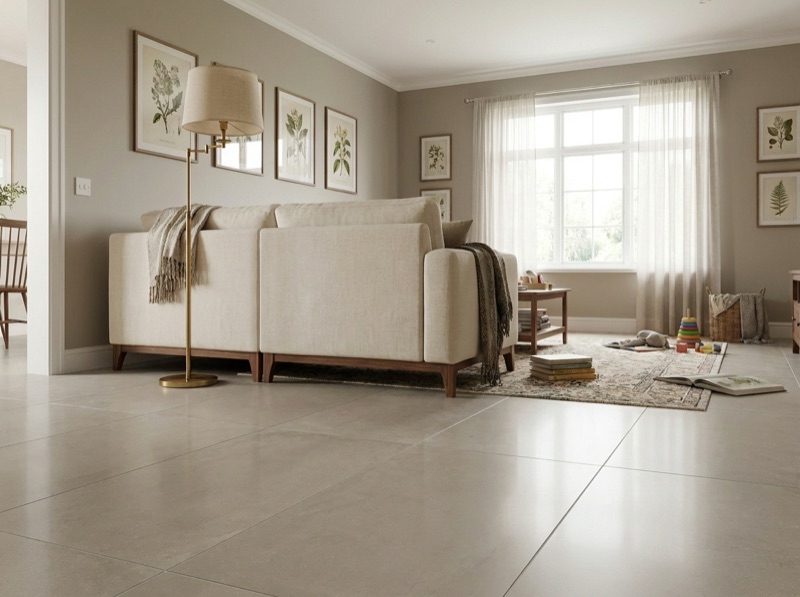
Yes, genuinely. A high gloss surface reflects light evenly, so any fine scratch interrupts that reflection and stands out. A matte or textured finish scatters light already, which is why a mark blends into the surface instead of standing apart from it.
Price the spot your cat actually uses
Tell us where the jumping and climbing happens, a stair tread, a window ledge, a rug corner, and we will pull samples suited to that spot along with the free in-home measure.
Free estimate
636-332-0654