 Flooring Correct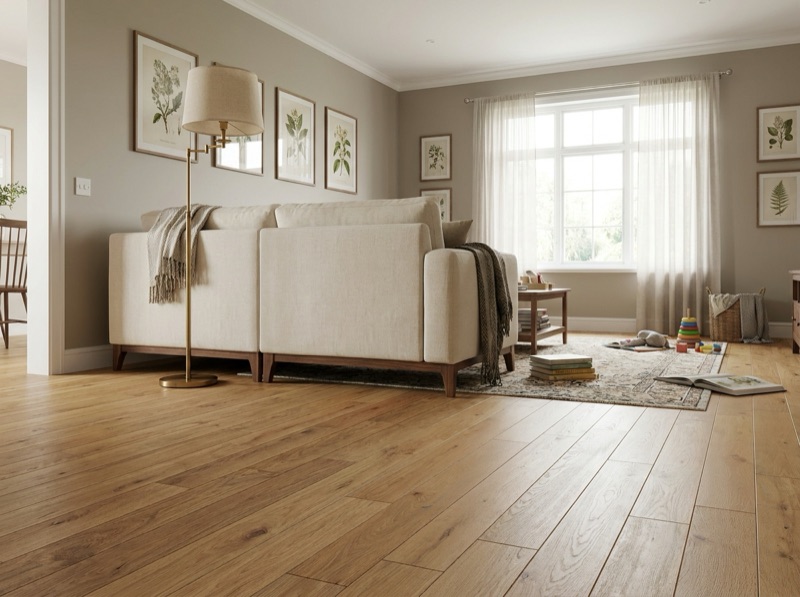

How does flooring affect home lighting?
Mostly through reflectance and sheen, not color alone. A pale, satin-finish floor bounces more ambient light back into a room than a dark, matte one does, which matters most in rooms with little natural light. High gloss reflects the most light but also the most glare. The right call depends on how dark the room already runs and what kind of light it gets.
What you are actually trying to decide
Almost nobody asking this is curious about optics for its own sake. They have a room that feels dimmer than they would like, or a bright room they do not want to lose, and they are trying to work out whether the floor can actually change that. It can, but not through color alone, and there are really three different ways to use a floor to answer for a room's light. Picking the wrong one wastes the leverage the floor actually has.
Option one: lean lighter to bounce more light back
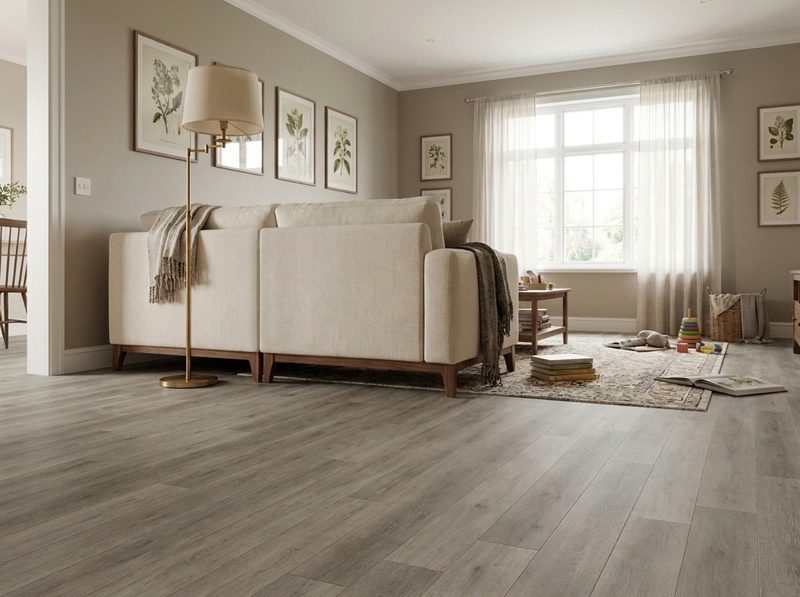
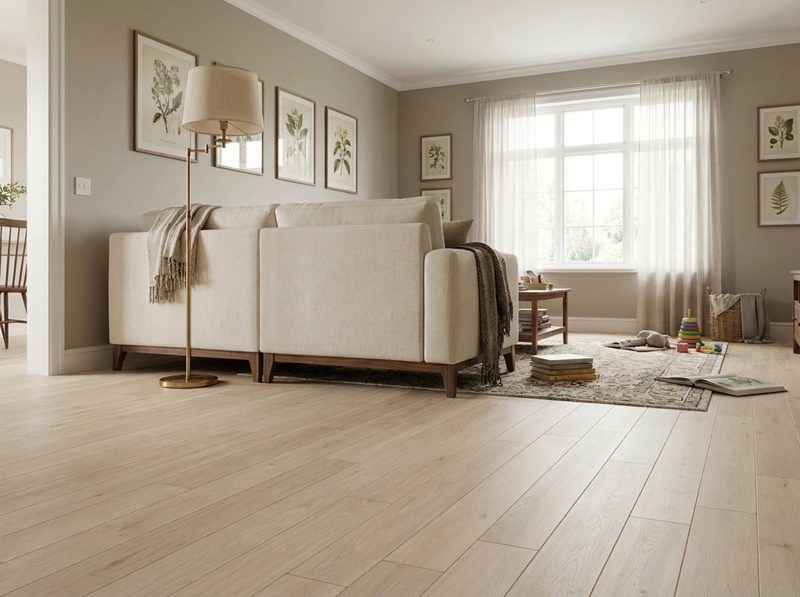
A pale floor, whether that is a light oak, a pale gray or a bleached vinyl plank, reflects more of the light that hits it back up into the room instead of absorbing it. In a room that runs dim, that reflected light adds up over an entire floor area in a way a single lamp cannot match. It is the most direct lever available and the one most people reach for first, and it genuinely works, though it is a smaller effect than most people expect from paint or window treatments doing the same job.
Option two: keep the tone, change the sheen
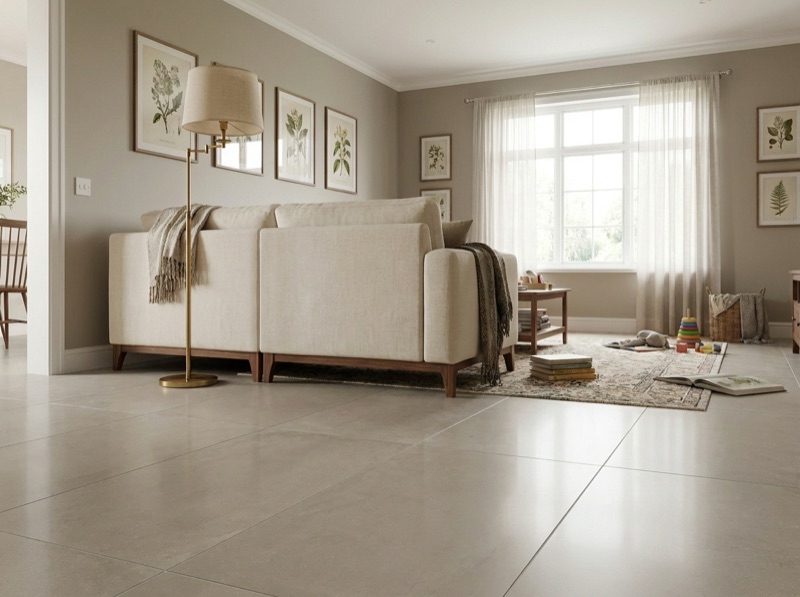
Sheen is the part of this question people skip past, and it deserves more weight than it gets. A high gloss surface throws light back in a hard, direct reflection, which can genuinely brighten a room, but it also throws back glare off overhead fixtures and window light at exactly the angle you are standing, which reads as harsh rather than bright. Satin scatters that same light into a softer, diffuse bounce that lifts the room without the hot spot. A darker floor in a satin finish can put more usable light back into a room than the same color in a flat matte, without changing the color at all.
Option three: let the room's own light sources do the work
Sometimes the honest answer is that the floor is not the lever to pull. A room with strong, consistent daylight, or one already carrying warm lamp light in the evening, may not need a color change at all, and forcing a pale floor into a room that already reads bright is a wasted trade if you actually preferred the darker tone. This is the option people talk themselves out of the fastest, usually because they assume darker automatically means dimmer, which is not the same claim as darker reflecting less.
What actually picks between the three
A north-facing room with little direct sun, or an interior room with few windows, gets the most benefit from leaning lighter, because there is less natural light to work with in the first place. A room lit mostly by warm bulbs at night, rather than daylight, changes how any floor color reads regardless of value, since warm artificial light shifts everything toward amber. And a glare-sensitive space such as a home office with a screen in it is exactly where high gloss backfires, because the same reflection that brightens the room also bounces straight off a monitor. Match the option to the room's actual light pattern rather than a general preference for pale or dark.
Test it under your own light, not ours
None of this settles cleanly under showroom fixtures, which are chosen to show every sample evenly rather than to mimic your living room at seven in the evening. Take the sample home, set it on the actual floor, and look at it with the overheads on, with just a lamp lit, and again in daylight, because sheen and reflectance behave differently in each. Give it more than one glance in passing. A sample propped against a wall for a minute tells you less than the same sample left flat on the floor for an evening, where you actually walk past it and notice how it catches light at an angle rather than head on. If cabinets are part of the room, that comparison deserves its own look, and a bedroom carries a slightly different version of this same test. Bring the sample to the free in-home measure and we will talk through it against your actual rooms. Call 636-332-0654.
More on flooring and light
Whether dark always reads dim, how gloss compares to satin, and why the same sample can look different in two rooms of the same house.
636-332-0654Not necessarily. A room with strong natural light keeps most of its brightness regardless of floor color, because the light source is doing the work rather than the floor bouncing it around. Darker floors read as dimmer mainly in rooms that were already short on light to begin with.
It reflects the most light in a direct sense, but that same hard reflection creates glare off windows and overhead fixtures, which can make a room feel harsh rather than genuinely brighter. A satin finish usually delivers a more comfortable, evenly lit result for daily living.
Yes, often noticeably so. A sample that reads warm and bright in a south-facing living room can read cooler and flatter in a north-facing bedroom down the hall, because the two rooms are receiving genuinely different light all day.
Bring your sample and let's look at it together
Set it on your actual floor and we will talk through how sheen and tone will read under your own daylight and your own lamps, not a showroom fixture.
Free estimate
636-332-0654