 Flooring Correct
Home Office Flooring:
Comfort for
the Long Haul
A home office does not take on water, grit, or a parade of foot traffic. What it takes on is hours of sitting in one chair, a wheel pivoting over the same few feet all day, and a closed door that is supposed to keep a video call quiet.
A home office does not have a laundry room's water problem or an entryway's grit problem. Its defining fact is a body sitting still in it for most of a workday and a chair wheel spinning over the same patch of floor again and again. Comfort and quiet decide this room, not durability. Call 636-332-0654.
Comfort is the real design question here
This room reads a lot closer to a bedroom or a living room than it does to a laundry room or an entryway. There is no hose to fail, no snow being tracked in, and no daily abuse to plan around. What replaces all of that is simple: how does the floor feel under a chair, under bare or socked feet, hour after hour, with the door shut and the rest of the house going on without you.
The chair mat reality on hardwood and LVP
A rolling desk chair is harder on a floor than most people expect. Roll the same casters over the same patch of hardwood or luxury vinyl plank for months and that specific spot shows wear well before the rest of the room does. A chair mat is not optional under a rolling chair on either material. It is the difference between a floor that ages evenly and one with a worn patch sitting right where anyone glances first when they walk in.
Carpet under a rolling chair needs the right pad, or a hard pad on top
Carpet has the opposite problem. Without the right pad underneath, or a hard-surface chair pad placed on top of the carpet, repeated wheel traffic in one spot crushes the pile faster than normal foot traffic ever would. It is the same concentrated wear problem as hardwood or LVP, just showing up differently: a chair mat protects a hard surface from scuffing, while a hard chair pad on carpet protects the pile from being flattened and matted in one small circle under the desk.
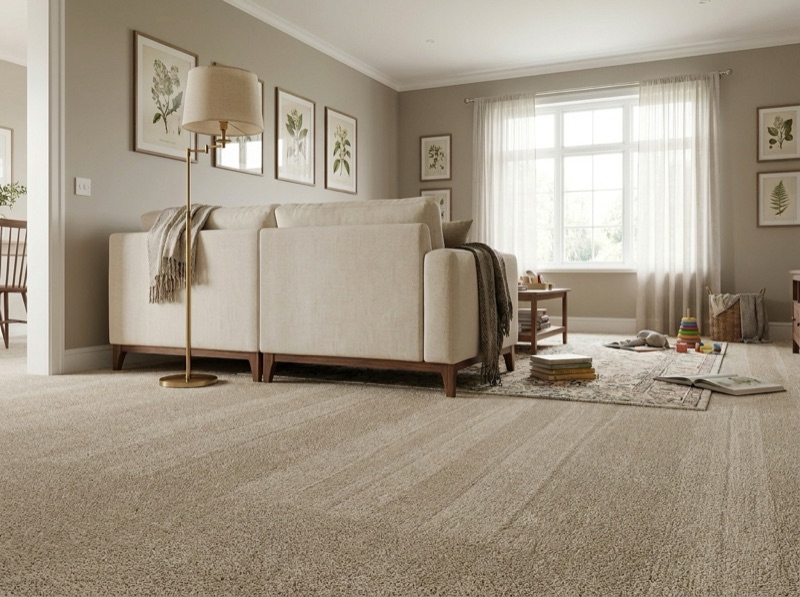
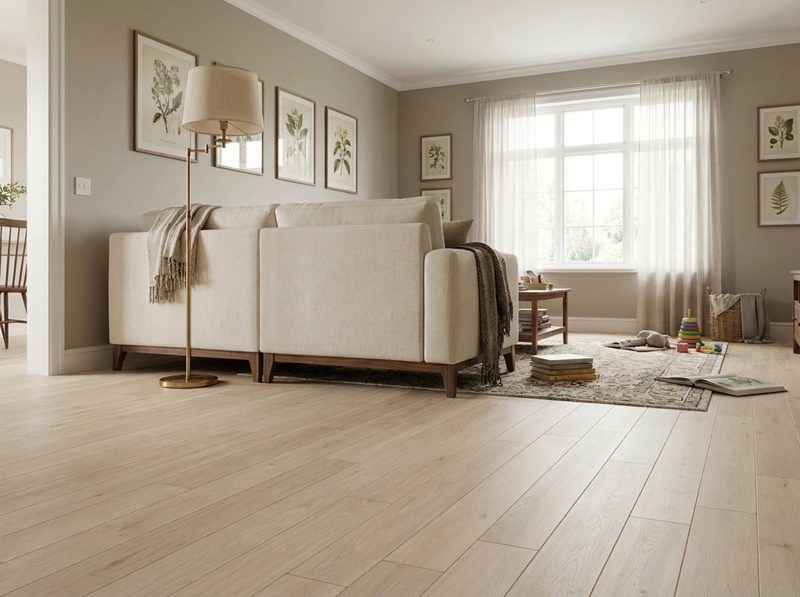
Comparing carpet and LVP for a desk chair
Because both materials need a protective layer under a rolling chair for different reasons, it is worth comparing them directly rather than assuming one is maintenance-free and the other is not. Our carpet versus luxury vinyl plank comparison covers the tradeoffs in more depth, and a home office is one of the clearer examples of a room where the right chair accessory matters as much as the flooring choice itself.
Quiet matters more here than in most rooms
A home office asks something most rooms do not: real quiet, on demand, for a video call or for concentration behind a closed door. Carpet naturally absorbs sound in a way a hard surface does not, which is part of why it remains a strong choice for anyone doing calls or focused work most of the day. A hard-surface office can get there too, usually with a rug under the desk area and, if the office sits above a living space, attention to underlayment so footsteps and the rolling of a chair are not traveling downstairs during someone else's afternoon.
Warmth and comfort for hours, not minutes
A bedroom floor mostly matters for the few minutes spent getting in and out of bed. A home office floor is under someone for the length of a workday, whether feet are propped under the desk or resting flat on the floor between calls. That longer exposure is exactly why comfort carries more weight in this room than it does almost anywhere else in the house that is not a bedroom, and it is worth choosing with that in mind rather than defaulting to whatever is already in an adjoining room.
Furniture and equipment are part of the plan too
A home office tends to carry heavier stationary furniture than most rooms its size: a filing cabinet, a bookshelf loaded with binders, sometimes a printer stand or a second monitor arm bolted to a desk. None of that moves often, and stationary weight in one spot behaves differently than the rolling wear a chair causes. A dense bookshelf leg can leave a faint indentation in carpet pile or in a softer luxury vinyl plank over time, the same way any heavy furniture does in any room. Felt pads or small furniture cups under the stationary pieces solve this easily, and it is worth doing on day one rather than after the first indentation shows up.
A standing desk changes the calculation slightly, since it shifts weight and sometimes adds an anti-fatigue mat of its own, which changes what the chair mat underneath needs to cover. None of this changes the underlying material recommendation, but it is exactly the kind of detail worth mentioning up front rather than discovering after the furniture is already arranged.
Where the office sits in the house changes the decision
A home office converted from a spare bedroom often keeps its carpet, since the comfort logic that made carpet right for a bedroom carries straight over to a desk chair. An office carved out of a dining room or a den more often goes hard surface, matching whatever runs through the rest of that floor. Neither path is automatically correct. It depends on how the room was used before it became an office and what borders it now. A converted basement office raises the slab question on top of everything else, since concrete underneath changes which materials are even on the table before comfort enters the conversation at all.
What we check during a free estimate for a home office
During the free in-home measure, we look at where the desk and chair will sit, whether the office is above a living space that needs sound attention, and what the room bordered or used to be before it became an office. Our full installation process covers underlayment choices specifically, and the rest of the house is covered in our rooms guide. Bring a photo of the room and note where the desk and any bookshelves will land, and we can talk through chair mat sizing before the measure even happens.
“We are so pleased with our new floors! ... During installation, everyone was so professional, kind, and respectful. We will continue to use them for future flooring needs!”
Questions about home office flooring
Straight answers on chair mats, quiet, and why comfort leads this decision rather than durability.
636-332-0654It depends more on comfort and quiet than durability. Carpet remains a strong, quiet choice under a desk chair. Hardwood and luxury vinyl plank both work well and give a more polished, professional look on video calls.
Yes, if the chair rolls. A rolling chair wears a visible track into hardwood or luxury vinyl plank faster than most people expect, and a chair mat is the simplest way to prevent it.
The right pad underneath, or a hard-surface chair pad placed on top, keeps repeated wheel traffic from crushing and matting the pile in one small spot under the desk.
More than people expect. Carpet absorbs sound naturally, which helps on calls and with concentration behind a closed door. A hard surface can get there too, usually with a rug and, upstairs, attention to underlayment.
Often, yes. An office converted from a bedroom usually keeps its carpet, since the same comfort logic applies to a desk chair. An office carved from a dining room or den more often matches the hard surface running through that space.
Where the desk and chair will sit, whether the office is above a living space that needs sound attention, and what the room was used for before it became an office.
Price home office flooring
Tell us where the desk sits and whether the room is above a living space. We measure in person and quote from what the room actually needs.
Free estimate
636-332-0654