 Flooring Correct
How soon can pets walk on new floors?
It depends on material more than day count. A stretched-in carpet or click-lock floor reaches full strength once the crew finishes, close to a person walking on it. Site-finished hardwood and fresh tile grout are genuinely still curing, and a claw or an accident is a different risk than a bare foot. Ask what the product needs before normal traffic; that lives on its spec sheet, not a general rule.
What you gain by letting them back in fast
A dog or cat does not understand why its house has been rearranged, and a crate for a full day or a room shut off with a baby gate is genuinely hard on an animal that has no context for it. Getting a pet back to its normal routine as soon as it is reasonable to do so matters more with animals than most people expect going in, and it is a real point in favor of moving fast rather than being overly cautious for no reason.
What you give up if you let them back in too soon
A pet is not the same load on a floor that a person's foot is. Claws are a point load that moves unpredictably, in a way a shoe or a bare foot does not, and that difference is exactly where the risk lives. Claws dragged across a hardwood finish that has not fully hardened can leave marks a footprint never would. An accident on tile grout that has not set can etch or discolor it before it gets the chance to cure properly. A claw that snags a fresh carpet seam or an edge that has not settled under furniture yet can pull a thread that keeps unraveling once it starts. And a skidding stop on any surface where an adhesive is still working underneath it, a glue-down section or a fresh caulk bead at a doorway transition, can shift something before it has actually bonded.
Where each side actually wins
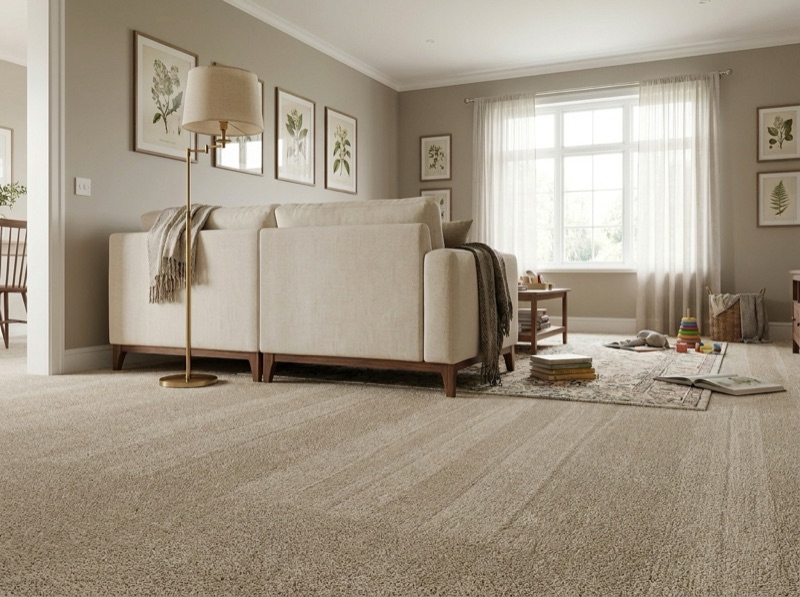
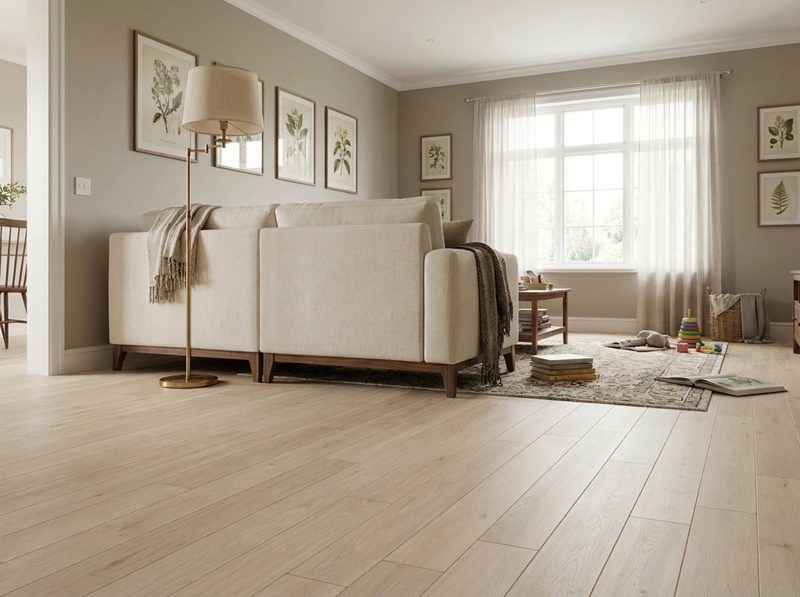
A stretched-in carpet is at full mechanical strength the moment the crew finishes and the room is cleaned up, the same way it is for a person walking on it, so the pet-specific risk there mostly comes down to claws catching a fresh seam rather than anything structural. A site-finished or freshly coated hardwood is the opposite case. The surface is genuinely still hardening after the crew leaves, and that is where a pet deserves the most caution of any material in the house, since claws are exactly the kind of contact a soft finish cannot yet resist. On tile, the grout is the vulnerable part rather than the tile itself, and an animal's unpredictable movement across a bathroom or mudroom floor right after grouting puts that joint at real risk. Click-lock luxury vinyl and laminate sit closer to carpet, mechanically finished once installed, with the one exception being a glued transition strip or a fresh caulk line that has not set yet.
The mistake this is actually about
The real mistake is not a specific number of hours. It is treating a pet like a considerate adult who will avoid the wet spot, walk at a normal pace and leave a fresh seam alone. Animals do not read painter's tape, do not know a nosing was just fitted, and behave in a brand new room exactly the way they behaved in the old one, at full speed and full curiosity. That mismatch between what a floor is ready for and what an animal actually does on it is what causes most of the marks people trace back to a new install, far more often than the material itself failing to hold up.
What actually protects both
Trim nails before reintroducing a dog or cat to a freshly finished hard surface, since a trimmed claw is a rounder, gentler point of contact than one left long. Ask what the specific product installed needs before normal traffic resumes, because that timing lives on the manufacturer's own instructions rather than a rule that applies to every finish the same way, and it is a fair question to raise at the in-home measure or when you call 636-332-0654. A rug or runner set down along a high-traffic pet path during that window protects the material underneath without asking the animal to change its habits. And if an accident does happen on a floor that is still curing, tell whoever installed it right away rather than waiting to see, since catching a problem early is always easier to sort out than waiting on it.
What else people ask about pets and a new floor
Material choice, crating during the job, and what to do about a mark that already happened.
636-332-0654Some hold up to claws and accidents better than others by construction rather than by how new the floor is. Cut pile carpet resists snagging better than a loop construction, and a moisture barrier backing keeps an accident from reaching the cushion underneath. That is a separate, longer-term question from how soon a pet can walk on a brand new install, and it is worth raising when you are choosing the material in the first place.
During the actual work, yes, mainly for the animal's own safety around tools, open doors and material being carried through the house. Afterward it depends on the material, and a site-finished hardwood or fresh tile grout genuinely calls for more caution than a stretched-in carpet or a click-lock floor that is finished the moment the crew is.
Say so as soon as you notice it rather than waiting. Whether it is repairable and how depends entirely on the material and how deep the mark goes, and that is a conversation worth having with whoever installed the floor while the details, and the leftover material if any was set aside, are still on hand. Call 636-332-0654 and describe what you are seeing.
Tell us about the household before we recommend anything
Dogs, cats, claws, accidents. Tell us who lives on the floor and we pull samples built for it, and cover what the finish needs once it's down.
Free estimate
636-332-0654