 Flooring Correct
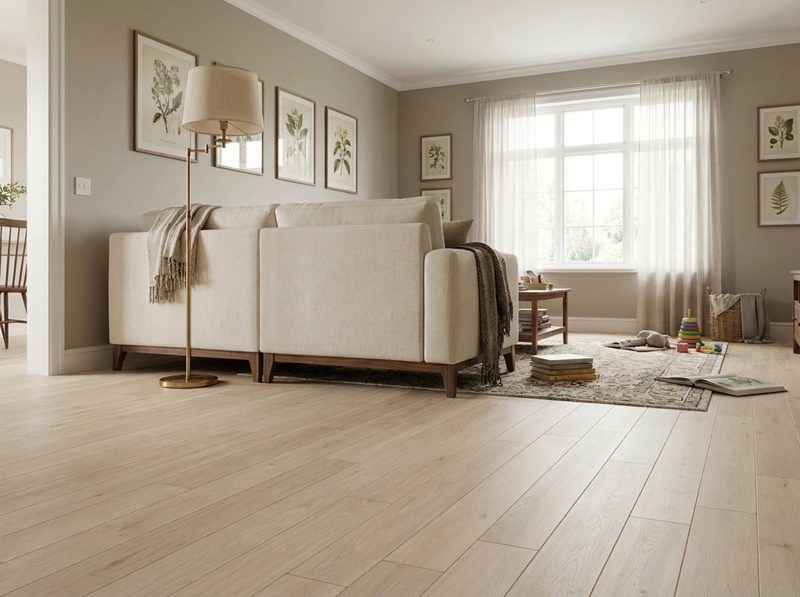
Should floor tile be matte or glossy?
The common belief is that glossy tile is dangerous and matte tile is safe, but shine and grip are two separate properties. A tile can be smooth and matte, or textured and glossy. What actually differs between the two finishes day to day is how each one shows scratches, water spots and footprints, not how safe it is.
The belief: shiny tile is a hazard
The idea shows up constantly: pick matte if you want a safe floor, avoid glossy because it is slippery. It is an easy belief to reach for, because a glossy showroom floor does look sleek and hard, and a highly polished stone in an old hotel lobby is probably the memory doing the talking. The trouble is that shine and slip resistance are not the same measurement, and treating them as one thing leads people to the wrong floor for the wrong reason.
Why the belief exists
Gloss and grip do tend to travel together in one specific case: a tile polished to a mirror finish is usually also flattened smooth in the process, and a perfectly flat, smooth surface is genuinely less grippy when wet. That correlation is real often enough to feel like a rule. It just is not the same as saying every glossy tile is smooth or every matte tile is textured, and plenty of tile lines break that pattern on purpose.
What actually governs grip
What determines wet grip is the surface texture at the tile's face, not the sheen level. A tile can be given a structured, textured surface and still be finished with a glossy topcoat, and a tile can be perfectly flat and still be matte. The DCOF number on the tag is what measures actual wet grip, and it is worth checking that number directly rather than judging a tile by how much it reflects the showroom lights. Our slip resistance page goes further into what physically creates that grip.
What matte and glossy actually trade against each other
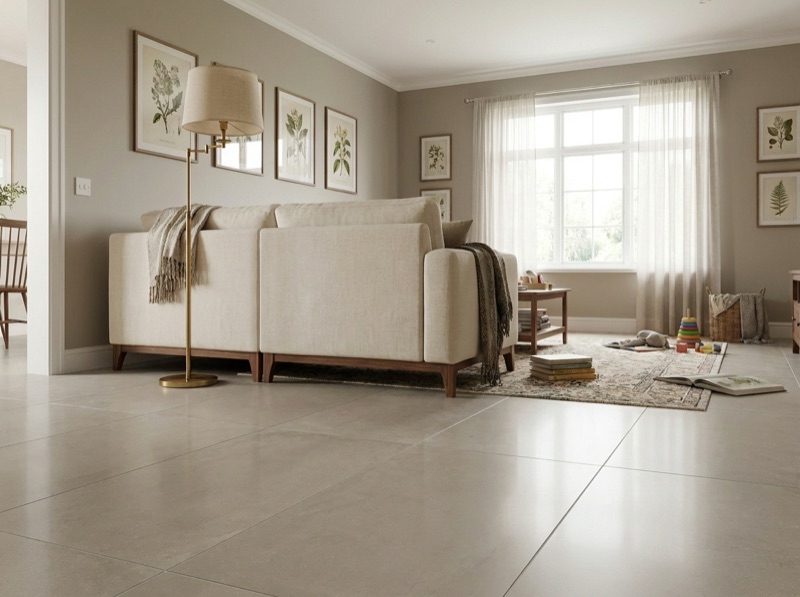
Once safety is off the table as the deciding factor, the honest differences are about upkeep and how the room looks lived in. Glossy tile reflects more light, which can make a small room feel brighter, and it reads as more formal. It also shows scratches, hard water spots and dust more readily, because a smooth reflective surface has nothing to hide a mark behind. Matte tile absorbs more light rather than bouncing it, reads as calmer and more contemporary in a lot of homes, and hides footprints, light scuffs and water spots far better simply because there is no shine for them to interrupt.
There is also a middle ground worth knowing about. Satin and semi-polished finishes sit between full matte and full gloss, giving back some of the reflected light a matte tile gives up without the hardest-to-hide scratch pattern of a true high gloss. Manufacturers describe these finishes with their own names, and the honest way to compare them is to stand a matte, a satin and a glossy sample of the same tile line side by side under the same light rather than trust a photo of any one of them.
What that means for a real room
A glossy tile can be a genuinely good floor choice, it simply is not automatically the riskier one, and a matte tile is not automatically the safer one either. The finish decision is really about how much reflected light and formality you want in the room, balanced against how much you want a floor that hides everyday marks between cleanings. The safety question gets answered separately, by the tile's own grip rating rather than by its shine.
Pick the finish for the room, not for the safety story
Because shine is not grip, the safety question does not actually get answered on this page. The slip resistance page settles that one, texture by texture, and it is the one to read if the floor is going somewhere that gets wet. What is left here is the part you live with every day: how much light you want bounced back into the room, how formal or how calm you want the floor to read, and whether you would rather see every water spot or none of them. Those answers change from a north-facing bathroom to a kitchen with a wall of windows, which is why the finish is worth settling against the actual room. Bring it to the free in-home measure and we will match the finish to the light the room really gets rather than to the light over a showroom rack. Call 636-332-0654.
More about tile finish
Slip resistance, scratch visibility and which finish actually shows dirt faster.
636-332-0654No. Slip resistance depends on the tile's surface texture, not on how much it shines. A textured tile can be glossy and still grip well, and a perfectly flat matte tile can be just as slick as a polished one. The number that actually settles it is the DCOF rating printed on the tile's spec sheet.
It is not that matte tile resists scratches better, it is that matte hides them better. A scratch on a reflective glossy surface catches the light and stands out, while the same mark on a matte surface has nothing shiny around it to draw the eye. Both finishes can be scratched by grit and hard debris the same way.
Neither one is inherently harder to clean, but they show dirt differently. Glossy tile shows dust, footprints and water spots more readily because of the reflection, so it can look like it needs cleaning sooner even when it does not. Matte tile hides that same buildup longer, which is convenient, though it does not mean less is actually there.
Match the finish to what the room does
Tell us the room and how much daylight it gets. We will set matte and glossy samples side by side under the same light, and settle the finish against the room itself at the free in-home measure.
Free estimate
636-332-0654