 Flooring Correct
What makes a tile slip resistant?
Slip resistance comes from surface texture, a structured or matte finish that gives water somewhere to go instead of sitting flat under a foot. The trade is real: a grippier surface is harder to keep clean and feels rougher underfoot, while a smoother finish cleans easily and feels better barefoot but grips less when wet.
What you gain: grip when it matters most
A slip resistant tile grips a wet foot because its surface is not perfectly flat. Fine texture, a structured pattern pressed into the face, or a matte finish that breaks up a smooth plane all give water somewhere to sit other than directly under the point of contact. That is the mechanism behind every grippy tile, whatever the marketing on the box calls it. Grip is a safety decision, not a finish preference, and it matters most in exactly the rooms where bare, wet feet are a daily fact.
What you give up: a surface that is harder to live with
The same texture that grips a wet foot also grips everything else. Dirt, soap scum and hard water minerals settle into a textured surface the way they never would on a flat glossy one, and mopping alone does not always lift them back out. A heavily textured tile can feel rough on bare feet even when dry, which is a real complaint in a room people stand in barefoot for any length of time. Grip and easy upkeep pull in opposite directions, and no finish gets both for free.
Where the grip side wins
Bathrooms, showers and any floor that meets a tub or shower directly want texture weighted heavily, since the floor gets walked on by wet bare feet as a matter of routine rather than by accident. Entries and mudrooms are the other clear case: melting snow off a boot, a wet umbrella, a dripping dog, all put water on that floor on an ordinary day. In both rooms, the cleaning tradeoff is worth accepting, because the alternative is a floor that photographs well and behaves badly at exactly the moment it matters.
Where the smooth side wins
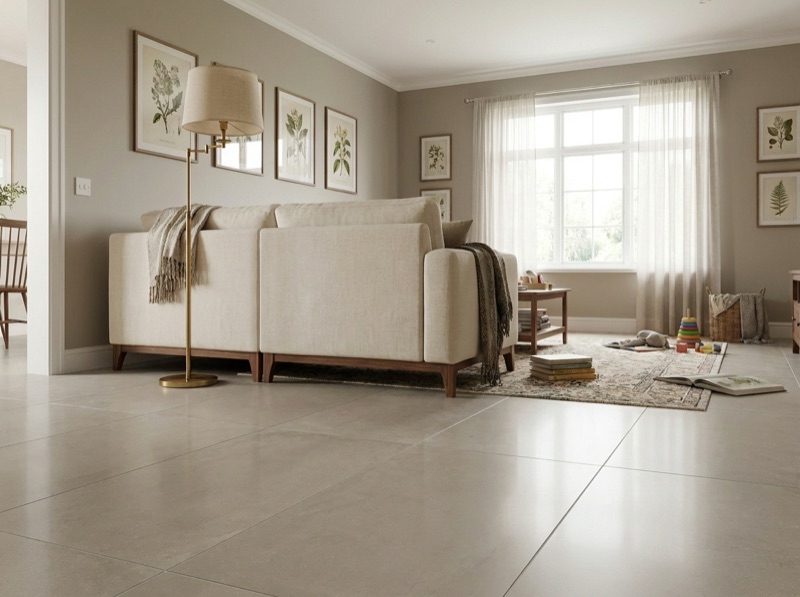
A living room, a dining room or a hallway rarely sees standing water, and in those rooms the cleaning and comfort case for a smoother finish is the stronger one. A formal dining room in particular often leans toward a more reflective, less textured tile precisely because grip when wet is not a real concern there, and the tradeoff runs the other way without cost.
A kitchen sits closer to the middle than either extreme. It gets splashes and the occasional real spill, so grip is worth some weight, but nobody wants to be scrubbing textured grout lines around the stove every week either. A moderate texture, more grip than a formal dining room needs and less upkeep than a shower demands, is usually the honest middle ground for that specific room, which is exactly the kind of call worth making in person rather than off a sample chip.
The honest downside of both choices
A heavily textured, highly grippy tile in a formal living space will read as too rustic for some rooms and will collect grit in its texture the way a smooth tile never does. A very smooth, low texture tile anywhere near water is a genuine hazard, no matter how good it looks in a photo. Neither finish is universally right, and picking one without thinking about the specific room is how a beautiful floor ends up either impossible to keep clean or dangerous when it is wet.
The mistake this is meant to prevent
The mistake is choosing a tile for a wet room based on how it looked under showroom lighting, dry, in good light, with nobody standing on it in socks. The DCOF number is what actually measures wet grip, and 0.42 is the figure a level interior floor that gets wet is expected to clear. Ask for that number by name before a shower or entry tile gets ordered, not after the first wet morning. The free in-home measure is where we match texture to the room's real conditions. Call 636-332-0654.
More about grip and finish
Whether size matters, treating a floor after the fact, and how much harder texture is to clean.
636-332-0654Yes. Smaller pieces mean more grout lines per square foot, and grout is more textured than a glazed face, so a small format genuinely grips better than one large smooth surface. The tile's own surface texture still does more work than the size does, which is why a large tile with a real structured face can out-grip a small tile finished with a very smooth glaze.
To a limited degree. Some anti-slip treatments and coatings exist for tile that has already been set, but results vary by product and by tile type, and none of them substitute for choosing the right surface texture before the floor goes down. It is worth asking the showroom about the specific tile before ordering rather than planning to treat it later.
Generally yes, though how much depends on the depth of the texture. A subtle texture is only a little harder to keep looking clean than a flat glaze, while a heavily structured, deeply grooved surface holds onto dirt and grime noticeably more and needs more frequent attention. The tradeoff scales with how much grip the tile is giving you.
Get the grip right before it is ordered
Tell us which room needs grip and who walks on it wet. We will read the DCOF figure off the spec sheet for any tile you are considering, and match the texture to how the room is actually used at the free in-home measure.
Free estimate
636-332-0654