 Flooring Correct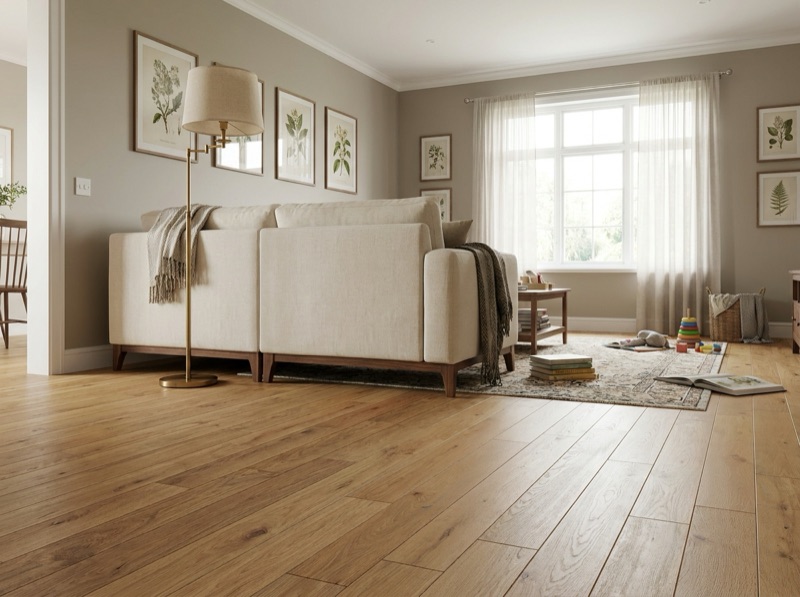
What flooring is best for allergies?
There is no single winner, and the differences between hard surfaces matter more than most people expect. A sealed plank or sheet floor is the easiest to keep genuinely clean. Tile drops behind the moment its grout goes unsealed. Rugs and their pads collect exactly the way carpet does. Match the floor to the routine each one demands, room by room.
Sealed hard surfaces, and what they ask of you
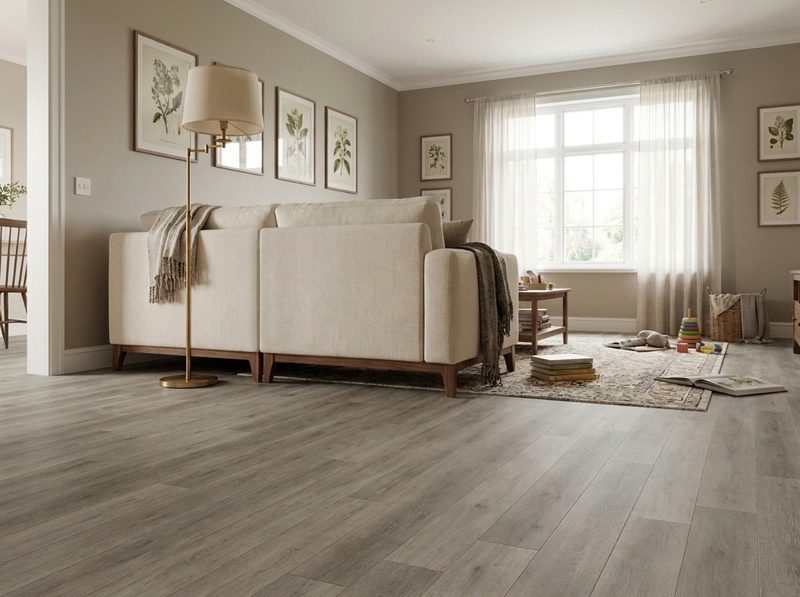
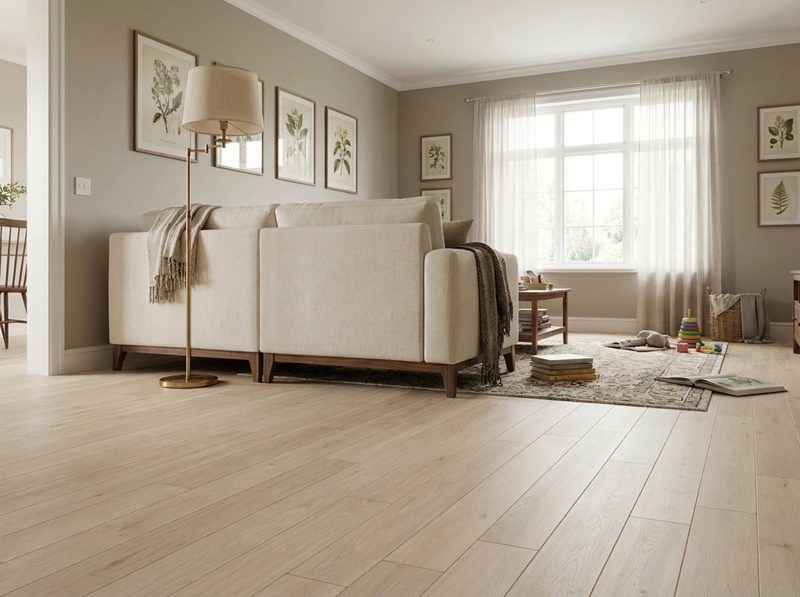
Wood, luxury vinyl, laminate and sheet vinyl behave alike in the one respect that matters here: nothing works down into them, so whatever lands stays reachable. That makes them the easiest floors to get genuinely clean, and the least forgiving of a skipped week, because anything you did not lift is still in the room and still gets moved around by feet and vents. Within that group the seam count is the real difference. Sheet vinyl runs in one continuous piece across most rooms, so there is almost no joint for fine dust to settle into. A plank floor carries a joint every few inches, and while a well-made click floor closes tight, those lines are where a dry mop stops being enough and a vacuum starts to earn its place.
Where tile stops being the automatic answer
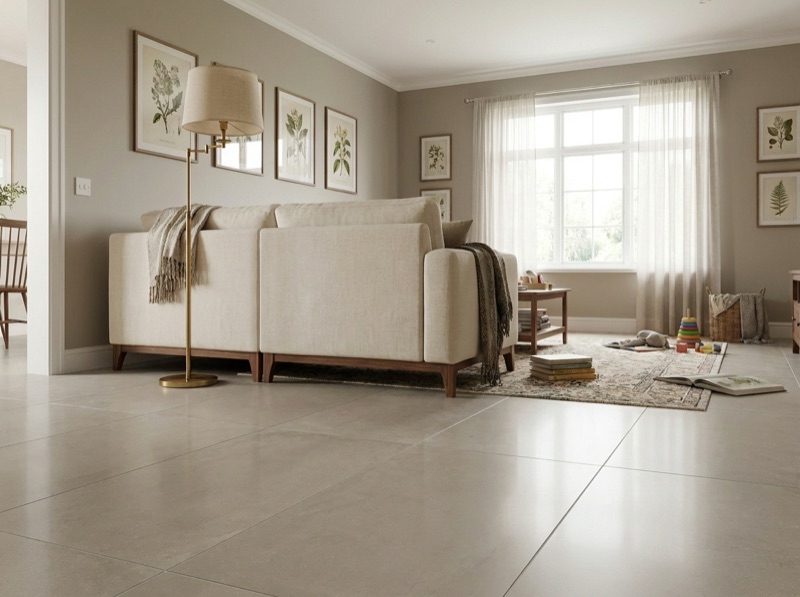
Tile reads as the hard-surface champion until you look at the grout. A grout joint is a narrow, slightly porous channel sitting just below the tile face, and unsealed or long-neglected grout holds fine dust and grime the way a fiber floor does, in a line instead of across a field. Sealed grout wipes clean along with the tile around it. So the honest version of the tile answer is that an allergy household is choosing a sealing habit as much as a material, and a larger format with fewer joints asks less of that habit than a small mosaic does. Our tile page covers grout and sealing in full.
Where a hard floor actually collects
Dust does not spread evenly across a room. It gathers where air slows down: along the baseboard, in the quarter round joint, at the threshold between two materials, and under anything that never moves. On a fiber floor that accumulation is spread through the field and comes out when the room gets vacuumed properly. On a hard floor it concentrates into narrow lines that a wide dry mop rides straight over, which is why a hard-surface room can look spotless and still hand an allergic household a load every time somebody walks through it. If you are choosing a hard surface for allergy reasons, the routine that goes with it includes the trim and the crevice tool, not only the open floor.
A rug is a small carpet with a hard floor's edges
A rug over a hard surface is a patch of fiber floor, and it collects exactly the way carpet does. That is only an improvement if it gets shaken out, washed or cleaned on a schedule. Left alone it becomes the part of the room nobody services. The pad under it is easier still to forget, because nobody lifts a rug to look, and pads and underlayments have a page of their own. A large rug that actually gets handled can be the best of both arrangements. A small one that lives half under a piece of furniture is the worst version, since it holds what lands on it and never gives it back.
The carpet half of the question
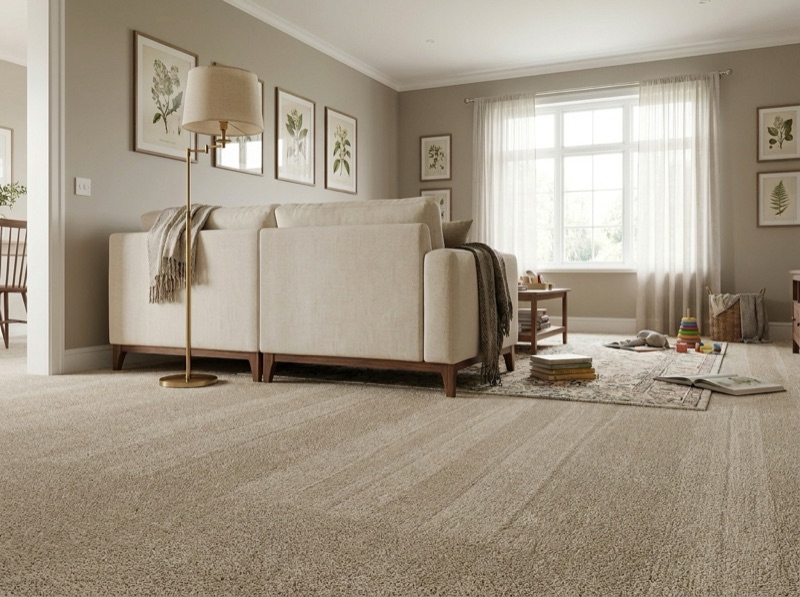
Carpet is usually what people are really asking about, and it has its own answer. Whether carpet is bad for allergies works through the pile, the fiber and the cleaning cadence in full, and that is the page to read before ruling carpet out of a bedroom. For the comparison on this page the point is narrower. A fiber floor does not ask for a lighter routine than a hard one, it asks for a different one, and the construction decides how demanding that routine turns out to be. Those construction choices, fiber, density and the cushion underneath, sit on our carpet page.
A check you can run in the room itself
Take a sample of anything you are considering home and set it on the floor of the room in question for a few days, not on a counter under shop lighting. Look at it in daylight from that room's own window, since dust and film both hide under warm light at a sample rack. Run a light cloth over a hard sample's face, then along a grout line, then over the base of a fiber sample, and compare what comes off each one. It is not a lab result. What it does tell you honestly is which surface in your specific room is collecting the most between cleanings, which is the real question sitting behind the allergy one.
Then look past the sample at the room. Where does air come into it, what in it never gets moved, and which floor already in the house shows the worst of this. Bring those answers, and whatever cleaning the specific product's own documentation calls for, to the free in-home measure, and the material decision usually makes itself.
More on flooring and allergies
Seam count, vacuum filtration, and the threshold strip that collects more than either floor beside it.
636-332-0654In practice it does, though less than the cleaning routine around it. A sheet floor with almost no joints, or a larger format tile with fewer grout lines, gives fine dust fewer narrow places to settle where a dry mop cannot reach. A plank floor with many joints is still easy to keep clean, it just rewards a vacuum over a mop more often.
For a fiber floor, yes, in practical terms. A vacuum that filters what it pulls out rather than pushing fine dust back through its own exhaust changes how much of that trapped material actually leaves the room instead of just moving around it. The filtration habit does more day to day than the fiber underneath it.
It often does. A threshold is a low ridge with a joint on each side of it, sitting exactly where air slows down and where a vacuum head or a mop tends to get lifted over rather than pushed through. It is a small strip, which is why it gets skipped, and an easy one to fix once you know to look at it.
Tell us who breathes that room the most
If allergies are the reason you are comparing floors, tell us which room and who spends the most time in it, an upstairs bedroom, a home office, a nursery. We will pull samples that match the cleaning routine you will actually keep and measure the room in person.
Free estimate
636-332-0654