 Flooring Correct
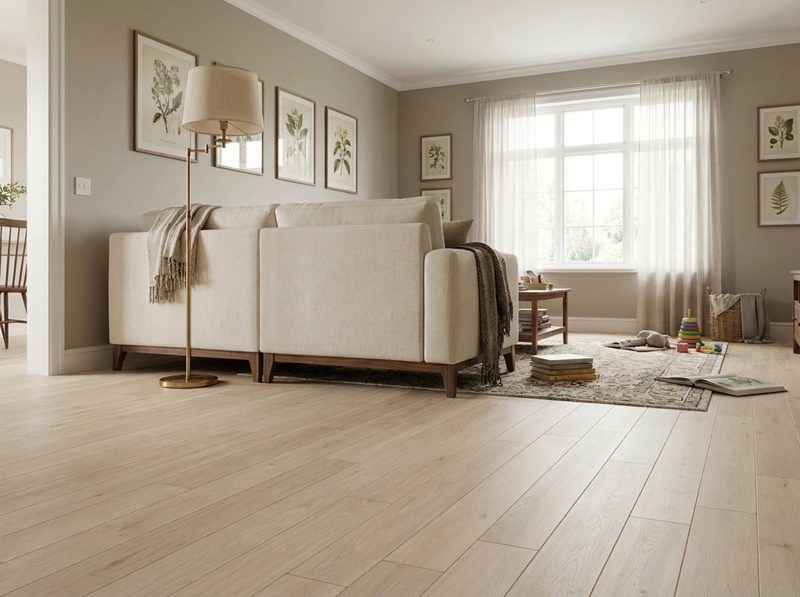
What flooring is quietest for a nursery?
Full carpet quiets sound made in the room and softens footfall best, but it is a fixed choice for the room's life. A hard surface with a dense rug and a real acoustic underlayment targets the specific transmission problem, sound traveling to the room below, while staying durable for later years. Which wins depends on what sits under the nursery.
The decision underneath the paint chips
Most nursery planning spends its energy on color and the crib. The floor decision that actually changes how the room lives is sound, whether a monitor picks up a settling baby clearly, whether noise from the rest of the house leaks in during a nap, and whether a hard floor above a living room turns every middle-of-the-night pace across it into a problem for whoever is downstairs. That is the real decision hiding under the swatches, and it comes down to one choice: carpet through the whole room, or a hard surface paired with a rug and an underlayment doing the acoustic work on purpose.
Two ways to get quiet, and what each is quiet about
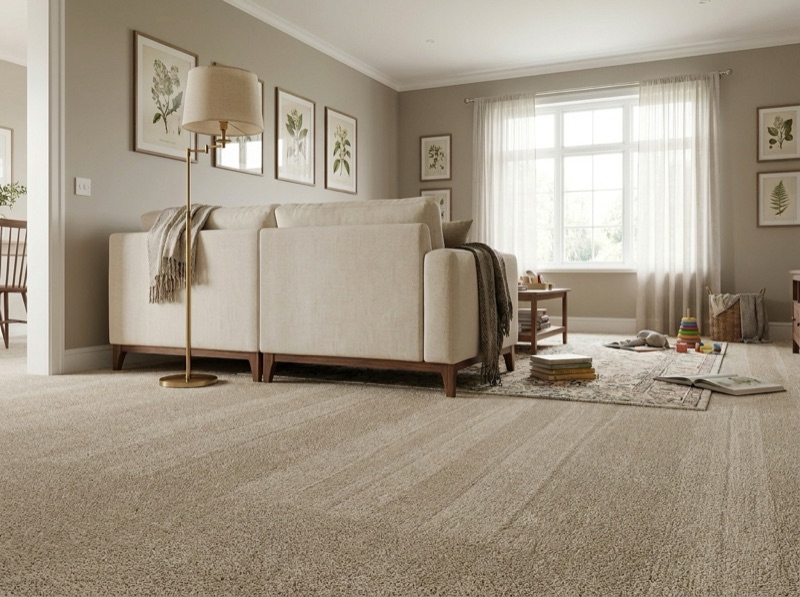
Full carpet handles airborne sound generated inside the room, it absorbs a cry instead of letting it bounce off a hard surface, and it softens footfall for late-night feedings on bare or socked feet. What it does not do by itself is stop sound traveling structurally, through the subfloor and framing, to a room below. Our bedroom page covers footfall transmission through an upstairs floor in general, and a nursery is the sharpest version of that problem, since the whole point is protecting somebody else's rest from a room that is awake at odd hours.
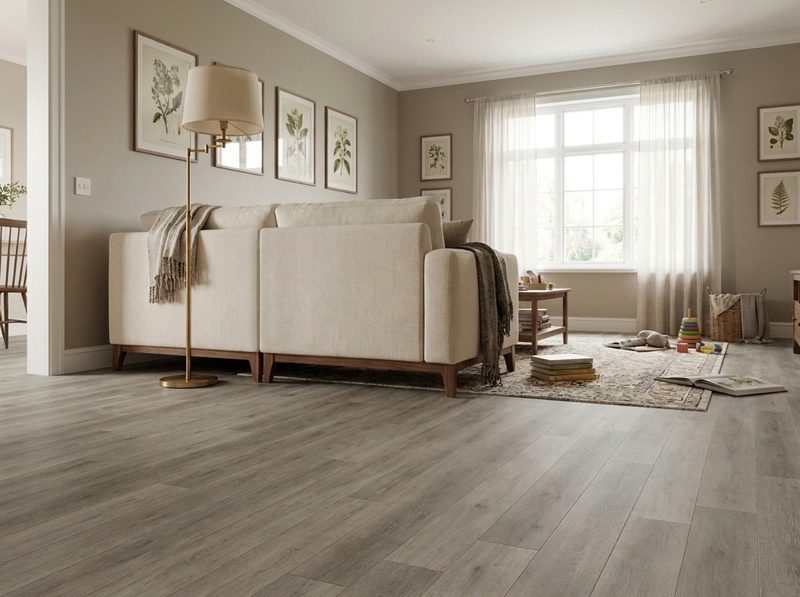
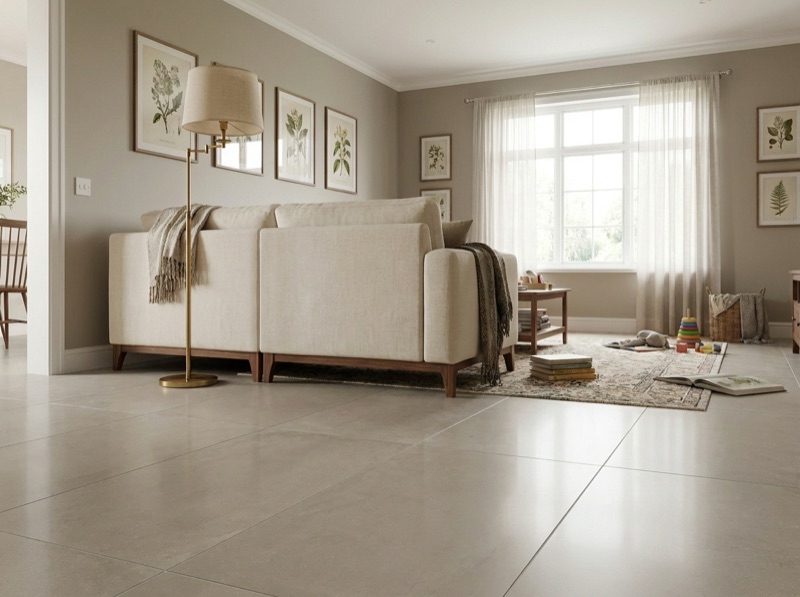
A hard surface, engineered hardwood, luxury vinyl plank or laminate, paired with a dense rug and a real acoustic underlayment installed under the hard flooring itself, targets that structural transmission on purpose rather than relying on wall-to-wall softness to do it by accident. It also keeps the room durable and easy to clean for whatever it becomes next, a toddler's room, then a bigger kid's room, without tearing anything out.
Carpet tile is a third option worth asking about in a nursery that may turn into a playroom, and the carpet tile page covers what that format does differently. In sound terms it sits between the two above: warmer and quieter underfoot than a bare hard surface, without the wall-to-wall absorption of a fully carpeted room.
What actually decides between them
Start with what is under the nursery. A room over a living space that gets used in the evening puts structural transmission first, and that favors full carpet or a hard surface with a genuine underlayment aimed at that specific problem, not a thin foam layer picked for cost. A nursery beside a home office or a busy hallway makes airborne sound into the room the bigger concern, and both carpet and a well-placed rug absorb that about equally well.
Then think about what the room becomes. If it is likely to turn into a playroom or an older child's bedroom, a hard surface with a rug lets the floor stay put while the rug changes with the room's job. Carpet is a fixed decision for the life of that installation, which is fine when the household plans to keep it a bedroom, and worth naming honestly when they do not.
Where quiet actually gets decided
Whichever direction you lean, the underlayment or pad underneath is the variable doing most of the acoustic work, more than the visible surface on top. A dense pad or underlayment resists compressing under weight, which is what actually interrupts sound moving through the floor assembly. A thin one looks the same in a sample box and performs nothing like it. That difference is something you can feel with your hands before you ever compare colors.
More on nursery flooring
What carpet actually blocks, rug coverage, and whether the floor needs to match the rest of the upstairs.
636-332-0654No. Carpet absorbs sound made inside the room and softens footfall on its own surface, but it does not stop sound traveling structurally through the subfloor and framing from a different room in the house. That is a separate problem, handled by underlayment and how the floor assembly itself is built, not by the visible fiber on top.
In the area it covers, a dense rug over a good pad comes close. The gap is at the edges, where a hard surface is still exposed and still reflects sound the rug's footprint does not reach. A generously sized rug narrows that gap; a small one leaves more of the room uncovered than people expect.
Only if continuity matters to you. A hard surface with a rug lets the nursery match an upstairs hallway now and simply swap the rug later as the room's job changes. Full carpet is a fixed choice for as long as that floor is down, which some households want and some do not.
Ask what goes under the nursery floor
Ask to compare underlayment and cushion options when you come in, and press them between your palms. That difference in give is the variable that actually changes what you hear through the floor. Tell us whether the nursery sits over a room you use at night.
Free estimate
636-332-0654