 Flooring Correct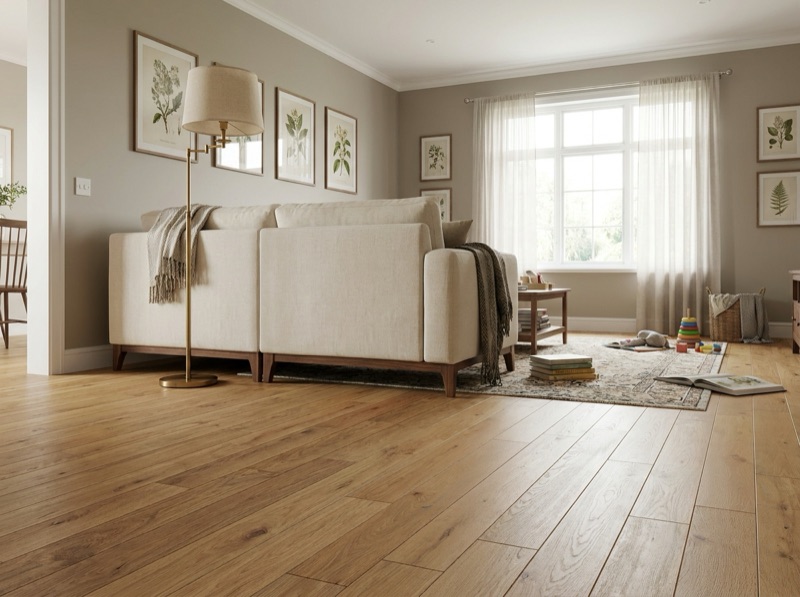
What flooring is safest for toddlers learning to walk?
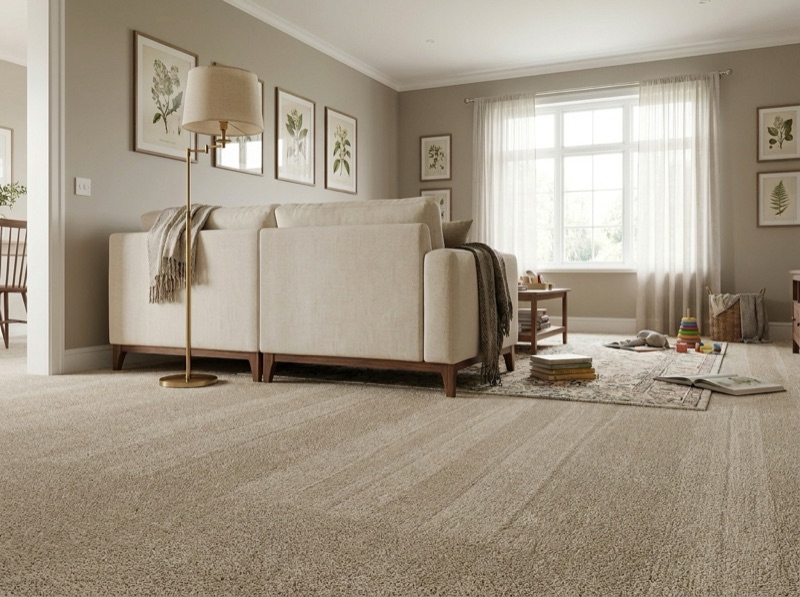
The deepest, softest pile is not automatically the safest choice. A foot that sinks unevenly into thick plush has to work harder to balance, which causes stumbles rather than preventing them. A low, dense pile or a matte hard surface gives a new walker predictable footing. Loose rug edges and doorway height changes cause far more trips than firmness does.
The soft-floor instinct, and why it feels right
Most parents shopping for a new walker's room reach for the deepest, plushest carpet on the rack, on the assumption that more cushion means a safer floor. The belief makes sense on its face. It comes from picturing a fall onto a hard floor and flinching, and a thick plush sample genuinely does feel forgiving under a palm at the showroom counter. The problem is that a toddler learning to walk is not falling from any real height. They are finding their footing again and again, at ankle height, hundreds of steps a day, and the surface that helps most with that job is not the one that feels softest to the hand.
What a deep pile actually does underfoot
A thick, soft plush lets a small foot sink in unevenly with every step, and an ankle that has not fully learned to balance has to work harder to find solid ground under that give. That extra effort is what causes a stumble, not what prevents one. A loose, thick area rug makes the same problem worse in a different way. An unanchored edge is not cushioning at all, it is a raised lip a small foot has no reason to expect, and it is one of the more reliable ways to catch a new walker mid-stride.
The accurate version, and what it means for the floor
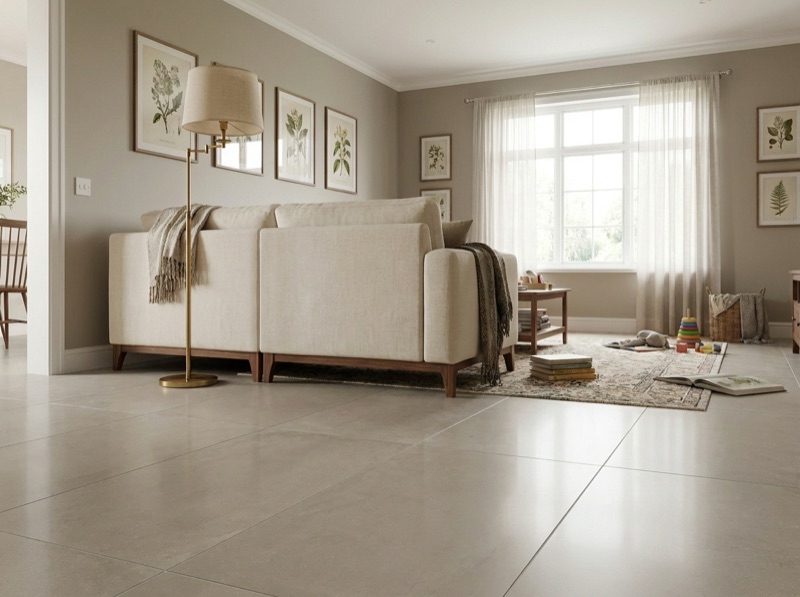
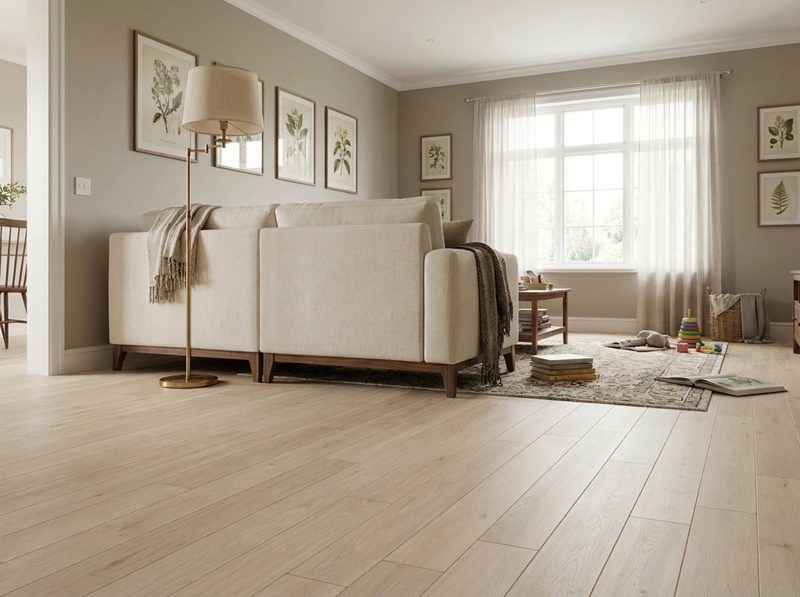
The corrected version is close to the opposite of the instinct. A low, dense pile with a tight, well set twist gives a new walker a predictable, even surface to push off from while still offering real cushion, the same construction our carpet page recommends for any room that sees steady traffic. A hard surface works too, as long as the finish has some texture or a matte sheen rather than a slick, high gloss. What actually needs avoiding is not the hard-surface family, it is a glossy, slippery sealed floor with nothing anchoring the rugs on top of it, since a bare or socked foot needs grip more than it needs give.
Where the real trips start: doorways, not pile depth
The transition between one flooring and the next, a carpeted bedroom stepping down to a hard hallway, is where most new-walker trips actually begin, because a toddler crosses that line without looking down at it. Our free in-home measure checks exactly how much height a new floor adds under each door and where a transition strip needs to sit, for precisely this reason. Fixing the transitions and anchoring every rug in the toddler's path does more for safety than maximizing how deep any single sample feels.
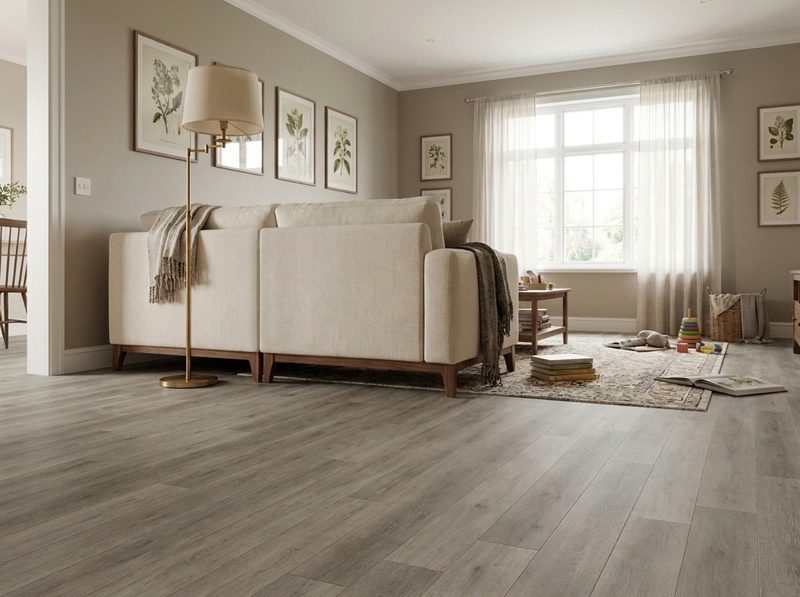
Once a household understands that footing and transitions matter more than softness, the floor list that used to feel narrow, carpet or nothing, opens back up. A dense carpet, an engineered hardwood with a wire-brushed texture, or a matte luxury vinyl plank can all be the right answer, and the deciding factor becomes the path a small foot actually walks, room by room, rather than which sample felt plushest on a showroom rack.
More on flooring for new walkers
Rugs, hard-surface finishes, and whether padding thickness matters as much as people assume.
636-332-0654Usually not. A deep, loose pile lets a small foot sink unevenly, which makes balance harder rather than easier, and an unanchored rug edge is a raised lip with nothing to warn a new walker it is there. A low, dense pile or a rug that is fully secured underneath is the safer version of the same comfort.
Not inherently. A matte or textured finish grips a bare or socked foot just fine. The real risk is a slick, high-gloss sealed surface, or a loose rug sitting on top of one, not the hard-surface family itself. Texture and finish matter more than whether the floor is hard or soft.
Some, but padding is not the main safety lever at this stage. A toddler learning to walk is finding footing, not falling from height, so predictable traction and flat, well-managed transitions between rooms do more for safety than how thick the pad underneath the carpet happens to be.
Ask the measure about the thresholds
Walk the rooms your toddler crosses most and note where one floor meets another. Bring that list to the free in-home measure, it settles exactly how much height the new floor adds at each doorway and where a transition strip belongs.
Free estimate
636-332-0654