 Flooring Correct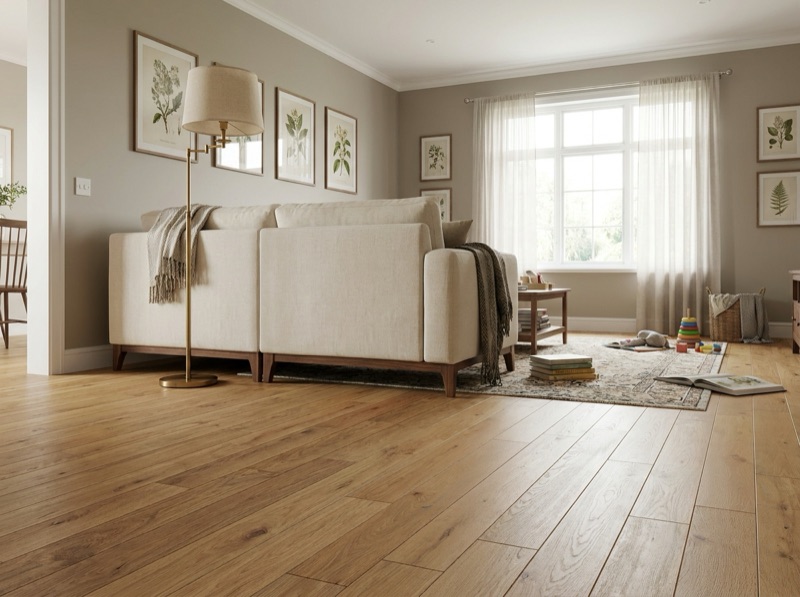
What flooring is best for rental properties?
The lowest-cost carpet looks like the safe default because it feels disposable, but that skips how rentals actually fail: carpet stains, mats and wears between tenants in ways that force a whole-room replacement. Resilient hard surface handles turnover better in the rooms everyone crosses, and carpet tile lets you swap one damaged square instead of the whole room.
The assumption: the least expensive carpet is the safe rental choice
Ask most landlords what belongs in a rental unit and the answer is fast: whatever costs the least, because a tenant is going to wear it out regardless of what you put down. It's a reasonable-sounding rule, and it's wrong often enough to be worth correcting before the next turn.
Where that assumption comes from
The belief comes from a true observation stretched too far. Rental units do turn over faster than an owner-occupied home, and nobody wants to sink money into a floor a tenant might damage in a year. That much is fair. Where it goes wrong is treating price as the only variable that matters, when what actually decides the total cost of a rental floor is how it fails and what it takes to fix that failure, not the number on the first invoice.
There's a second reason the assumption sticks around, and it's less about the math and more about who's making the decision. A landlord picking flooring for a unit they don't live in is choosing for someone else's daily use, and it's easy to default to whatever seems safest to be wrong about. The lowest-cost option feels like the least risky decision precisely because nobody has to live with the consequences except the next tenant and, eventually, whoever owns the property when it fails again.
What actually happens to a rental floor between tenants
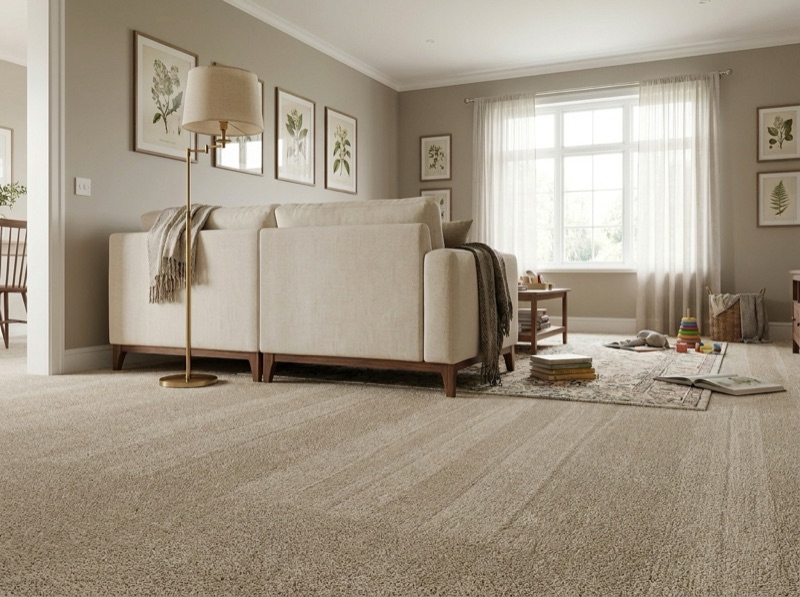
A rental floor doesn't fail gradually the way a floor in a house you live in does. It gets hit hard between move-out and move-in, cleaned aggressively on a deadline, and judged by whoever walks through next, all in a compressed window with no time to baby anything back to health. A low-grade carpet fiber crushes and mats fast under that kind of use, stains hold instead of releasing, and once a broadloom carpet is stained or torn in one spot, the whole run in that room usually has to come up, because there's no way to replace a small section out of a wall-to-wall install without it showing.
Hard surface fails differently between tenants, and mostly it fails better. A scuff or a scratch on a resilient plank is a cosmetic mark that a mop and time will fade rather than a stain that sets into fiber. What actually damages a hard surface between tenants tends to be one-off events, like a dragged appliance or a dropped weight, rather than the slow accumulation that ruins a carpet over a normal lease term.
The corrected version, material by material
The corrected version puts resilience and repairability ahead of the sticker price. A nylon or triexta carpet holds its texture and resists staining through more turnovers than a soft polyester construction does, which matters more here than it does in a house you're picking for comfort. Fiber is where that difference actually lives, and certain constructions hide staining between deep cleanings better than others.
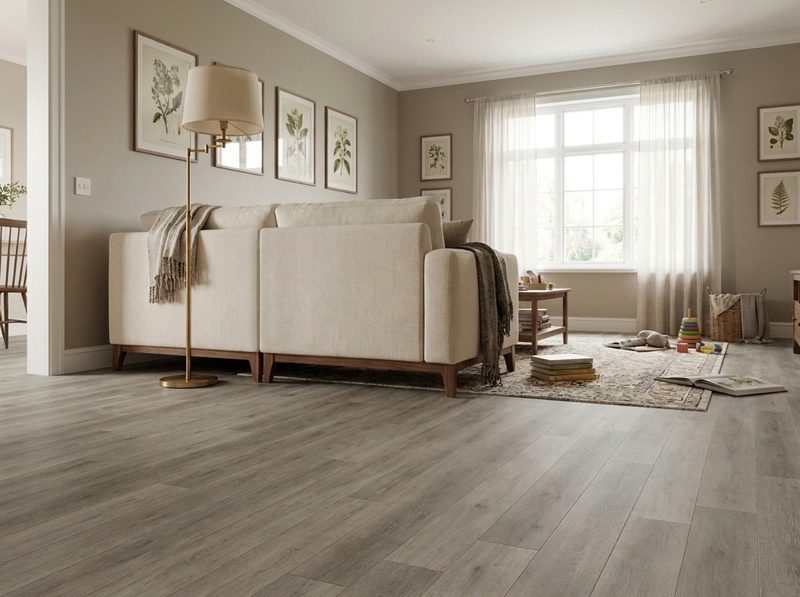
Carpet tile changes the math entirely: it arrives in modular squares rather than one wide roll, and a stained or torn tile comes up and gets swapped on its own, without touching the rest of the room. A hard surface like luxury vinyl plank sidesteps the stain-and-crush problem altogether and takes a straightforward mop between tenants.
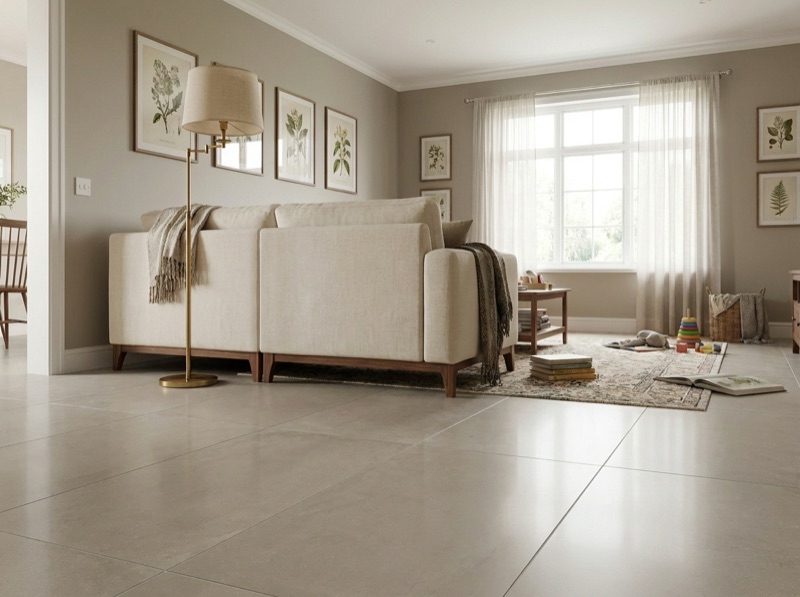
Sheet vinyl belongs in this answer too, and it earns its place for a reason none of the others can copy. In a laundry room, a utility room or a hall bath narrow enough to cover in one piece, it goes down with no joint anywhere for water to travel through, which is why our own sheet vinyl page calls it a common choice in rental property: a floor that can be taken up and replaced later without turning it into a large project. Laminate sits in the honest middle. Its wear surface takes daily traffic as well as anything at its level, but a laminate floor is built from boards with seams, and standing water finds a seam and swells the core underneath. The comparison puts vinyl where the water is and laminate where the traffic is, and that split holds in a unit you rent out the same way it holds in a house you live in.
Where full carpet still makes sense in a rental is the same place it makes sense anywhere: a bedroom, where comfort matters and the wear is limited to one occupant rather than every foot that crosses a common hallway. The correction here isn't carpet out everywhere. It's putting the resilient materials where the traffic and the turnover abuse actually concentrate, and saving the softer, less repairable option for the room that takes the least punishment.
What that frees you to do
None of that settles the bigger question of whether you're standardizing one spec across every unit or buying room by room as turns come up, and <a href="/answers/do-you-work-with-property-managers-and-landlords/">that's a separate decision with its own page</a>. What this frees you to do is stop treating the invoice as the whole cost. A floor that survives several turnovers without a full replacement is doing more for you than one that was less to buy and failed after one. Call 636-332-0654.
What else landlords ask about rental flooring
Portfolio strategy, bedrooms specifically, and whether the floor affects turnaround.
636-332-0654That's a strategy decision as much as a material one, and it depends on the size of the portfolio and how often units turn over. That question changes what you buy rather than how it holds up, so it's answered on its own page instead of here.
It holds up fine, and plenty of landlords run it there for the same durability reasons as the rest of the unit. The tradeoff is comfort rather than durability: tenants shopping for a rental still tend to expect carpet underfoot in a bedroom, so pulling it everywhere isn't automatically the improvement it looks like on paper.
It affects how much work the turn takes rather than how fast a tenant decides to leave. A floor that survives cleaning and inspection without repair shortens the list of things that have to happen before the next tenant moves in, which is a real advantage even though it's not the reason most landlords start asking the question.
Have the unit measured before you standardize anything
Subfloor condition and what's already down vary unit to unit even in an identical floor plan, and that's exactly what the free in-home measure checks before you commit one product across a whole property.
Free estimate
636-332-0654