 Flooring Correct
What vacuum is safe for hardwood floors?
A vacuum with the brush roll turned off, or a canister or stick style that never had one, is the safe choice on hardwood, because a spinning brush is exactly what grinds grit into a finish. That same brush pulls embedded dirt out of carpet pile, so a floor with both surfaces needs a vacuum that switches settings, not one setting for the whole house.
What a brush roll gains you on carpet
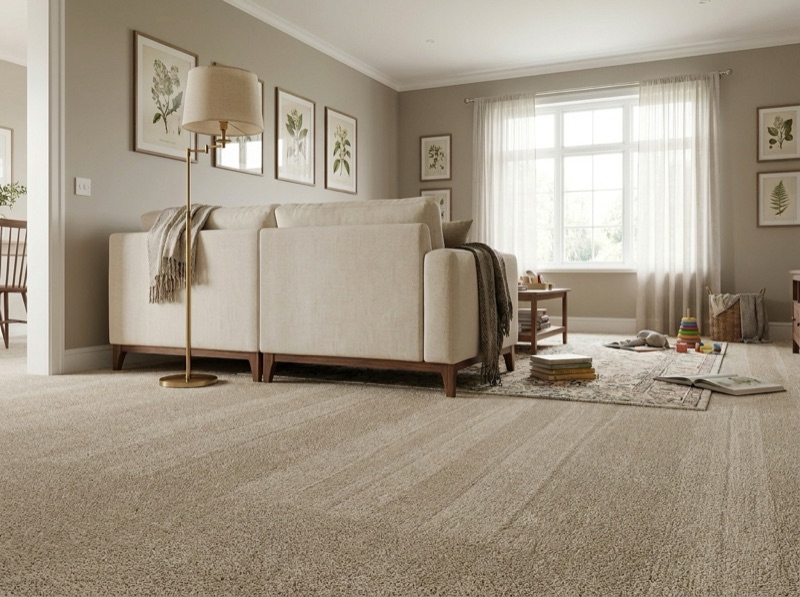
A rotating brush roll agitates carpet pile as it turns, lifting embedded dirt, pet hair and dander up out of the fiber where suction alone cannot reach it. That agitation is not optional on carpet. It is the actual mechanism that makes a vacuum work rather than just skim the surface, and it is why carpet care in general leans on it so heavily. A vacuum without a brush roll, run over carpet, mostly moves surface debris around and leaves the deeper dirt that grinds pile down from the inside.
What that same brush gives up on hardwood
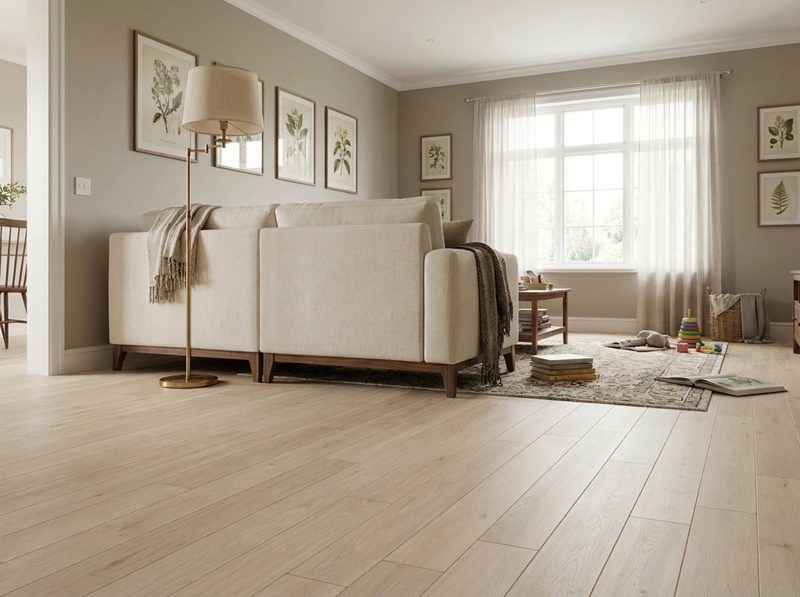
The mechanism that helps a carpet is the same one that hurts a finish. A spinning brush roll pressed against hardwood drags whatever grit is on the floor across the finish in small, fast circles, and grit is harder than the finish coating a board. Over months of the same motion in the same traffic lanes, that shows up as fine scratching and a duller sheen, the kind of wear that looks like the floor has simply aged faster than it should have. It is not usually one pass that does it. It is the same brush roll, on the same path, over and over, for years.
The setting that actually decides this, and where each side wins
Most vacuums built for mixed flooring have a way to disengage the brush roll, either a switch, an automatic sensor that detects a hard surface, or a separate hardwood attachment with soft bristles and no spinning bar. When that setting is off, suction alone is doing the work, which is exactly right for hardwood and genuinely weaker on carpet. A house that is mostly carpet, especially with pets, wants a vacuum where brush power is the priority and hardwood is a smaller share of the floor plan. A house that is mostly hard surface with an area rug or two wants the opposite: strong suction with a bare-floor setting as the default, and brush power treated as the exception for the rug.
The honest downside of going hardwood-only
A canister or stick vacuum bought specifically for hardwood, with no brush roll at all, is genuinely gentler on a finish, and it is a poor performer if that same house has bedrooms or a family room in carpet. Fine dirt and pet hair sit deeper in carpet fiber than suction alone reaches, so a hardwood-only vacuum used across a whole mixed-floor house ends up under-cleaning the carpet even while it does right by the wood. Neither extreme is the correct answer for a typical house. A vacuum that switches, or two vacuums each doing their own job, is the honest recommendation, not the more convenient one.
Robot and central vacuum, briefly
Robot vacuums vary more than upright and canister models, since some run a spinning brush at all times and some have a bare-floor mode of their own, so check the model rather than assuming. Central vacuum systems avoid the question differently, because most swap between a hardwood head and a carpet power head at the hose end, keeping the two jobs physically separate rather than relying on one motorized head to do both. In either case the underlying trade-off is the same one this page describes, just handled by different hardware.
The mistake worth avoiding is simple: running the carpet setting across the whole house because switching feels like an extra step. Check the setting before you vacuum a hardwood room, every time, and the finish holds its sheen for years longer than it otherwise would. If you are choosing between a wood and an LVP floor partly because of how it holds up to daily cleaning, that comparison is worth reading before you decide. Bring your current vacuum's spec sheet to the Wentzville showroom and we will tell you whether it is doing right by the floor you have, or the one you are about to buy. Call 636-332-0654.
What else people ask about vacuuming hardwood
Entryway grit, microfiber pads, and whether vacuuming too often is ever the problem.
636-332-0654For loose dust and grit sitting on top of a hardwood entryway, yes, suction alone handles it well. Entryways carry sand, salt and driveway grit that a brush roll would otherwise grind into the finish, so a bare-floor setting is exactly the right tool there, not a compromise.
No, and that is the point of them. A microfiber pad on a flat-head vacuum or dust mop attachment picks dust up by static and texture rather than agitation, so there is no spinning motion dragging grit across the finish the way a rotating brush does.
Not on the correct setting. Frequent vacuuming with the brush roll off and a soft floor attachment is one of the better daily habits for a hardwood floor, because it removes grit before foot traffic grinds it in. The risk was never frequency, it was always which setting was running.
Not sure your vacuum is doing right by the floor
Bring the make and model, or just the spec sheet, and we will tell you whether the brush setting is safe for the hardwood you have or the one you are considering.
Ask the showroom
636-332-0654