 Flooring Correct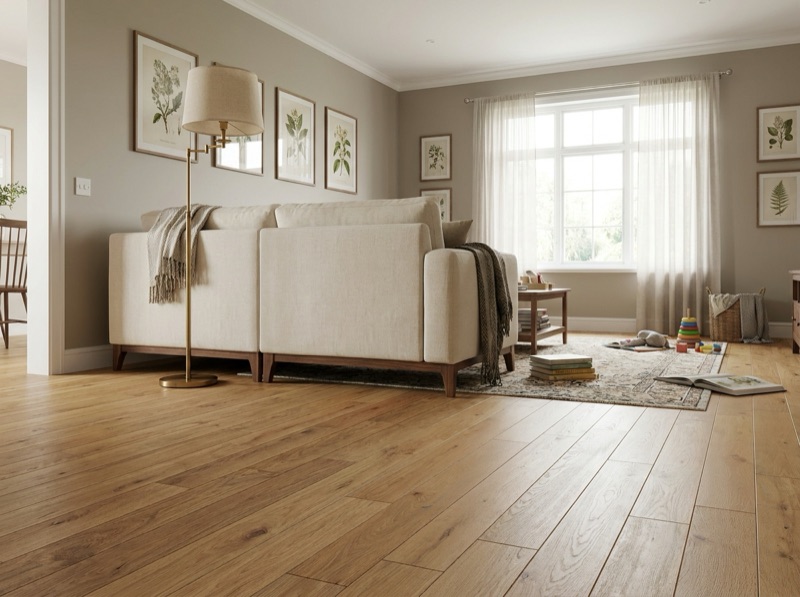
Luxury Vinyl Plank
vs Hardwood:
Resale vs Moisture
Hardwood can be sanded back to new decades from now. Luxury vinyl plank does not mind a wet week or an imperfect subfloor. Both claims are true, and this page says exactly where each one carries the room.
Hardwood and luxury vinyl plank get compared constantly, and the honest reason is that they solve different problems. Hardwood can be sanded back to new when it scratches or dates, and buyers respond to it at resale. Luxury vinyl plank shrugs off moisture and an imperfect subfloor, and asks very little of you week to week. We sell both sides of this floor, so this page can say plainly where each one wins. Call 636-332-0654.
What each side is actually offering
Hardwood's real advantage is that it is not disposable. A solid wood floor can be sanded down and refinished when the surface wears through, dents, or simply goes out of style, which means the same boards can look new again long after a vinyl floor would have been pulled up and replaced. That renewability is also most of why hardwood carries a resale reputation other hard surfaces do not: buyers read it as a permanent feature of the house rather than a finish that will need replacing on their watch.
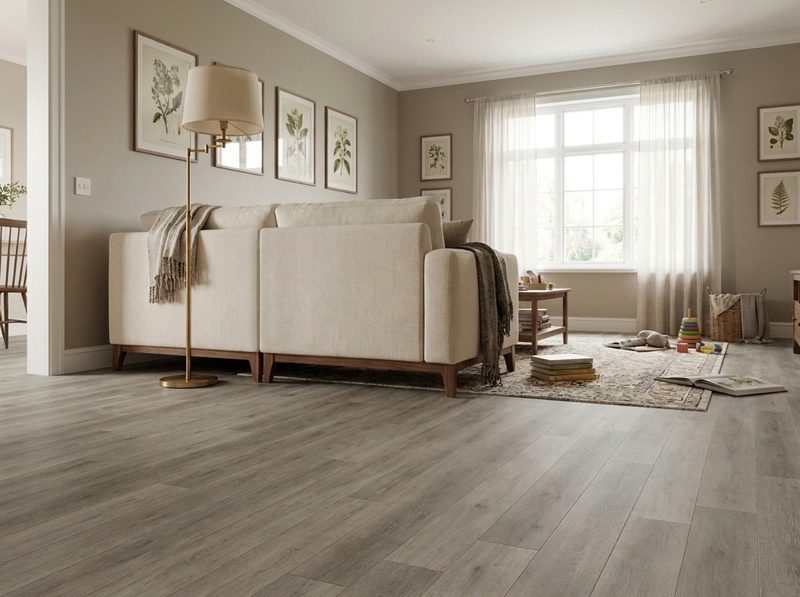
Luxury vinyl plank's real advantage is that it does not worry about the things that worry wood. A spill left too long, a slow leak under an appliance, a run of humid weeks, none of it threatens the floor the way it threatens hardwood. It also does not require the subfloor to be as close to perfect, and it asks less of you afterward: no felt pads to police, no refinish to schedule, no humidity range to protect. It is the lower maintenance floor of the two, day to day.
Where each one actually struggles
Hardwood's weakness is water, plainly. Standing water cups and warps boards, and once that happens the fix is sanding, board replacement, or both, not a wipe and a shrug. It is also less forgiving of a subfloor that is out of flat, since a rigid solid board does not flex to hide a dip the way a floating floor can. And while a wood floor can be refinished, it cannot be refinished forever. Each pass removes a thin layer of the wearable surface, and eventually there is not enough wood left to sand.
Luxury vinyl plank's weakness shows up differently. It cannot be sanded or refinished at all, so a deep gouge or a burn stays there until the plank is replaced rather than restored. Direct sun over years can fade a vinyl floor in a way solid wood generally resists better. And while it tolerates moisture far better than wood, tolerating moisture is not the same as being built for standing water. A room that sees water constantly, not occasionally, is a different conversation, one where tile usually does the job better than either of these two.
The verdict, room by room
- Living rooms, dining rooms and home offices: hardwood, for the permanence and the resale case buyers respond to.
- Formal entries and foyers: hardwood, where the floor is part of the house's first impression and refinishing later is a realistic plan.
- Kitchens: luxury vinyl plank, because spills, dropped pans and a subfloor near plumbing are exactly its strengths.
- Basements: luxury vinyl plank, since a slab is rarely flat enough or dry enough for solid wood to be a fair bet.
- Laundry rooms and mudrooms: neither, honestly. This is where a third material should take the room, and does.
- Bathrooms: neither. Vinyl plank tolerates moisture; it is not built for standing water, and this is tile's job.
Where a third material crashes the comparison
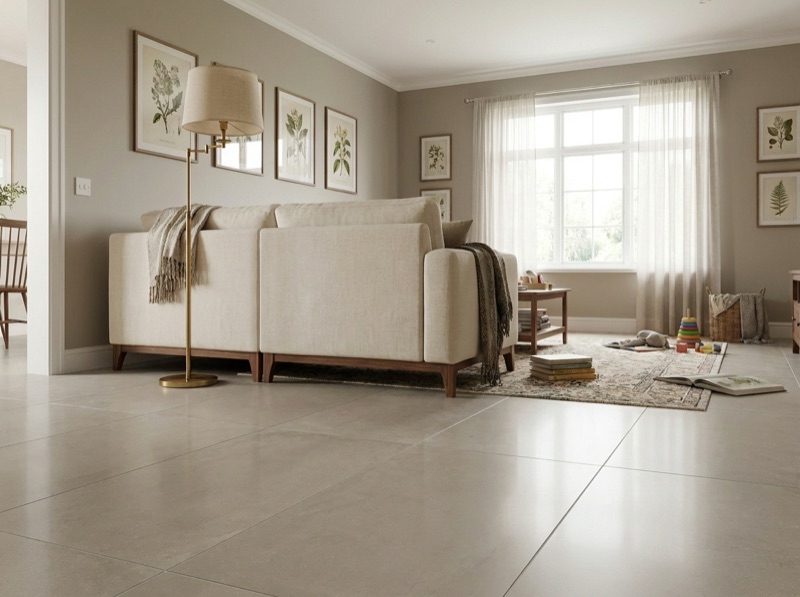
This matchup has a blind spot worth naming directly. In bathrooms, laundry rooms and anywhere water sits rather than passes through, the honest answer is tile, not vinyl plank and certainly not hardwood. And where a slab or a below grade room makes solid wood impractical but the look of real wood still matters, engineered hardwood can split the difference between the two sides of this page. A comparison that pretends only two materials exist is doing you a disservice.
The subfloor question, plainly
This is the part of the decision that gets skipped most often. Hardwood wants a subfloor that is flat, dry and structurally sound, because the boards themselves will not correct anything underneath them. Luxury vinyl plank is considerably more forgiving of minor variation, which is why it is often the right call in an older house or over a slab where perfectly flat is not realistic. Neither floor levels a room on its own, but the amount of correction each one demands before installation is genuinely different, and it belongs in the conversation before either material gets chosen on looks alone.
That forgiveness is also why luxury vinyl plank gets specified so often in additions, basement finishes and older homes with settled framing, while hardwood gets specified in main-level remodels where the subfloor is already known and sound. Neither preference is about one material being better than the other in the abstract. It is about which one matches the floor you actually have underneath it.
Living with each one, day to day
Hardwood asks for a bit of ongoing attention: felt pads under furniture, blinds or curtains to manage direct sun, humidity kept in a reasonable range through a Missouri winter and summer, and a refinish on a schedule rather than as an emergency. None of it is difficult, but it is real upkeep, and skipping it shows up eventually in the finish. Luxury vinyl plank mostly wants to be swept and occasionally mopped. That difference is small in any single week and considerable over a decade of ordinary family use.
The resale question, without the folklore
The folklore says hardwood always sells a house and vinyl never does, and like most folklore it oversimplifies a real pattern. Hard surface that reads as wood in the main living areas is what most buyers expect to see today, and solid hardwood does that job with a pedigree vinyl cannot fully claim. But a well chosen, well installed luxury vinyl plank floor in the right room, a kitchen or a basement, reads as a sensible, durable choice rather than a compromise, and buyers who understand flooring generally recognize it that way.
The mixed answer is usually the right one
Very few houses should run one material top to bottom. The pattern that keeps working: hardwood where the house makes its first impression and where refinishing decades from now is a realistic plan, luxury vinyl plank anywhere moisture or an unpredictable subfloor is a real factor, and tile in the rooms where water is a constant fact of life rather than an occasional risk. The transitions between materials, at doorways and thresholds, are worth planning deliberately rather than letting the floor plan decide by accident.
What we carry on each side
On the luxury vinyl plank side our lines run across Mohawk, Casabella, National Flooring Products, ProGen, Bruce, Audacity, Armstrong, Portercraft, Adleta, Engineered Floors, PureGrain, FirmFit, MetroFlor, Paramount, Nextfloor, MSI and Tarkett. On the solid hardwood side: Portercraft, Paramount, Hartco, Jackson Hardwood, Casabella, Hudson Collection, Durango and National Flooring Products. Both live on the same showroom floor at 15570 Veterans Memorial Pkwy in Wentzville, so you can stand on a plank of each within a minute of the other and feel how differently they behave underfoot. Call 636-332-0654 to check a specific line before making the drive.
Settling it
List your rooms, apply the verdicts above, and notice how few of them are genuinely close calls once each room's real risk is named honestly. For the ones that are close, the free in-home measure settles it with a look at the actual subfloor rather than a guess. Related reading: solid versus engineered hardwood if the wood side of this page needs a further split, and the comparisons hub for every other matchup on the site.
“The team at Flooring Correct is great to work with. I have known the owners for years and they are great people. I'm a repeat customer and will continue to be one.”
The questions this matchup always raises
Straight answers on resale, refinishing, subfloors and the rooms where a slab changes the decision.
636-332-0654Hardwood carries the stronger resale reputation because buyers see it as permanent and refinishable. Luxury vinyl plank in the right room, a kitchen or basement, reads as a sensible choice rather than a compromise.
No. A scratched or damaged plank gets replaced, not sanded. That is a real trade against hardwood's ability to be refinished, though replacing a plank is usually a smaller job than a full refinish.
Generally no. A slab is rarely dry or flat enough to be a fair bet for solid wood, which is why luxury vinyl plank or engineered hardwood are the more realistic choices below grade.
It can. Solid boards do not flex to hide a dip the way a floating floor does, so an out-of-flat subfloor either gets corrected first or points the choice toward luxury vinyl plank instead.
Luxury vinyl plank. It mostly wants sweeping and occasional mopping, while hardwood asks for felt pads, humidity control and an eventual refinish on schedule.
Yes, multiple lines of each, on the same showroom floor at 15570 Veterans Memorial Pkwy in Wentzville. Call 636-332-0654 and we will set planks and boards side by side.
Split it by room, not by trend
Tell us your rooms. We will say which want permanence and which want moisture tolerance, measure in your home, and quote from real numbers.
Free estimate
636-332-0654