 Flooring Correct
Carpet in
Saint Charles,
Missouri
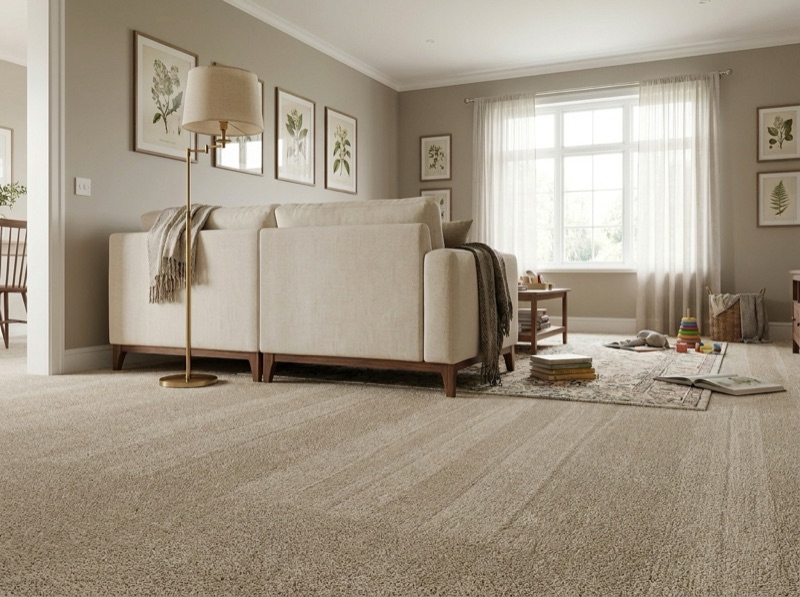
In a city whose houses run from before the war to brand new, carpet is rarely a simple rectangle. Old stairs, odd rooms and real seam planning are the craft here.
Flooring Correct measures, supplies and installs carpet across Saint Charles, 22.1 road miles east of our Wentzville showroom, about thirty minutes on I-70, covering 63301, 63303 and 63304. Carpet work in this city spans more housing history than anywhere else we serve, and the difference between a job in the old core and one in a new subdivision is worth explaining honestly. Call 636-332-0654.
One material, two very different cities
The Census Bureau American Community Survey, 2024 five-year estimates, table B25034, puts 6.8 percent of Saint Charles housing at 1939 or earlier and 27.7 percent at 2000 or later, with New Town at St. Charles, begun in 2003, anchoring the new end. For carpet, those two ends behave differently in almost every practical respect: room shapes, stair geometry, subfloor condition and even what the carpet is being asked to do.
In newer housing, carpet's job is mostly bedrooms and stairs in a house that is otherwise hard surface, and the rooms are regular. In the older stock, carpet often does more work: it quiets rooms that hard floors would make echo, it softens floors that have a century of character in them, and it fits spaces that were never built square. Both are proper carpet jobs. They are simply not the same carpet job.
What an old house asks of a carpet
Pre-war rooms have personalities: a bay here, a chimney breast there, a doorway that is not quite opposite its partner. Broadloom handles all of it, but the cutting and seam planning stop being routine, because the room is not a rectangle and the roll is. The measure in an older Saint Charles house is genuinely a planning session: where the widths run, where the seams fall relative to the windows, and how the material meets original trim that nobody wants disturbed.
Underneath, older subfloors flex and squeak in ways new construction does not, and carpet is the most forgiving floor you can put over that character. It is worth saying plainly: where a hard surface would demand serious levelling first, carpet with the right pad often delivers a beautiful result over an honest old floor at far less preparation. That is a legitimate engineering reason to choose it upstairs in an old house, not a compromise.
Old stairs are their own trade
Staircases in the older stock are frequently steeper and narrower than modern code would build, sometimes with winders turning a corner, and they concentrate wear ferociously. Carpeting them well is detail work: each tread wrapped properly at the nosing, pattern and pile direction kept consistent through the turn, and a fiber chosen for recovery rather than softness. A stair runner, with wood showing at the edges, is a classic answer in this housing and we fit those too.
In the newer subdivisions the stairs are wider and regular, and the decision is simpler but still deserves its own thought: the stairs take more concentrated wear than any bedroom they connect, so they should not simply inherit the bedroom's carpet by default.
Fiber and pad, chosen by job
The fiber logic does not change by neighborhood, so here it is straight. Nylon recovers from crushing best and belongs on stairs and landings. Triexta is the one to ask about with pets, because its stain resistance is built into the strand rather than applied to it. Polyester takes color beautifully and suits gentler bedrooms. Pad density matters more than pad thickness, and in an older house the pad is doing double duty: comfort above, and a little diplomacy over an uneven surface below.
Our carpet lines run across Mohawk, Pet Premier, Godfrey Hirst, SmartStrand, DreamWeaver and Anything Goes, which between them cover soft bedroom pile through hard-wearing stair fiber. Availability moves, so call 636-332-0654 before making the drive if you want something specific on the floor when you arrive.
The quiet argument, which old houses understand
Older two-story houses transmit sound through their structure enthusiastically, and owners who have lived with bare upstairs floors in them rarely need convincing about carpet. It is the most effective acoustic decision available in a house of that era: it quiets the room it is in and the room below it simultaneously. In the newer stock the same logic applies at lower intensity, and the pad specification is where most of the quiet actually comes from.
Partial jobs and honest transitions
Most Saint Charles carpet work is partial: bedrooms and stairs while the main level stays, or one floor now and another later. The craft point is the transition, where carpet meets the hard surface at a doorway or a stair nosing, and where a good job reads as intentional. Bring a photo of the adjoining floor when you visit, and if the house is older, a photo of the stairs helps us quote realistically before anyone drives anywhere.
Where carpet is the wrong answer we will say so: kitchens, baths and entries belong to vinyl plank or tile, and a basement conversation starts with the slab, where carpet tile is often the smarter soft answer. The carpet against hardwood page settles the classic matchup room by room.
What comes up with the old carpet
Replacing carpet in an older house is partly an archaeology project, and it is better to say so before the day than during it. Under a long-serving carpet we routinely find the history of the room: earlier pads that have crumbled to powder, tack strips from a previous generation, painted borders from the era when rugs floated in the middle of rooms, and occasionally the original wood everyone hopes for. Each finding changes the preparation slightly, none of it is alarming, and all of it is why tear-out and disposal are written into our quotes as real line items rather than afterthoughts.
The useful habit for a homeowner is simple: if you know what is under your carpet, tell us at the measure, and if you do not, we lift a corner in a closet and find out. Five minutes with a corner settles the preparation plan, keeps the quote honest, and occasionally upgrades the whole project when something worth restoring appears.
Phasing a house one floor at a time
Old houses are usually recarpeted in chapters rather than all at once: bedrooms this year, stairs and landing next, the study when it stops being a storage room. That is a sensible budget rhythm and it carries one craft requirement: continuity. Dye lots vary between production runs, so a hall carpeted two years after its bedrooms will never match perfectly from the same sample card. The honest approaches are to carpet connected sightlines in one phase, or to treat each phase as deliberately its own color. We will map which rooms see which at the measure, so the chapters read as a plan rather than an accumulation.
How the thirty minutes works
Carpet is the material most dependent on touch, so the showroom trip earns its half hour: pile under your hand and underfoot tells you what no photograph can. Make it once, properly, with photos of the rooms and stairs, then take samples home and the free in-home measure does the rest at your address. The work follows our installation process, and more about the city is on our Saint Charles service area page.
“The job was done quickly and done very well- thanks Randy. ... All in all, it was a good experience with Flooring Correct. I would recommend them to anyone”
What Saint Charles homeowners ask about carpet
Straight answers on old stairs, uneven floors, seam planning and the quiet that carpet buys in older houses.
636-332-0654Yes, and old staircases are their own trade: steeper, narrower, sometimes turning through winders. Each tread gets wrapped properly at the nosing and the fiber is chosen for recovery. A runner with wood at the edges is a classic answer in this housing too.
Often it is the most forgiving choice you can make. Where a hard surface would demand serious levelling, carpet with the right pad delivers a beautiful result over an honest old floor with far less preparation. We assess it at the measure.
Not if they are planned. Rooms that are not rectangles need real seam planning: widths run to suit the room, seams fall away from window light and out of the walking path. That planning is exactly what the in-home measure is for.
Nylon first, for its recovery from crushing, in a construction that hides a traffic path. Stairs take more concentrated wear than the bedrooms they connect, so they deserve their own selection rather than inheriting one.
Noticeably, and in both directions: the room it is in and the room below. Older two-story houses transmit sound through their structure, and carpet with a proper pad is the most effective acoustic improvement available to them.
Mohawk, Pet Premier, Godfrey Hirst, SmartStrand, DreamWeaver and Anything Goes. Availability moves, so call 636-332-0654 before driving out if you want a specific line waiting.
Yes: 63301, 63303 and 63304 are all inside the area we measure in, from the old core to New Town. The showroom is 22.1 road miles west, about thirty minutes, and the measure comes to you.
The room's history, usually: crumbled pad, old tack strip, sometimes painted borders or original wood. None of it is alarming and all of it is why tear-out is a real line item. Lifting a closet corner at the measure settles the plan in five minutes.
A straightforward bedroom is usually measured in hours, and an upstairs of bedrooms in a day or two depending on furniture and closets. Older houses add tear-out time more than fitting time, and the measure sets the schedule honestly before anyone commits.
Yes, and it is regularly done to preserve wood a household is not ready to restore. The tack strip perimeter is the only fixing, the field is untouched, and the wood waits underneath. Tell us if preservation is the intent and we fit accordingly.
Price a carpet, Saint Charles
Tell us the rooms and the age of the house. We measure in your home, plan the seams and stairs properly, and quote from real numbers.
Free estimate
636-332-0654