 Flooring Correct
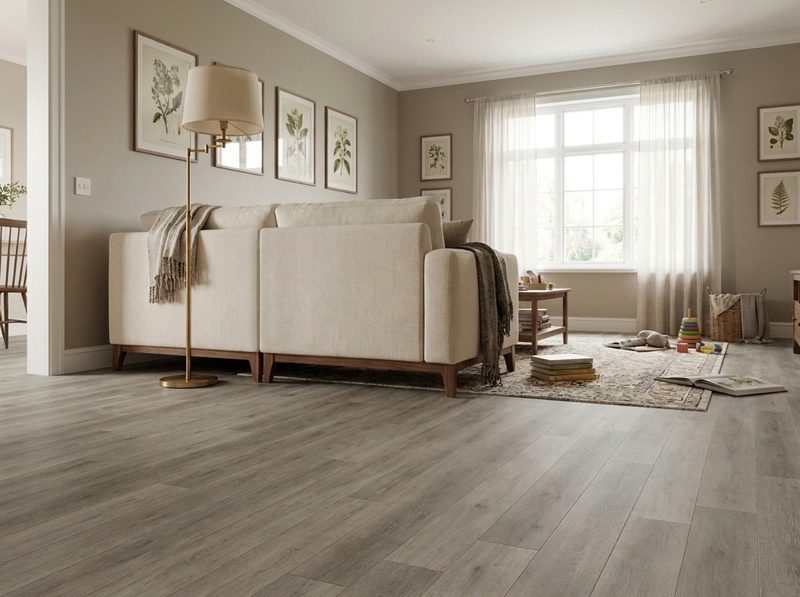
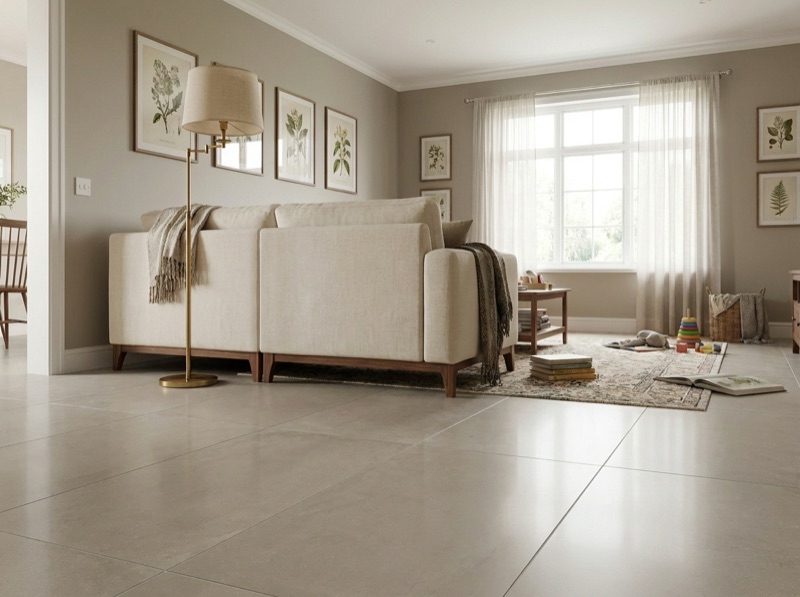

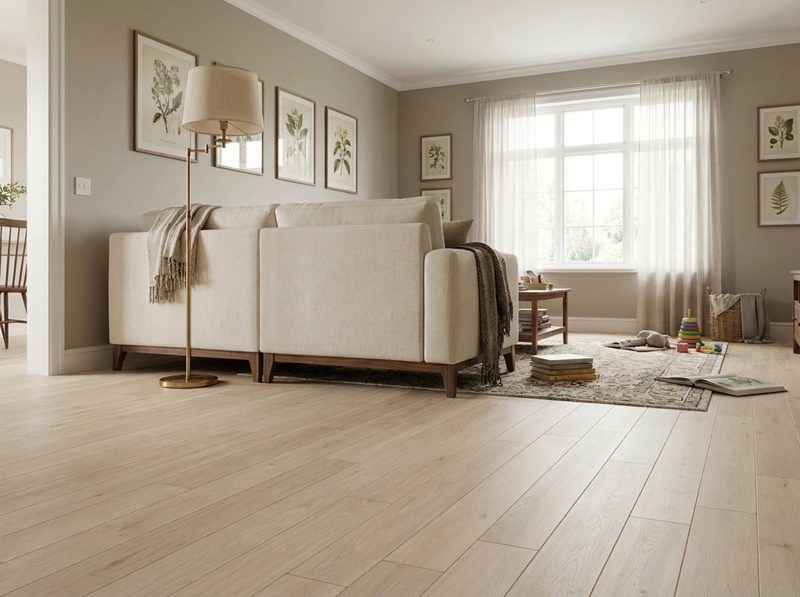
Luxury vinyl plank in Hawk Point,
laid over whatever is already there
Plank floats rather than fastens, so the structural question that governs a nailed floor does not arise here. What replaces it is flatness, and in a stock of 278 homes built two different ways that is worth checking room by room.
Hawk Point is built two ways at once. 41.7 percent of its 278 housing units are manufactured homes and 48.2 percent are single-unit detached houses, and most materials have to be argued differently for each. Plank is the exception, because a floating floor is not fastened into the structure at all. It rests on what is there, locks to itself, and moves as one field. That single property is why plank is worth raising first here, and it shifts the whole appointment onto a different question: not what will hold a fastener, but how flat and how sound the surface underneath actually is.
One material that suits both of the town's floor systems
In a factory-built home, plank sidesteps the thing that makes other hard surfaces awkward. Nothing is nailed into the deck, nothing relies on joist spacing, and the floor can be lifted again later if a section needs attention. In a site-built house it does the same trick over a subfloor from around 1989 that has been carrying coverings for three decades. The preparation differs between the two, but the material asks the same short list of questions in both, which is unusual for two housing types sharing one town line.
Flat is the specification, and soft is the disqualifier
A locking floor needs the surface beneath it to be flat within a tolerance and firm everywhere. Flatness is fixable: we grind the humps, fill the dishes and check with a straightedge across the run rather than trusting a floor to be flat because it looks it. Soft is different. A spot that flexes underfoot, typically where water has been near a dishwasher, a water heater or an exterior threshold, has to be repaired before anything goes over it, because a floating floor spans a soft spot without curing it and the joints above it eventually tell on you.
That check takes minutes, and it is the single most useful thing we do at a plank measure. It is also why we ask to walk every room rather than only the two you mentioned on the phone.
The kitchen end of a home fitted out around 1989
Kitchens set the constraints on plank jobs, and a kitchen from a stock whose median build year is 1989 was fitted to the floor thickness it had at the time. The dishwasher sits in an opening with a fixed height, the range slides between cabinets that were set to the old surface, and the toe kick is the height somebody decided decades ago. So we settle in advance whether the new floor runs under the appliances or stops at them, what happens at the dishwasher opening, and whether a threshold is needed where the kitchen meets the next room. Kitchen flooring covers how that room gets planned; the point here is that the answer is decided by cabinetry the house has had for years.
Cartons come in where a roll could not
Plank arrives in cartons that two people can carry, which changes what the entry to your home has to accommodate. A narrow landing, a set of steps up to the door, a turn immediately inside: all of that is manageable with cartons and would be a genuine problem with a single roll. What cartons do need is somewhere flat and dry inside the house to sit before installation, ideally in the room they are going into, so that the material and the room are at the same temperature when the first plank locks.
Buying the spare carton while the truck is already coming 24.5 miles
Plank is made in runs, and color can shift subtly between one production run and another, so a repair made three years from now out of a fresh carton rarely disappears. The fix is boring and it works: order the attic stock at the same time as the floor, from the same run, and keep it flat and indoors. In a town of 278 homes served by a 24.5 mile run, that spare carton rides out on a truck already making the trip, which is the easiest moment it will ever be to plan for a future repair.
Judging a plank properly, because a whole room does not travel
A single plank cannot show you what a floor of it looks like. Length, bevel and the pattern repeat only become visible across several boards laid end to end, and a repeat that reads fine on a rack can be obvious once it lands in a long room. That is worth a trip to the showroom at some point in the decision, where planks are laid out at length under one consistent light. We still bring samples to the measure, but the two visits do different jobs.
Where a plank run should stop in this floor plan
A floating floor wants a continuous field with expansion room at every edge, so the run is planned to break where a break is natural rather than where the material runs out. Doorways, the meeting line at a bedroom staying soft, and any span long enough to need a transition all go on the sketch at the measure. Carpet in Hawk Point is usually what sits on the other side of that line, and solid hardwood in Hawk Point is the alternative worth weighing where the structure will take it.
The plank lines we would put in front of a Hawk Point homeowner
We carry Mohawk, Casabella, National Flooring Products, ProGen, Bruce, Audacity, Armstrong, Portercraft, Adleta, Engineered Floors, PureGrain, FirmFit, MetroFlor, Paramount, Nextfloor, MSI and Tarkett. That is a long list because the category covers a wide span of construction and wear surface, and narrowing it is a conversation about your rooms rather than about the town. The luxury vinyl plank pillar explains cores, wear layers and how the products differ, the in-home measure explains how the appointment runs, and the Hawk Point service page covers the town itself, 278 homes on 0.415 square miles.
“Amazing, quick, easy experience. My floors look great!! Jonah steered my in the right direction with his expertise ...”
What gets asked when the floor underneath is the unknown
The recurring questions from a town of 278 homes where the surface under the new floor is never quite the same twice.
636-332-0654Generally yes, and it is often the straightforward answer. Nothing is fastened into the structure, so what matters is that the existing deck is sound and flat. We check for soft spots first, because a floating floor bridges one rather than fixing it.
Flat enough that a straightedge run across the room does not rock, and firm everywhere. We grind the high spots and fill the low ones as part of the preparation, and we repair anything that flexes before a plank is opened.
It depends on the opening heights, which in a Hawk Point kitchen were usually set around the original floor. We measure the dishwasher opening and the range gap at the appointment and decide then whether the floor runs under or stops at them.
We recommend it. Color can shift between production runs, so a future repair made from a fresh carton rarely blends. Ordering the spare with the floor means it comes out on the same truck that is already driving the 24.5 miles.
Yes, and it is worth the trip. Plank length, bevel and pattern repeat only show up across several boards, so we lay them out at length in the showroom and then bring samples to your own rooms for the light.
No. Plank is often taken through the living end while bedrooms stay carpeted, and the meeting line gets drawn on the sketch at the measure so the transition and the expansion gap are planned rather than improvised.
Have a Hawk Point floor checked for flat before you choose a plank
Straightedge across every room, soft spots found and repaired, then color. Call 636-332-0654 and we will plan the delivery and the spare carton onto the same 24.5 mile run.
Free estimate
636-332-0654