 Flooring Correct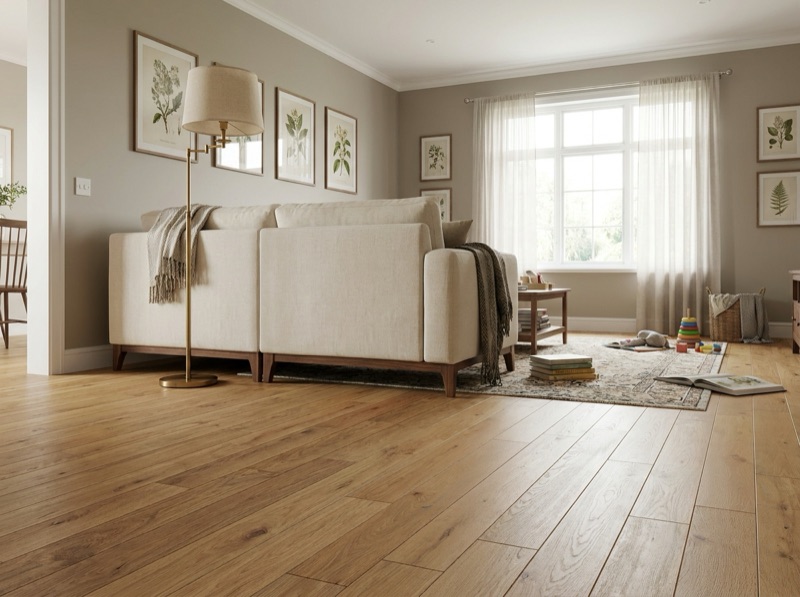
Flooring in Augusta,
Missouri, 24.5 miles
south of the store
Augusta sits 24.5 road miles south of our Wentzville showroom, about a 36 minute drive. The median house here was built in 1938, so nothing gets assumed before the tape comes out.
Augusta is 24.5 road miles south of our showroom, about 36 minutes. It is a Town of 271 residents at the 2020 census base and 268 by the 2024 estimate, spread over 0.889 square miles of bluff, holding 166 housing units whose median build year is 1938. We come out, we measure, and we quote from what the tape says rather than from a floor plan. Call 636-332-0654.
166 housing units, and 53.6 percent of them built in 1939 or earlier
The entire housing stock of Augusta is 166 units on 0.889 square miles, and 53.6 percent of it was built in 1939 or earlier, per the U.S. Census Bureau American Community Survey five year estimates for 2020 to 2024. The median build year is 1938, and no town we publish a service-area page for carries an earlier one. Alongside that, 93.4 percent of the housing is single-unit detached and 95.4 percent of the occupied units are owner occupied. Those four figures together give the flooring conversation here a particular shape: owners deciding for houses they intend to keep, in buildings framed and floored long before the conventions a modern product sheet quietly assumes.
That is not a warning, it is a reason to look before quoting. A house of this age has usually carried more than one floor, and the layers rarely agree from room to room. The in-home measure is where an Augusta quote actually starts.
The drive south, and why it is one planned trip
A routing engine's fastest path from Wentzville to Augusta leaves Wentzville on Missouri Route Z, continues onto Route D, follows a short Route D and Route T concurrency, then joins Missouri Route 94 into Augusta. From our door at 15570 Veterans Memorial Pkwy, Wentzville MO 63385 that is 24.5 road miles and about 36 minutes, heading south the whole way. Nobody would call it far, but it is not a five minute errand either, so the trip gets planned: samples leave the showroom with you, and the measure is booked as a block of time instead of a drop-in.
St. Charles County's Klondike Park carries an Augusta mailing address on Highway 94, and Missouri State Parks lists the same park among the services at the Augusta Trailhead. Katy Trail State Park, built on the former Missouri-Kansas-Texas railroad corridor, runs past the town and gives Augusta its own trailhead.
Bluffs of dolomite and sandstone, and a river that moved away
Augusta sits on bluffs above the Missouri River, in the stretch of the valley that Missouri State Parks calls the heart of Missouri's Rhineland, the area settled heavily by Germans in the mid-1800s. The bluffs approaching town from the east are composed of dolomite and sandstone, and the Klondike Quarry area just east of town exposes St. Peter sandstone, a white quartz sandstone that was ground up on site for glassmaking. The town is not on the water any longer. A flood in the 1870s changed the course of the Missouri River and eventually left Augusta without a riverfront. Only one historic building still stands along that former riverfront, a house-store that served the river trade and then railroad commerce.
Out in the bottomland below town, a May 2019 East-West Gateway Council of Governments map titled 'Levees and Levee Protected Areas, St. Louis Metropolitan Area', drawn from the U.S. Army Corps of Engineers National Levee Database, lists a 'Dutzow / Augusta Levee System' among the levee systems it maps. The houses themselves are up on the bluff, not down on the flat.
Rail came late here, and then Defiance took the stop
Rail service did not arrive until the 1890s, when the Missouri, Kansas & Texas line completed tracks to the town. Neighboring Defiance built a depot in 1894 that pulled the railroad stop away from Augusta. The town was laid out in the 1830s by Leonard Harold as the Town of Mt. Pleasant, and renamed Augusta in the 1840s after the first name turned out to be registered already with the Postal Service for another town. St. Charles County classifies Augusta as a Town, not a city and not a village, and dates its incorporation to the 1850s.
Eleven National Register listings in a place this small
Missouri State Parks' National Register list for St. Charles County records eleven separate Augusta listings, among them the Walnut Street Historic District, the Harold-Knoernschild Farmstead Historic District, the Mt. Pleasant Winery Historic District and the Augusta Harmonie Verein. The Harmonie Verein was a German singing society, organized in the 1850s when charter members, blocked by Missouri temperance laws, met in a tent on the frozen Missouri River. It built a frame clubhouse in 1869 and an octagonal bandstand two decades later.
The National Park Service documents the building stock as Missouri German vernacular with austere symmetrical facades and sparse detailing, the earliest brick buildings marked by flat brick arches later superseded by the segmental arch of the imported Rundbogenstil. Sparse detailing is the phrase to hold on to: plain trim gives a floor nothing to hide behind, and it makes every decision about where one floor stops and the next begins visible from the doorway.
Grapes on the town seal, and the first AVA in the country
Wine is in the paperwork here as well as in the cellars. The National Park Service form records the town's decision in the 1860s to issue an official municipal seal which depicted a cluster of grapes prominently placed in the center, and the Augusta Wine Company, a co-op of local growers, built a communal wine cellar and hall in that same decade. The Augusta AVA was the first American Viticultural Area designated in the United States, granted on June 20, 1980, and its boundary is drawn on county and township and range lines.
Several houses here were built with a cellar dug for wine
Several houses scattered through Augusta were built with deep basements used as wine cellars. That is a local detail with a practical edge. A below grade room dug to stay cool is not the same room as a conditioned modern basement, and what sits under a floor matters as much as what sits on it. We look at the below grade rooms properly here rather than taking the word basement at face value.
A St. Charles County town, schooled by a Franklin County district
Augusta's public elementary school belongs to the School District of Washington, which is headquartered in Franklin County and hosts schools in three different counties: Franklin, St. Charles and Warren. The district serves all or part of seven different communities, Augusta among them. Augusta belongs to St. Charles County, but its daily orbit is not drawn on the county line.
What a tape finds when no two rooms have to match
The measure is free and it happens at your address, not at a counter. We walk every room you are considering, take real dimensions, look at what is on the floor now and at how each room meets the next, check doorways and stair openings, and note anything that will need a decision before install day. In a stock this old that list runs long, and it belongs on paper rather than on install morning.
Which page to read next, by material
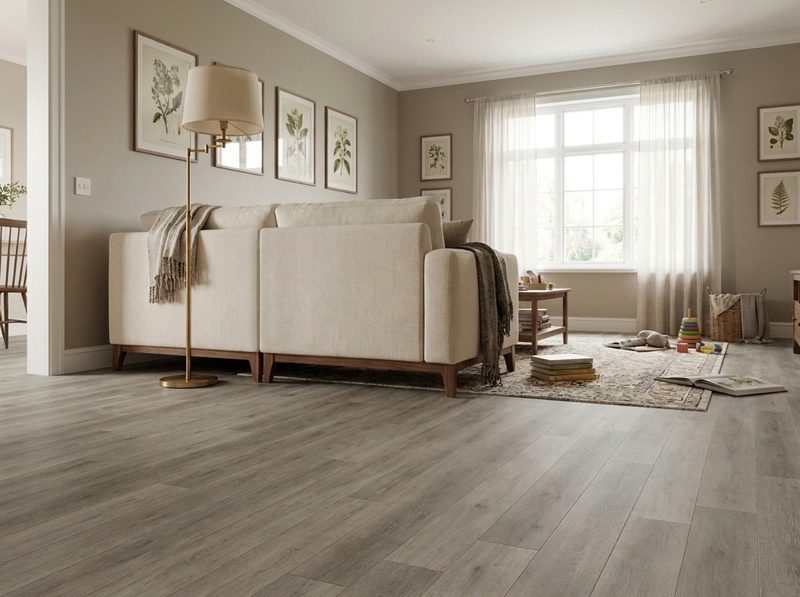
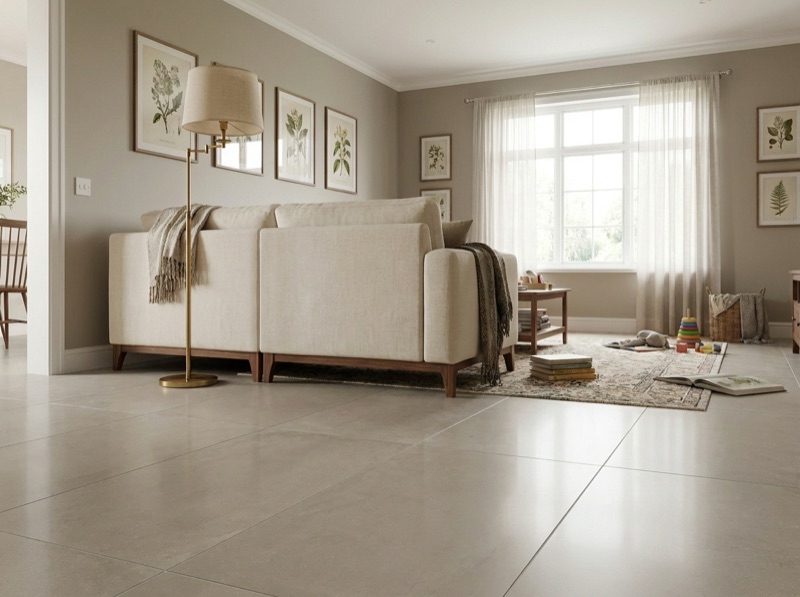
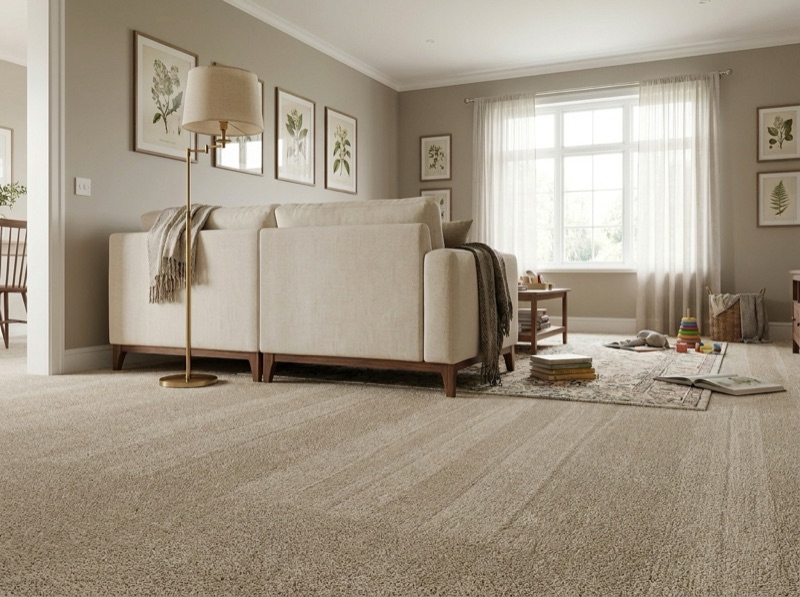
Each material meets this housing stock differently, so each has its own Augusta page rather than a paragraph here. Read carpet in Augusta for what happens above an old board subfloor, solid hardwood in Augusta for the structural questions a nailed floor asks first, and luxury vinyl plank in Augusta for the flatness problem that decides most vinyl jobs in pre-war houses. For contrast, St. Charles and Chesterfield show what a much larger and much later stock asks instead.
“... You can trust them to guide you but let you make the decision. Plus they are PROs at installation. Wow!!”
What people out here actually ask us
The drive, the free measure, and what a median build year of 1938 means for the quote.
636-332-0654About 24.5 road miles and roughly 36 minutes. A routing engine's fastest path from Wentzville to Augusta leaves Wentzville on Missouri Route Z, continues onto Route D, follows a short Route D and Route T concurrency, then joins Missouri Route 94 into Augusta.
We come out. The in-home measure is free, it happens at your address, and the distance changes neither of those. Because it is a 36 minute drive each way, we schedule it as a proper block of time.
Mainly how much we assume, which is nothing. Older stock has usually carried more than one floor, room heights and doorways vary, and no two rooms have to match. We find that out with a tape, not from the curb.
St. Charles County's list of political subdivisions classifies it as a Town, not a city and not a village, and dates its incorporation to the 1850s. The 2020 census base put the population at 271 and the 2024 estimate at 268.
Yes, and we will look at the cellar while we are there. Several houses in Augusta were built with deep basements used as wine cellars, and a room dug to stay cool behaves differently from a conditioned one.
Not since the 1870s. A flood in that decade changed the river's course and eventually left the town without a riverfront. Augusta looks out over bottomland now, and Katy Trail State Park, not the water, runs below it.
Flooring by material in Augusta
Each of these goes into what the material does in a Augusta house specifically. Start wherever you already have a leaning, or book the free in-home measure and work it out with the samples in front of you.
Book a measure in Augusta, where the median house predates 1939
More than half of this town's 166 housing units were finished in 1939 or earlier, and several sit over a cellar dug to keep wine cool. We look at the room and the room underneath it before anyone writes a number. Call 636-332-0654.
Free estimate
636-332-0654