 Flooring Correct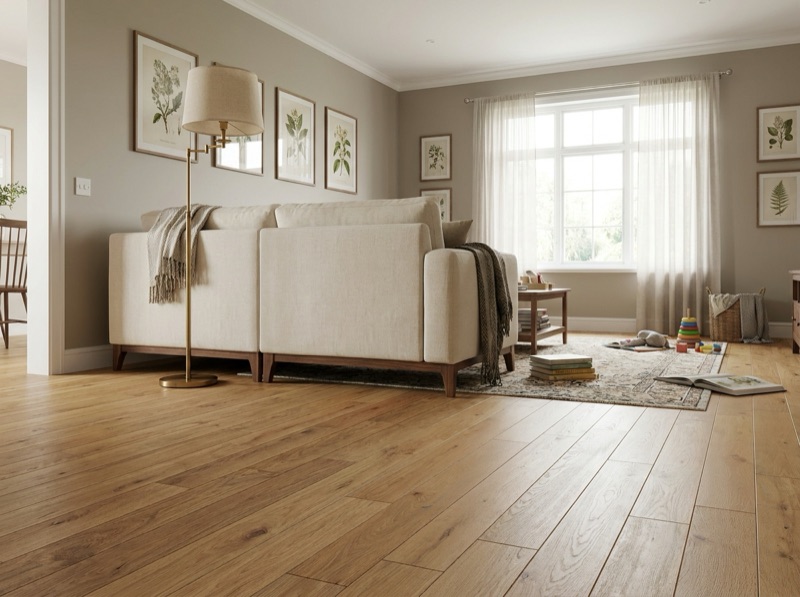
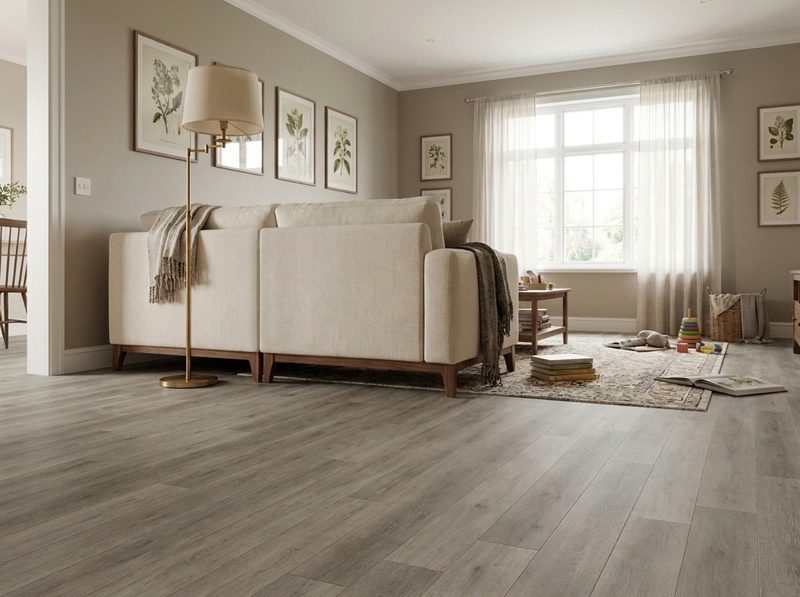
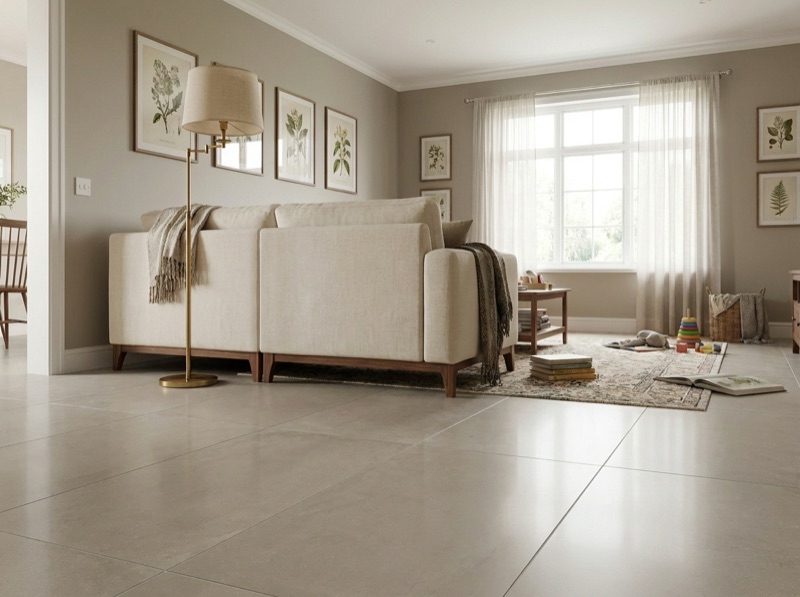
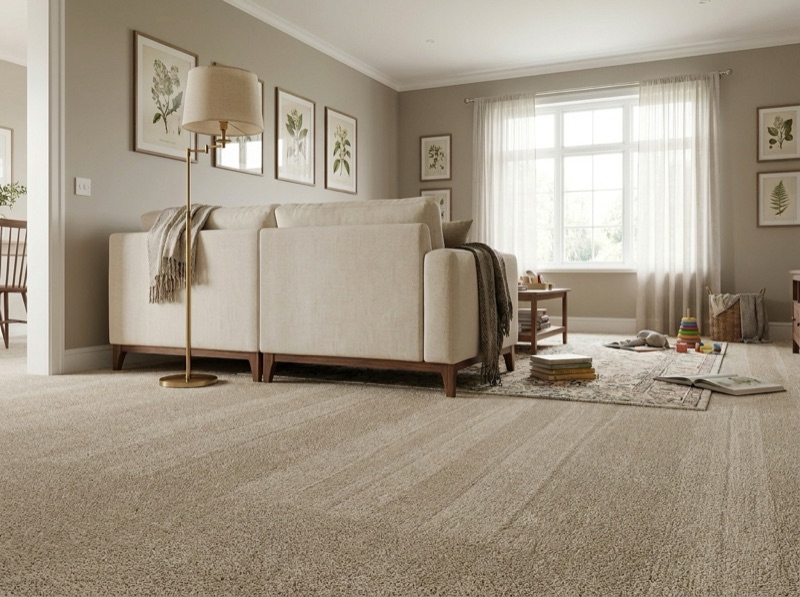
Can I take flooring samples home?
Yes. Samples go home the same day, and the decision worth thinking about is which form to take. A chip settles color range only. A full plank or full tile shows scale, bevel and sheen. A real piece of carpet has to be handled underfoot. Take the finalists in whichever form answers your question.
Yes, and this is the part of a showroom visit that does the most work after you leave. The question worth thinking about is not whether to take samples but which form of the product to walk out with, because a chip, a full size piece and a photograph each answer a different question.
Three forms, and they are not interchangeable
Almost everything on the floor exists in more than one form. There is the chip or swatch, a small cut of the product, loose or mounted on a board. There is the full size piece, a whole plank, a whole tile, a real square of carpet. And there is the display itself, the rack panel that shows several planks running together in sequence, which stays in the store but photographs well. What you should carry out depends entirely on what you are still trying to settle.
Take chips while you are still eliminating
Early on you are not choosing a floor. You are ruling out colors, and a chip does that as well as anything larger. Hold it flat against a cabinet door, the trim, a piece of the counter surface, the floor in the next room that you are keeping. Undertone declares itself at the join between two surfaces and nowhere else, which is why a chip held up in the air tells you almost nothing and the same chip laid against oak cabinetry tells you everything you needed.
Chips travel easily, so take several and treat none of them as precious. What a chip cannot show you is scale. A wood look printed across a plank has a repeat, and a swatch the size of a business card cannot tell you how often that repeat lands in a room. Neither can it show a bevel, a wire brushed texture or the way a low sheen kills a reflection that a higher sheen would have thrown at you all afternoon.
Take full size pieces once you are down to finalists
A whole plank shows the edge treatment, the gloss level, the surface texture and the full run of the printed or milled grain. A whole tile shows the true format, and how much of a floor one unit covers is most of what decides whether a room reads calm or busy. A real square of carpet lets you stand on it barefoot, set a chair leg on it and see whether it takes a footprint. Take fewer of these, and take the ones that are actually in contention.
The tradeoff is bulk and availability. Full pieces are heavy, and a rack piece is shared with whoever comes in next, so ask at the counter rather than assume. Leave space in the car. If you are weighing two categories rather than two colors, the head to head pages do that argument properly, for instance vinyl against laminate, and samples are better used to settle the last two products inside one category.
Photograph what cannot leave the rack
Some things do not come apart into a sample. A large format tile reads as a floor only when several are laid together, and a display panel showing a run of planks in sequence tells you how much variation the product carries board to board. Photograph those, and photograph them with the product tag legible in the frame, because a picture of a floor with no product name attached is a picture of a floor you will never find again. The tag is worth learning to read while you are standing there.
The limit every sample has
Here is the honest boundary. Every sample you carry out came from one production run, and the material that arrives on your job comes from another. Wood is a different draw of the same species. Tile is a different firing. Carpet is a different dye lot. Manufacturers publish a shade variation range for a product precisely because that spread is expected rather than a fault, and where a given product sits on that range is on its spec sheet. A sample tells you the character of a floor accurately. It does not promise you the exact face of the boards that land in your living room.
What to do with them once they are home
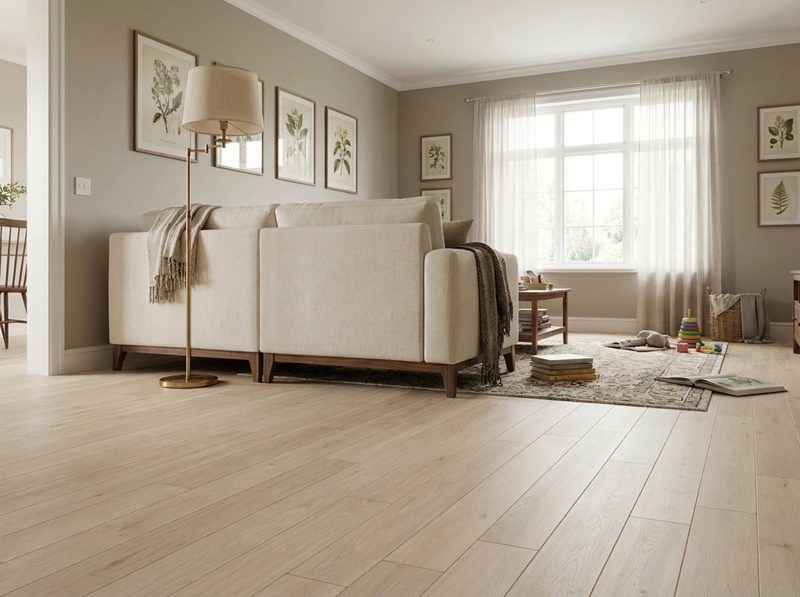
Lay them where the floor is going and look at them across a full day rather than in one sitting, which the showroom page spells out. Two things worth adding to that. Look at a sample flat on the floor rather than held up at eye level, because a floor is seen from above at a shallow angle and reflects light differently there. And keep each sample with its tag, since a plank separated from its label is close to anonymous a week later.
Then bring the survivors back. The Wentzville showroom is where the last comparison happens, and once you have a favorite, call 636-332-0654 and we will come measure the rooms.
What people ask at the sample rack
Keeping them, what they cost, and taking them before the category is settled.
636-332-0654Ask at the counter when you take them, because full size pieces and mounted boards go back on the rack for the next person. What matters more than the calendar is that each sample gets seen in morning light, in afternoon light and under your lamps at night before you rule it in or out. A couple of days on your own floor settles most arguments.
Neither. Handling the product and carrying samples out carry no charge, and nothing you take home obligates you to order anything. The estimate and the measure that produces it are free as well, and material is only ordered once a written quote is in your hands and you have agreed to it.
You can, and it is often the fastest way to find out that a category is wrong for the room. Carrying a laminate plank, a vinyl plank and a piece of engineered wood home together shows you differences in warmth, sound and surface that no comparison chart conveys. Just keep each one with its tag so you know what impressed you.
Come back with the survivors
Bring the samples that are still in contention, tell us which room each one won, and we will take it from there. If one lost the moment it got home, say why. That is usually the shortest route to the one that wins.
Free estimate
636-332-0654