 Flooring Correct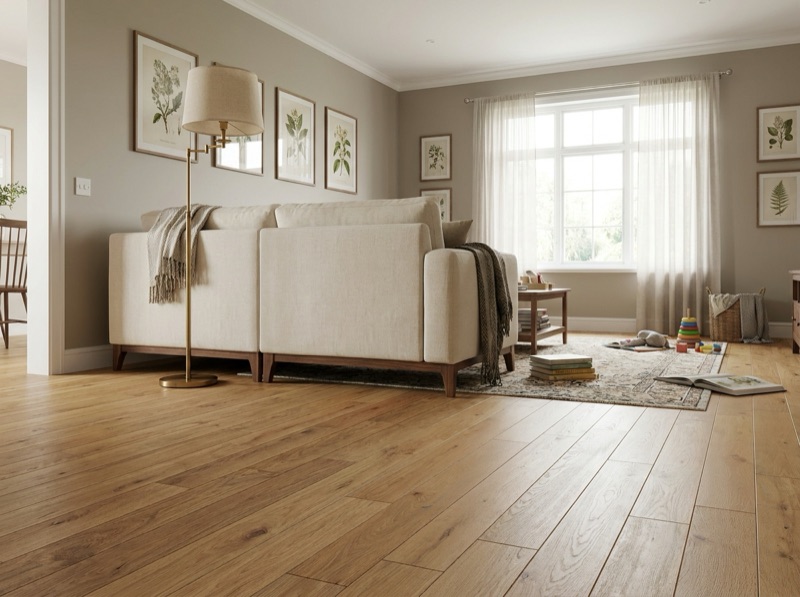
How many flooring samples should I compare?
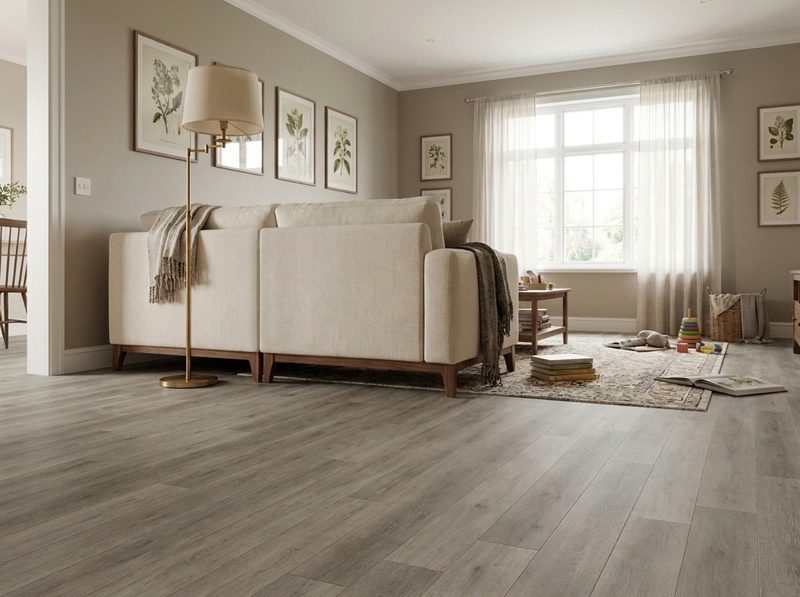
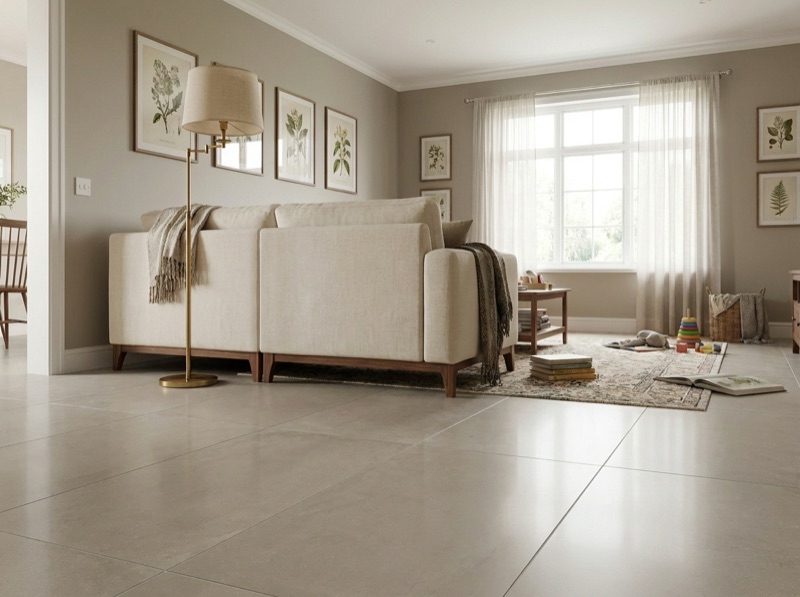
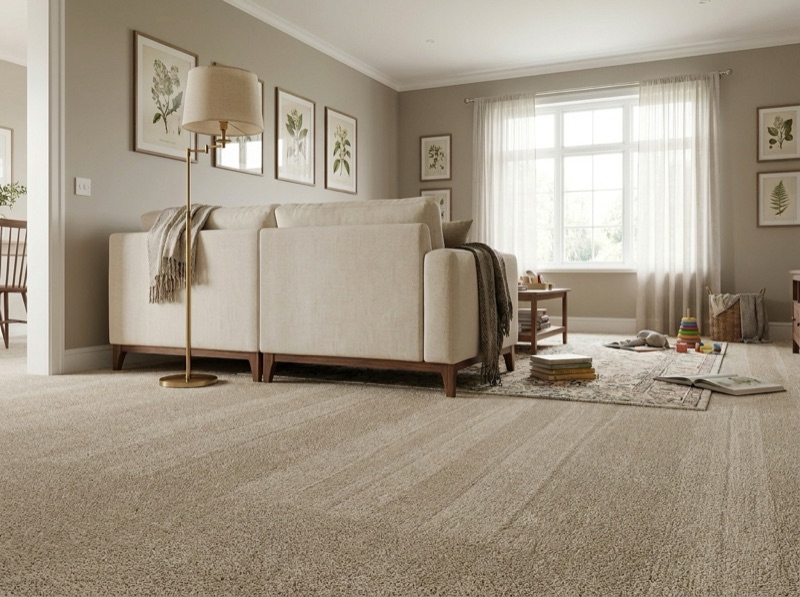
Most people leave the showroom with three or four, and that is about right. More than four stops working, because every sample you add multiplies the comparisons you have to hold in your head. Narrow by room condition first, then by look, then put the final two against your trim and cabinets rather than against each other.
People arrive at a showroom expecting to browse and leave with a stack. The ones who actually decide do something different. They run an elimination in a fixed order, and by the time colors are on the table the field is already small. Here is that order, and the step in it that does the real work.
Start by eliminating categories, not colors
The first cut has nothing to do with looks. It is a set of facts about the room: what is under the floor, how much water it sees, who walks on it, how much light it takes and what it has to meet at every doorway. Those facts rule out whole categories before a single sample gets handled, and ruling out is far faster than choosing.
A basement on a slab, a bathroom, a kitchen and a bedroom each shorten the list differently, and they shorten it hard. Our floor finder runs the same elimination as a short quiz if you would rather do it before you drive out. Either way, the honest version of this step ends with one or two categories, not five.
Do this first and everything downstream gets easier. Do it last and you will fall for a plank that cannot go in the room you were buying it for.
Then pick a visual lane inside the category
Within a category, the next cut is a family rather than a product. Tone first, warm or cool or neutral, because tone is what has to agree with your trim and cabinets and it is the hardest thing to talk yourself into later. Then format: plank width, tile size, or pile style. Then surface texture and how much sheen you want coming back off it.
Three decisions, each of which halves the rack. At the end of this step you are looking at a group of products that are genuinely interchangeable in the room, which is exactly the position you want to be in before you start comparing individual boards.
The arithmetic that caps the shortlist
Now the number. Four finalists means six side-by-side pairings. Eight finalists means twenty eight. The work of comparing does not grow with the size of your stack, it grows much faster than that, and past a certain point you stop comparing and start cycling.
That is the practical reason most people walk out of the showroom with three or four samples and a clear reason attached to each one. Three or four is small enough to hold in your head and large enough that you are not deciding between a favorite and nothing. If you find yourself carrying more than that, the honest read is that step one was skipped and a category is still in play that should not be.
Samples go home with you, and looking at them in your own light is a separate discipline that has its own page. What matters here is how many go home, not what you do with them once they are there.
The step that actually decides it
Get down to two, then stop comparing them to each other. This is the move almost nobody makes, and it is the one that turns a favorite into a decision.
Two samples compared against each other produce a preference, and a preference flips depending on which one you picked up last. Two samples compared against a fixed reference produce an answer. So lay each one against the things it will actually have to live beside: the trim, a cabinet door, the counter surface, the floor in the next room that you are keeping, the stair nosing at the top of the flight. Judge each sample against those, one at a time, and write down what fails. Usually one of them fails something and the decision makes itself.
If both survive, the tiebreaker is not aesthetic. Go back to step one and let the harder room condition break it, because the sample that handles the worst thing your house does to a floor is the one you will still like in five years.
What the last two get compared on
- The trim and the doors, since a floor sits against them along every wall in the house.
- Cabinet fronts and the counter surface, which is where an undertone mismatch shows first.
- Whatever flooring you are keeping, at the exact doorway where the two will meet.
- The wear the room actually delivers, not the wear you imagine. Chair legs, claws, grit at the door.
- How it reads at the hour you use the room most, which is rarely the hour you shopped.
Bring the reference pieces with you and the whole sequence collapses into one visit. Then the free in-home measure settles the quantity for whichever one won. Call 636-332-0654.
What people ask standing at the rack
Mixing categories, breaking a tie at home, and what to do when nothing lands.
636-332-0654Not at the start. Carrying a plank and a carpet home is a reasonable way to settle a question you genuinely have not answered yet, like whether a bedroom should be soft underfoot. It is a problem when it lasts, because two categories in play means the room question is still open and no amount of staring at color will close it.
Stop comparing the two to each other and compare each one to the room. Put them against the trim, the cabinets and the doorway where the new floor meets the old, and list what each one fails rather than which one you prefer. Disagreements about preference do not resolve. Disagreements about whether an undertone clashes with an oak door resolve very quickly.
Usually the fix is to go back a step rather than forward. A shortlist where nothing feels right normally means the visual lane was picked before the tone was, or that a category is still in play that the room rules out. Reset to the room facts, choose the tone deliberately, and the next handful will feel far more like real candidates.
Narrow it to one, then get it measured
Tell us the room, what is under it and who lives on it, and the material question shortens fast. Once a finalist wins, we measure the actual rooms and quote that product in them.
Free estimate
636-332-0654