 Flooring Correct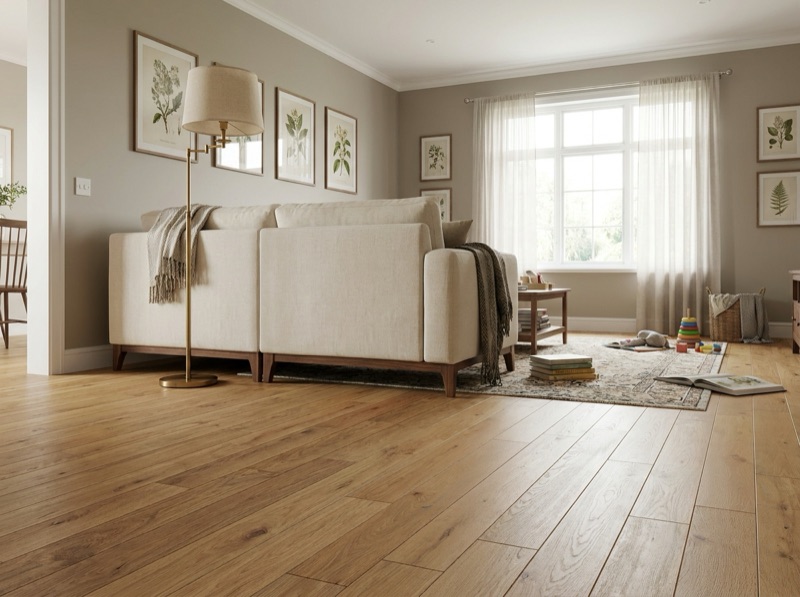

Can you wet mop laminate?
Not the way you would mop tile. A damp mop wrung out until it stops dripping is fine and is how laminate gets cleaned day to day. A soaking wet mop, standing water left to sit, or a steam mop pushes moisture into the seams between planks, and that is where the core swells and does not recover.
What damp mopping actually gets you
A damp mop, one wrung out until it stops dripping rather than left sopping, cleans a laminate floor completely for day-to-day dirt: tracked grit, spilled coffee, muddy paw prints. Add a laminate-specific cleaner and you are lifting film and dulling residue without putting any real volume of water on the surface. This is the whole cleaning routine laminate asks for, and it is genuinely fast, which is a real gain over a floor that wants to be scrubbed or steamed to look right.
What you give up compared to a floor built for standing water
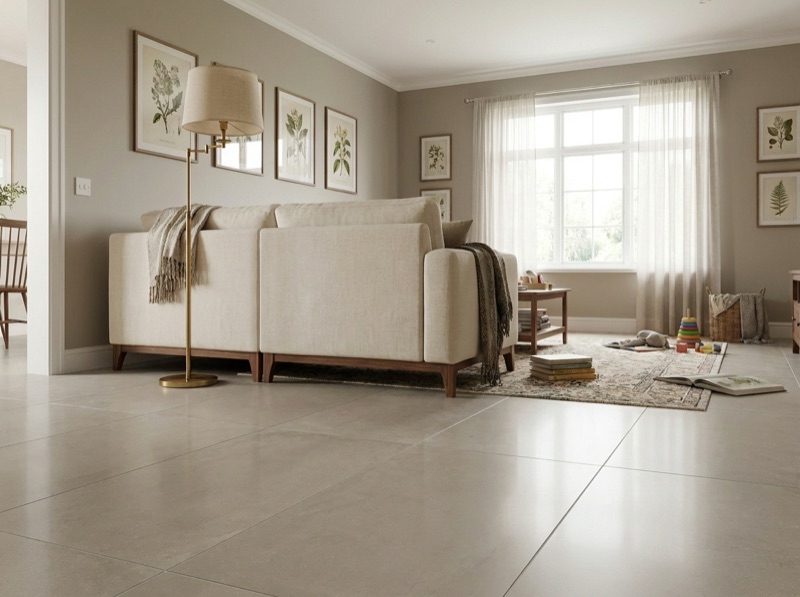
Tile and sealed stone can take a genuinely wet mop, a bucket of rinse water, even a hose in a mudroom, because the material itself does not care. Laminate cannot do that, and pretending otherwise is the fastest way to a swollen seam. The comparison between vinyl and laminate covers this trade in full: laminate's fiberboard core is what gives it the solid, wood-like feel underfoot, and that same core is the reason it cannot shrug off standing water the way a fully synthetic floor can.
Where the tradeoff wins for laminate anyway
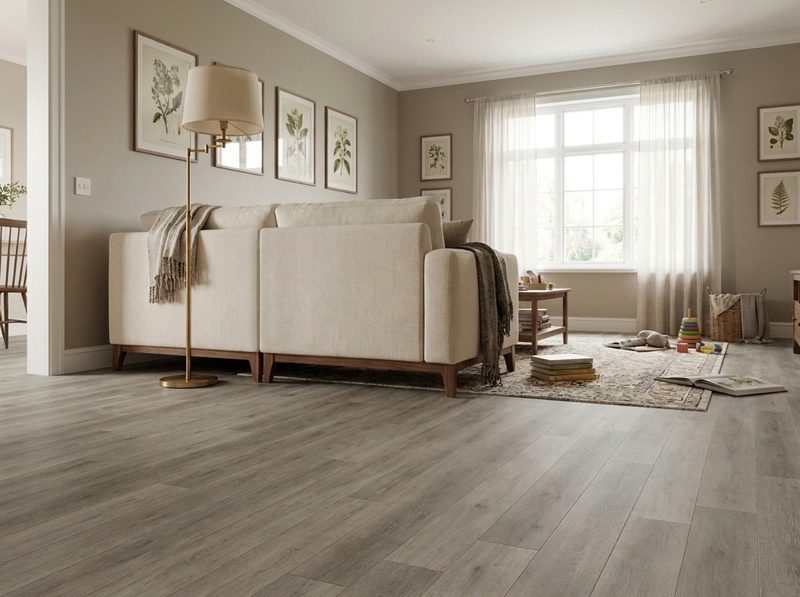
In a living room, a bedroom, a dry hallway, this is not much of a tradeoff at all. Those rooms rarely see anything wetter than a spilled drink, wiped up within a minute or two, and a damp mop routine handles the actual dirt that shows up there just as well as a wet mop would on tile, without ever putting the floor at risk. This is the traffic-heavy, mostly-dry territory laminate is built for, and the cleaning method matches the room.
Where the tradeoff loses
A kitchen with a sink that overflows occasionally, an entry that tracks in slush all winter, a laundry room near a washer that has leaked before: these are rooms where the floor gets a genuinely wet cleaning more often, not just an occasional splash. Laminate can still work in a water resistant line, but the honest read is that this is exactly the territory where the case for luxury vinyl plank gets stronger, since it takes a real mop without the same downside. A household that scrubs a floor rather than damp mops it, out of habit more than necessity, is also worth naming here. If the actual cleaning routine in a room looks more like tile care than laminate care, that mismatch is worth resolving before the floor goes down rather than after the first hard scrub.
The mistake this prevents
The mistake is not usually the routine mop. It is the one-off: a string mop rinsed and not wrung, a bucket of rinse water left to dry on its own, a borrowed machine used for a deep clean because the floor looked dull that week. Steam belongs on that list as well, and the steam mop question has its own page working through what happens at the seam. A puddle left to dry on its own does the same slow damage a leaking appliance does, just in one dose instead of many, and the reason it goes unnoticed is that nothing looks wrong on the surface while it is happening.
How to keep the routine safe without overthinking it
Wring the mop until it stops dripping before it touches the floor, work in manageable sections rather than flooding the whole room at once, and go back over anything that looks like it is sitting rather than absorbing into the mop pad. If a spill sits long enough to find a seam, dry it immediately rather than waiting, the same as you would for any spill on this floor. None of this is complicated, it just needs to become habit rather than an afterthought, especially in a household that is used to mopping tile or vinyl elsewhere in the same house.
If wet cleaning is a daily reality in a room, not an occasional one, that is worth raising before you buy rather than after the first swollen seam. Kitchens and bathrooms both have their own honest answers on this, worth reading if either is the room in question.
What else people ask about cleaning laminate
How wet is too wet, accidents, and whether a generic cleaner is doing more harm than good.
636-332-0654Wring it out over the bucket until it stops dripping, then wring it once more. The giveaway is what the floor looks like behind you: a passed section should read dry again within a few seconds. If there is still visible shine sitting there a minute later, the pad is carrying more water than this floor wants, and that water is heading for the nearest seam rather than evaporating off the surface.
Dry it as soon as you notice, with towels pressed into any spot where water has pooled rather than left to air dry on its own. A one-time accident that gets dried promptly is very different from repeated soaking, and most floors shrug off an isolated mistake caught early. Watch that spot over the next few days for any edge that looks slightly raised.
Use a cleaner labeled for laminate rather than an all-purpose or wax-based one. Generic cleaners and anything with wax or oil in it can leave a film that dulls the wear layer or makes the floor slicker than it should be, and that is a different problem from the water question but worth getting right at the same time.
Avoid the mistake that swells a seam
Tell us which rooms are in scope and how they actually get cleaned day to day. If a room needs more than a damp mop can handle, we will steer you to a floor built for that instead of letting laminate take the hit.
Free estimate
636-332-0654