 Flooring Correct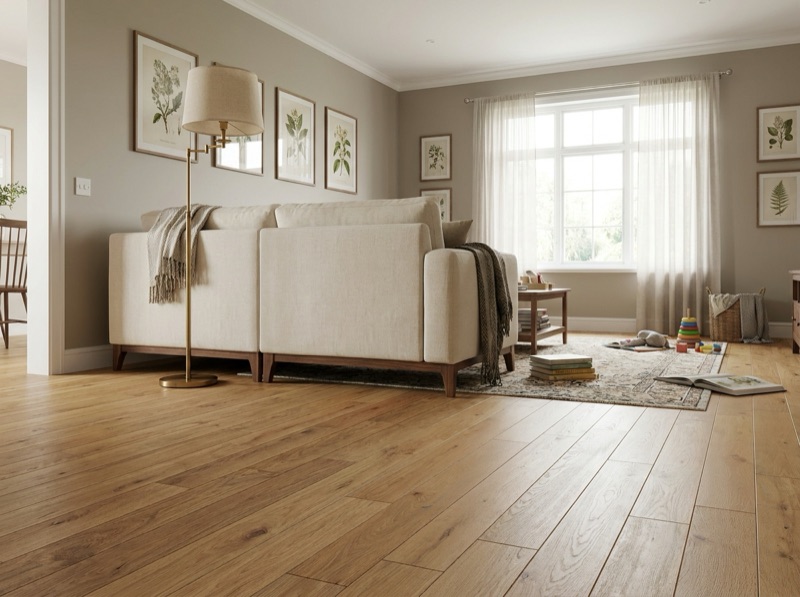
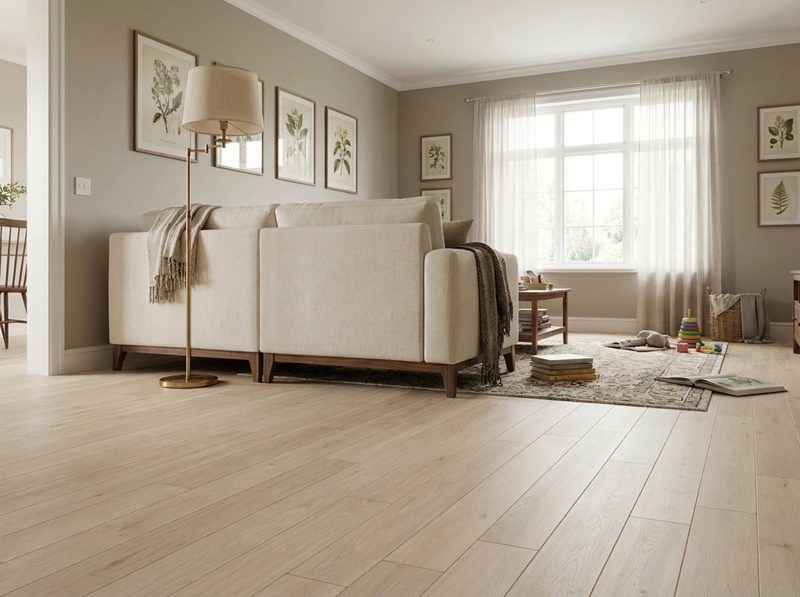
Does engineered hardwood look different from solid?
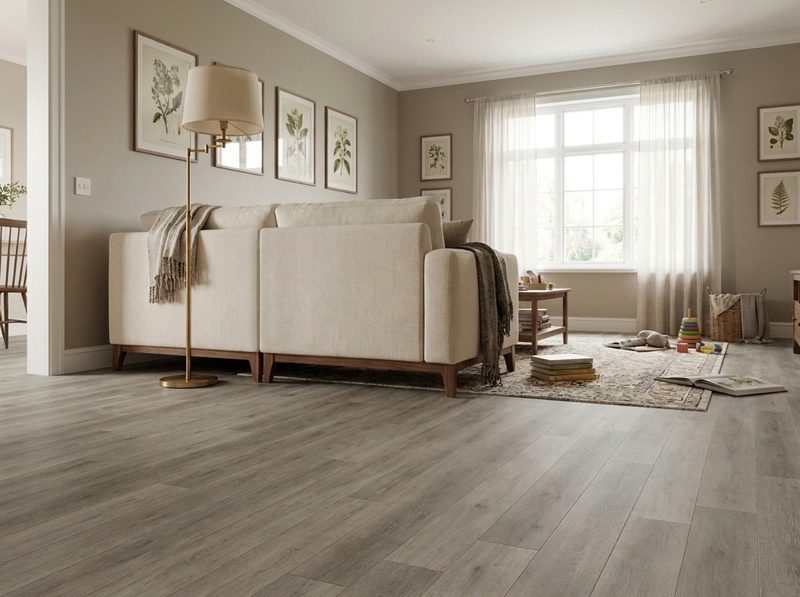
Not from above, which surprises people expecting a lesser look. Both start from the same sawn hardwood surface, the same species, grain and finish options. What actually sets them apart shows up in two places you would not think to check: how even the finish looks on day one, and how flat a wide plank stays years down the road.
The misconception, and why it's an easy one to have
Because the word engineered sounds manufactured while solid sounds like the real thing, people assume they will be able to eyeball the difference walking into a room. They expect engineered to read as thinner, glossier in a plastic way, or somehow a step down from the genuine article. None of that survives contact with an actual board, and the word is doing its job honestly here. It is just describing what sits under the surface, not what is on it.
The plain correction
The wear layer on top of an engineered board is a genuine slice of the same hardwood a solid board is milled from, a fact our engineered hardwood page covers in full. Once it is down, you are looking at the same species, the same grain, the same stain and finish sheen options, the same board width choices. Nothing about the visible surface changes because of what is underneath it. If someone tells you they can spot engineered from across a room, what they are actually spotting is the finish or the plank width, not the construction hiding beneath the boards.
What is actually different, and it is not what people expect
Two real differences do exist, and neither one is the fake-versus-real story people walk in expecting. The first shows up on day one. Most engineered flooring arrives prefinished with a factory-applied coating cured under UV light, which means the sheen is uniform across every single board before it ever reaches your house, rather than depending on a crew's hand and a drying window on site. A well finished solid floor can look every bit as good, but that uniformity is something you are trusting the finishing process to deliver rather than something the factory already guaranteed before delivery.
The second shows up years later, not on install day. The wide plank comparison is argued in full on our solid versus engineered page, and the short version is that engineered holds a wide face flatter through Missouri's humidity swings than solid does. A wide-plank room in engineered can still look tight and flat several summers in, while the same width in solid is starting to show the small seasonal gaps that are normal for the material. That is an honest, visible difference between the two, just not the one most people walk in worried about.
What follows from that
If you are adding engineered flooring next to solid you already own, an addition, a finished attic, a room that got skipped the first time around, visual continuity comes down to species and stain match, not construction. Matched under the same light the room actually has, engineered can sit right next to solid without announcing which is which. And if what you actually want is one continuous piece of wood underfoot for its own sake, with no manufacturing seam anywhere in its structure, that is a real preference worth naming rather than something the look alone will tell you to want.
It also changes what is worth asking about at the counter. Instead of hunting for a way to spot the difference, the more useful questions are the ones the eye cannot answer on its own: which species and stain match the wood you already have, whether the room in question is a candidate for solid at all once the subfloor and moisture are considered, and what wear layer a given engineered board carries if refinishing down the road matters to you. Those are the real decisions hiding behind a question that sounds like it is about appearance and turns out to be about everything underneath it instead.
More on how engineered hardwood actually looks
Whether it's tellable by eye, why engineered isn't a downgrade, and what happens when you mix it with solid.
636-332-0654Almost never by eye alone. Both show the same species, grain and finish once the floor is down, so the visible surface gives nothing away. The construction difference lives at the edge of an individual board before installation, which is not something anyone is looking at once the floor is finished.
No, and that assumption is the misconception this page exists to correct. What a floor looks like comes down to species, grain, stain and finish choices available in both constructions, not which one is underneath the surface. Looks and construction are simply two different questions, and neither name implies anything about the other.
Because solid wood moves more across a wide face as humidity swings through the seasons, while the layered core in engineered resists that movement. A wide solid floor can start showing small seasonal gaps a solid installer would call normal, while a wide engineered floor tends to stay visibly flatter over the same years.
Yes, and it is a common way to extend an existing solid floor into an addition or a previously unfinished room. The visual match comes down to species and stain, matched at the counter under real light, rather than to which construction each room happens to be built on.
Bring a piece of the existing floor to be matched
If you're adding onto solid you already have, bring a sample or a photo in good light. We match species and stain at the counter, then confirm it at the in-home measure before anything is ordered.
Free estimate
636-332-0654