 Flooring Correct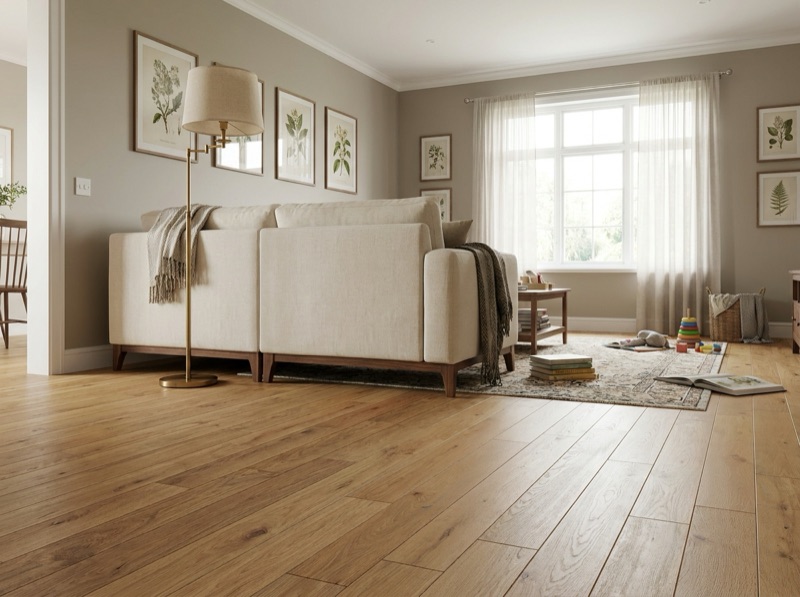
Is engineered hardwood real wood?
Yes. The top of an engineered plank is a real slice of sawn hardwood, the same species and grain as a solid board, so the surface underfoot is wood and behaves like wood. Engineered describes how the plank is built below that layer, not what the layer is. Laminate and luxury vinyl only print a wood image, which is where the confusion starts.
The plain yes, and what it covers
Yes, and it is worth being precise about what that yes includes. The top of an engineered plank is sawn from a log. It is oak or hickory or maple or walnut, the species is named on the box, and the grain in front of you is the grain that tree grew. It ambers in the light, dents when something heavy lands on it, takes a stain and a finish, and reads as wood underfoot because it is wood. Underneath that surface is a built-up core, and the construction has a page of its own. The part you see and touch is not the part that was engineered.
The word is doing most of the damage
Almost nobody walks into a showroom and asks whether solid hardwood is real wood. The question attaches to engineered specifically, and the first reason is the name. In everyday English, engineered in front of a natural material is a warning that you are getting a substitute for it. You have met engineered stone and engineered leather, and in both cases the word tells you the material has been reconstituted into something else. In flooring it means something much narrower. It describes how the plank was assembled. It says nothing about the visible material.
The trade vocabulary makes it worse. The wood on top is called a veneer, and veneer in ordinary use means a thin decorative facing glued over something lesser, usually to hide it. In a floor, veneer means solid hardwood cut to a controlled thickness. Same word, completely different job. Then the industry measures it in millimeters on a spec sheet, and a number that small starts to sound like a coating rather than a piece of a tree.
The floors it gets confused with, which genuinely are not wood
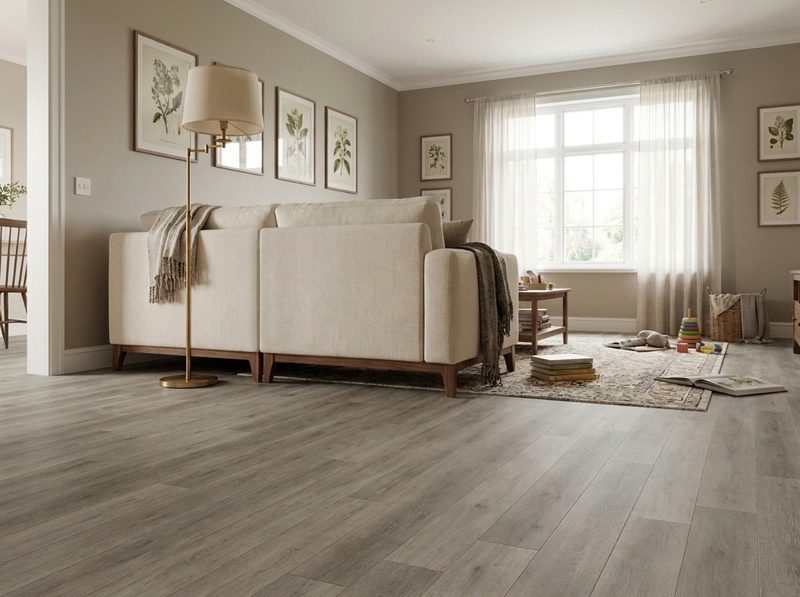
The other half of the confusion is standing on the next rack. Laminate and luxury vinyl plank both sell a wood look, both borrow the names of wood species, and both are pressed with a wood texture you can feel with a fingertip. Neither one contains any hardwood at all. The face of those products is a printed image, a high resolution photograph of a wood floor, sealed under a clear wear surface and bonded to a core. On laminate that core is a dense fiberboard. On luxury vinyl it is a vinyl core built to ignore water.
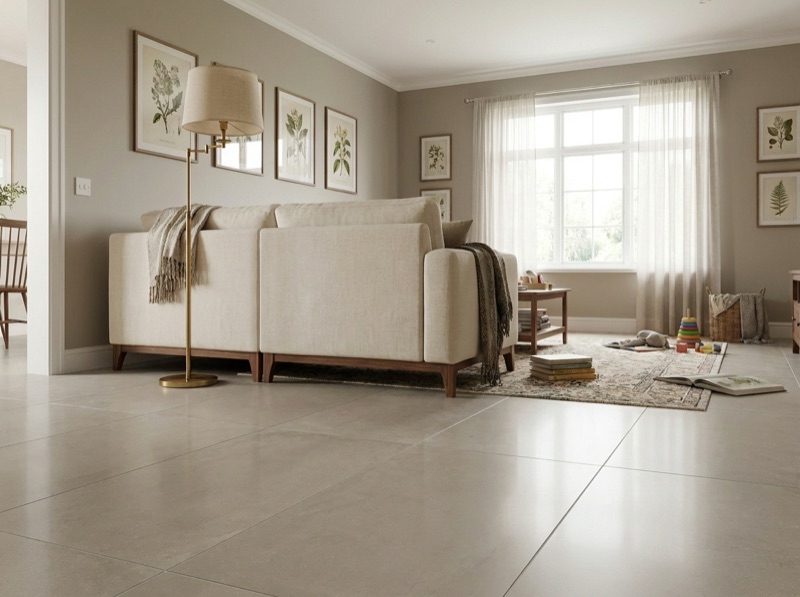
We sell both and we are not running them down. They are honest floors that do jobs wood cannot do, and a room that gets wet on a regular basis is better served by luxury vinyl plank or laminate than by anything with a wood surface. But they are printed and engineered hardwood is not, and four categories sitting side by side under the same lights is exactly how the question gets born. Vinyl plank against real wood takes that matchup apart properly.
Settling it yourself with a sample in your hand
You do not have to take anyone's word for it. Four checks separate a wood surface from a printed one, and all of them work standing at a counter with a board in your hand.
- Look for the repeat. A printed floor works from a limited set of photographed boards, so walk far enough down a run and you will meet the same knot a second time. Real wood never repeats, because no two boards came out of the same place in the tree.
- Look at the cut end. Wood grain runs through the top band and keeps going into the edge. On a printed floor the image stops dead at the surface and what sits below it looks nothing like the face.
- Read the spec sheet vocabulary carefully. On an engineered floor, wear layer means sawn hardwood and is quoted in millimeters. On a vinyl floor the same two words mean the clear film over the print and are quoted in mils. Identical phrase, different substance.
- Ask what species it is. A wood floor has one and the box will say so. A printed floor has a pattern name that is designed to sound like one.
What being real wood does not get you
The yes is not a promise about performance, and it cuts both ways. Because the surface is wood, it scratches like wood, it responds to the swing between a humid Missouri July and a January with the furnace running, and it is not waterproof. More moisture tolerant than a solid board, certainly, which is why it goes into rooms solid cannot handle. Waterproof, no. Water that sits will get into wood whatever the core is made of, so a room that has flooded before, or one where the floor gets wet as a matter of routine, is a room for tile or vinyl rather than for anything with a wood surface.
The yes also tells you nothing about how long the floor will last. Two engineered floors can both be entirely genuine wood on top and have very different lifespans, because one carries a generous layer of it and the other carries barely any. That single specification is the real quality question in this category, and it is the one that governs whether the floor can ever take a sanding. Real or not real is settled in a sentence. That one takes a spec sheet.
The question worth asking instead
Once the yes is out of the way, real against fake stops being a useful frame. What matters is where the floor is going and how much wood is on top of it. Over a concrete slab or over radiant heat, engineered is not a concession, it is the correct construction and usually the only wood that belongs in the room, which the slab question works through. Above grade over a wood subfloor, a solid board still earns its keep, and the head to head settles that room by room. Species is a separate decision again, covered in the durable species answer.
Then come and put your hands on both. The engineered hardwood page runs through what we stock, the Wentzville showroom keeps boards you can carry over to the window and look at in daylight, and the free in-home measure settles what is underneath the room you are flooring. Call 636-332-0654 and ask for the wear layer number on anything you are considering.
The follow-ups this one always raises
Laminate, composite cores and whether a real wood surface actually buys you the years.
636-332-0654No, and this is the single most common mix-up in the category. Laminate is a printed image of wood under a clear wear surface, bonded to a dense fiberboard core, with no hardwood anywhere in it. An engineered plank has a genuine sawn hardwood surface. Both are legitimate floors and we stock both, but only one of them is wood.
Yes. The core is a stability decision and it does not change what your feet are on. A plank with a sawn hardwood face over a composite core is a wood floor at the surface, which is the difference between it and laminate, where the face itself is printed. The core options are worth understanding on their own terms.
Not automatically. Being genuine wood and having enough of it are two different things, and the second one is what governs lifespan. A generous wear layer puts an engineered floor on a timeline much like a solid one. A thin layer does not, no matter how real it is. That specification has its own page, and it is the number to ask for.
See it next to a printed floor
Bring the rooms and the doubts. We will set a wood board beside a printed one so you can see the difference for yourself, then measure in your home before a thing is ordered.
Free estimate
636-332-0654