 Flooring Correct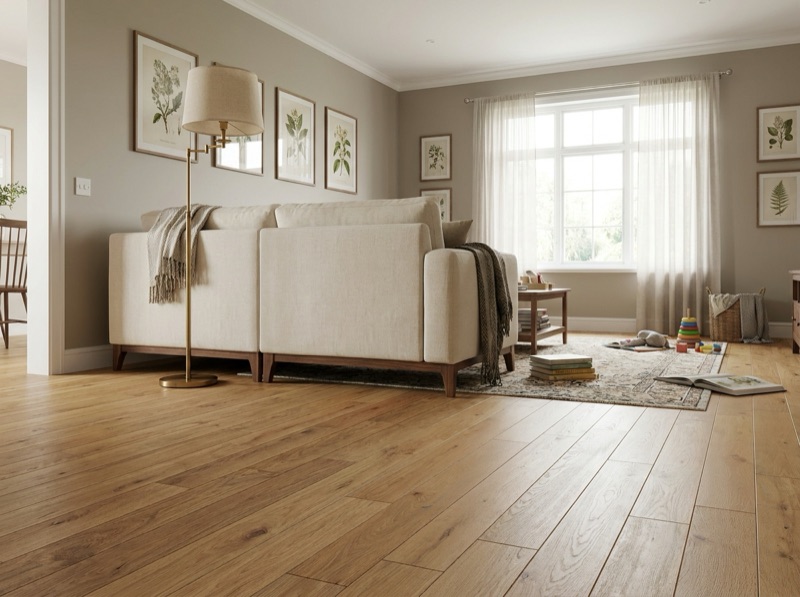

How do I match new flooring to existing trim?
Start with what the trim actually is. Painted trim is a neutral, so almost any floor undertone sits next to it. Stained trim carries a real undertone, and the floor needs to share its warm or cool lean rather than copy it exactly. If the trim is being repainted anyway, choose the floor first and the paint second.
Painted trim is a neutral, and that widens the field
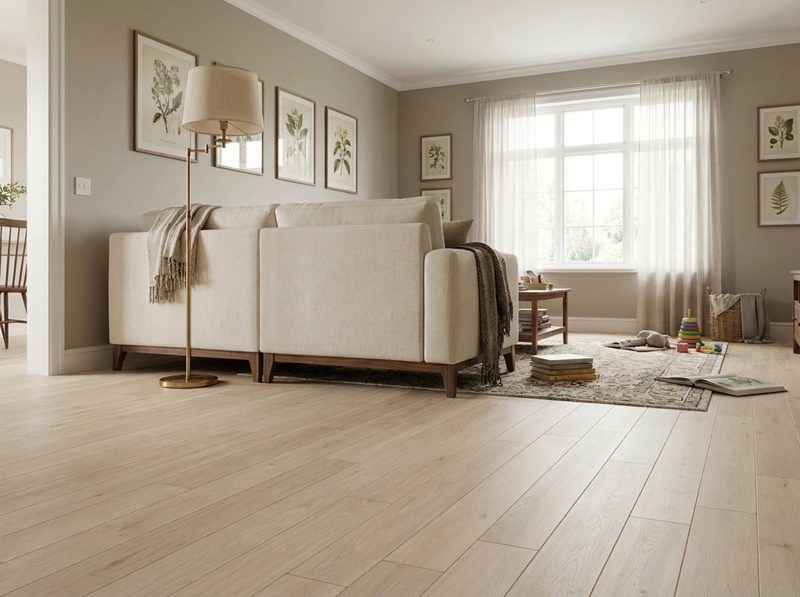
Start by naming what you are matching to, because painted trim and stained trim are two different problems wearing the same question. Paint is a neutral. It does not carry the depth of undertone a stain does, so a white or off white baseboard sits comfortably beside floor tones that would fight a stained piece of oak. The one thing worth checking is which way the paint itself leans, since almost every white has a bias toward warm or cool that only shows up once something real is held against it. Set the flooring sample flat on the floor against the baseboard, in the room the floor is going in, and that bias turns up immediately. Reading undertone off real material under real light is the whole method here, and it is worked through in full on the wall color page, so this page assumes it and moves on to what trim does differently.
Stained trim is the harder case, and near misses are what hurt
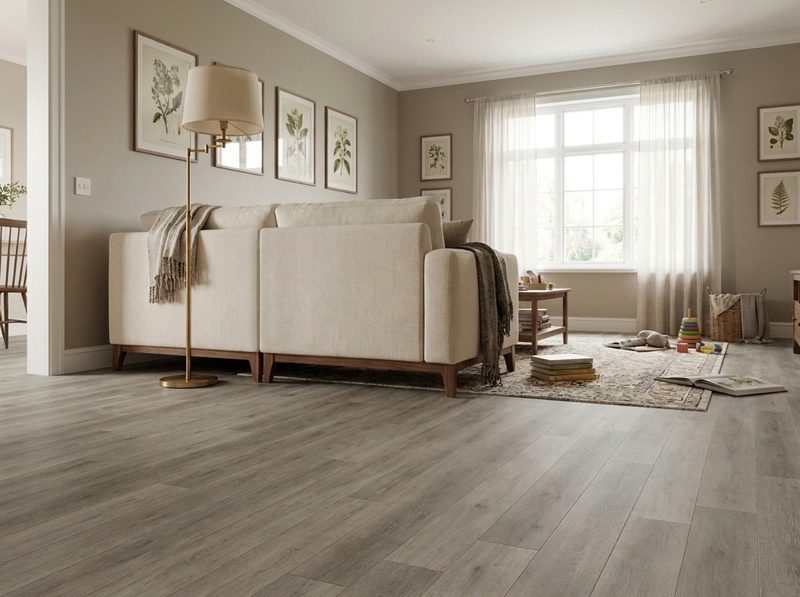
Stained trim carries a genuine undertone: red, orange, yellow, or a cooler brown that reads almost gray in daylight. The floor does not have to copy that stain. It has to make an obvious decision about it. A floor that clearly shares the trim's warm lean reads as chosen. A floor that clearly departs from it, a cool plank running up to a deliberately dark stained base, reads as a contrast somebody intended. What reads badly is the near miss: a floor half a step off the trim's tone, close enough that the eye keeps trying to resolve it into a match and never manages it. If your sample lands in that zone, the fix is to move further away rather than closer. The classic version of the clash, a flat gray floor with no warmth in it beside honey toned wood, is covered from the floor's side on our gray flooring page.
If the trim is getting repainted, the order of decisions matters
Plenty of these projects already include new paint, and that changes what you are comparing against. Hold the sample against the color the trim is going to be, not the color it is now, because the old baseboard is not the pairing that will exist once the job is finished. If the paint has not been picked yet, pick the floor first. Paint is by far the easier of the two to change later, and there is a white that works with almost any wood tone, while the reverse is not reliably true. Settling the order early also keeps two trades from tripping over each other, since trim painted before a new floor goes down and trim painted after it are different jobs with different masking and different risks to a finished surface.
What happens at the very bottom of the baseboard
There is a detail under this question that most people do not think about until the floor is going down. A new plank or laminate floor stops short of the wall to leave an expansion gap, and along an existing baseboard that gap is normally covered by a shoe molding or a quarter round run at the bottom of the trim. That small strip is a decision of its own. Finished to match the trim, it reads as part of the baseboard, and the floor simply arrives at it. Finished to match the floor, it reads as the edge of the floor and visually shortens the trim a little. Neither is wrong, and the choice matters most when floor and trim sit far apart in tone, because then the strip is the only thing standing between them. If the baseboard is coming off and going back on, or being replaced outright, the constraint disappears and the trim can simply be finished to whatever floor you actually want.
Settling it with real material
A sample looked at in a store is not the comparison you need. The comparison is that sample against your own baseboard, at the hour you actually use the room. Bring a photo of the trim, or better, an offcut if a past project left one behind, and we will hold full sized boards against it at the Wentzville showroom, then send the finalists home with you. Our gallery shows finished rooms where a plank run meets a doorway and where wood plank meets a brick hearth, which are the places floor and trim actually negotiate. The free in-home measure is where the shortlist goes back into your own room, against your own trim, before anything is ordered. Call 636-332-0654.
More on pairing flooring with trim
Exact matches versus intentional contrast, doors and casing, and how trim sheen changes the read.
636-332-0654No, and trying for an exact match is usually the wrong goal. What matters more is that the two share the same general warm or cool lean, so they read as chosen together rather than clashing. Some contrast between floor and trim is normal and often looks more intentional than a near-identical match that misses.
Usually they are all one package, painted or stained the same way as the baseboard, so answering the baseboard answers them. Where they differ, a house with stained doors and painted baseboards for instance, defer to whichever surface carries more visual weight in the room, which is normally the one you see the most of from the doorway.
It affects how strongly the color reads, since glossy painted or varnished trim reflects more light and can look lighter or brighter than the same color in a matte finish. It is worth comparing at the sheen the trim will actually end up in, not against an old sample in a different finish.
See it against a full sized board, not a chip
Bring a photo or an offcut of your trim. We hold real boards against it on the showroom floor, then bring the shortlist back to your actual room at the free in-home measure.
Free estimate
636-332-0654