 Flooring Correct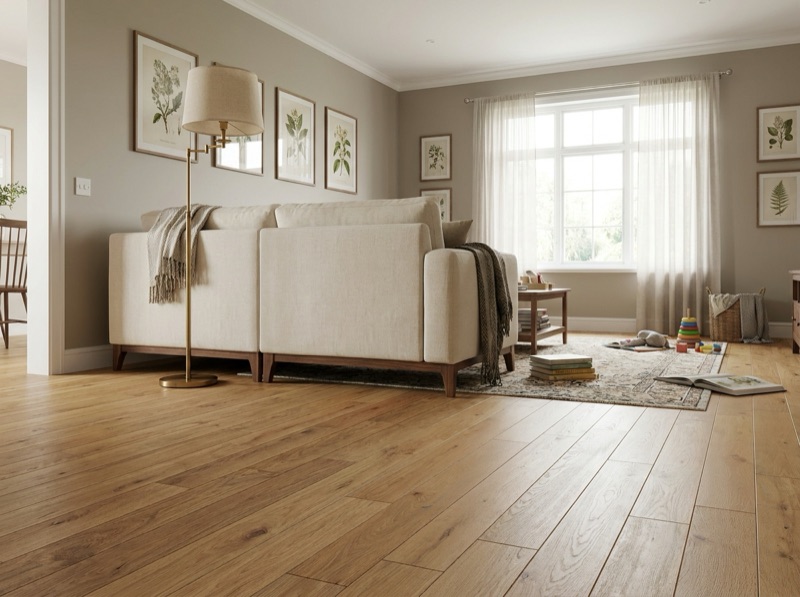
Is laminate good for dogs?
Yes, more than its reputation suggests. The belief that laminate scratches easily comes from confusing it with hardwood. A laminate wear layer is loaded with aluminum oxide, harder than the finish on a site-finished wood floor, and it generally shrugs off claws. The real risk for a dog household is moisture at the seams and how a paw grips the surface, not scratching.
Ask most people why they're nervous about laminate with a dog in the house, and claws come up first. That worry is inherited from hardwood, where a dog's nails genuinely can mark a finish over time, and from thin, low-grade laminate decades ago that scuffed and dented the way its reputation still suggests. Neither reason holds up against what a laminate wear layer is actually built from.
What the wear layer is actually doing
The clear top layer on a laminate plank is melamine loaded with aluminum oxide, one of the harder abrasives used on a residential floor, sitting over a printed layer that carries the wood look rather than being wood itself with a soft finish on top. That construction is why laminate generally shrugs off the things that mark real wood: claws, chair legs, grit tracked in off the driveway. If the worry is scratching, laminate is one of the stronger answers in the house, not a weak one.
Even so, no wear layer lasts forever against everything. A determined dog, a dropped bone, or years of the same nail crossing the same three feet of hallway can eventually leave a mark the way anything eventually can. Because <a href="/materials/laminate-layer-anatomy/">laminate can't be sanded and refinished</a>, the fix for a genuinely damaged plank is the same one as anywhere else in the house: pull it and swap in a spare from the same run, which is why keeping a box back is worth doing in a dog household more than almost anywhere else.
What the real risk actually is
The genuine risk with a dog in the house isn't the surface, it's the seams. An accident, a knocked-over water bowl, or a wet paw dripping by the back door sends water toward the joint between planks rather than the middle of one, and <a href="/materials/water-resistant-laminate-tech/">that's exactly where laminate is built to resist water, not ignore it</a>. A household that wipes up after itself the same day is a very different case than one that leaves puddles unattended for a while.
Traction is the other honest factor. A smooth, glossy laminate can be slicker under a dog's paw pads than a textured or lower-sheen surface, especially for an older dog or one that runs through the house at speed. That's a texture and finish question worth raising at the counter, not a reason to rule laminate out on its own.
Where laminate for a dog household actually sits
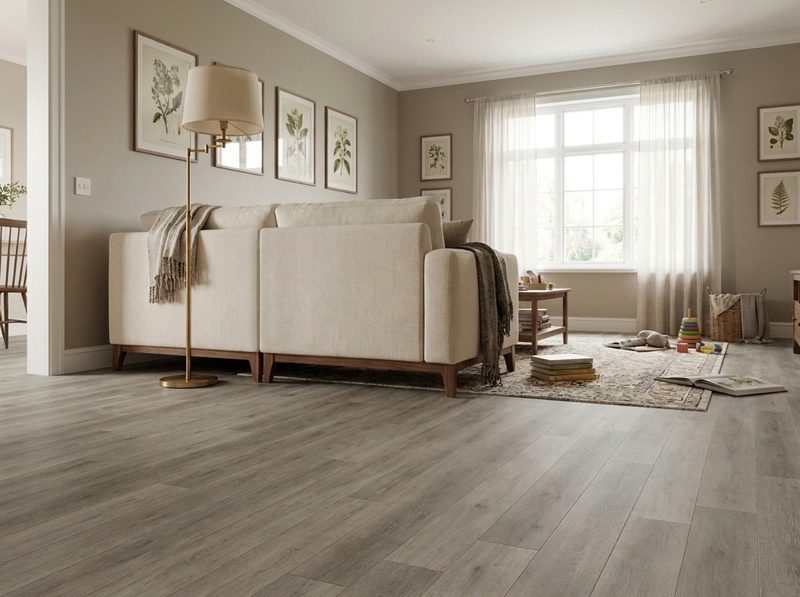
The living room page covers the room where this decision usually gets made: a dry, busy space with dogs, kids and dragged furniture is exactly where laminate's hard face is an advantage rather than a liability. The class printed on the box still matters here. The pillar page names AC4 as the tier for houses with dogs, and what that number actually measures is its own subject worth a look before you order.
The other rooms a dog actually uses
A living room isn't the only room worth thinking through. The entry a dog uses to come back inside sees grit, mud and wet paws at the door far more than the room they nap in all afternoon, and that traffic pattern can matter more for the underlayment and the edge seal than for the plank's finish. A kitchen with a water bowl in the corner is a similar case, and it's covered on its own on the kitchen page, alongside every other reason that particular room asks more of a floor than most.
More on laminate in a house with dogs
Scratching, traction underfoot, and what an accident actually risks.
636-332-0654Unlikely, and less than most people expect. The wear layer is loaded with aluminum oxide, which is harder than the finish on a site-finished hardwood floor, so it generally resists the marks claws leave on real wood. The bigger factor for a dog household is what happens at the seams, not what happens on the open surface.
It can be, depending on the sheen and texture of the specific line. A high-gloss, very smooth laminate offers less grip under a paw than a textured or lower-sheen surface does. It's worth mentioning at the counter if you have an older dog or a breed that runs indoors, so we can point you toward a grippier finish.
Not if it's found and cleaned up in a reasonable amount of time, which is exactly what water resistant laminate is built to survive. The risk grows with how long the moisture sits at a seam, since that's where it can reach the core, not with the simple fact that an accident happened once.
Tell us where the dog actually spends time
The water bowl corner, the door they come in wet, the room they nap in all day: that's the map that decides the AC class and the underlayment, and it's exactly what the free in-home measure walks with you.
Free estimate
636-332-0654