 Flooring Correct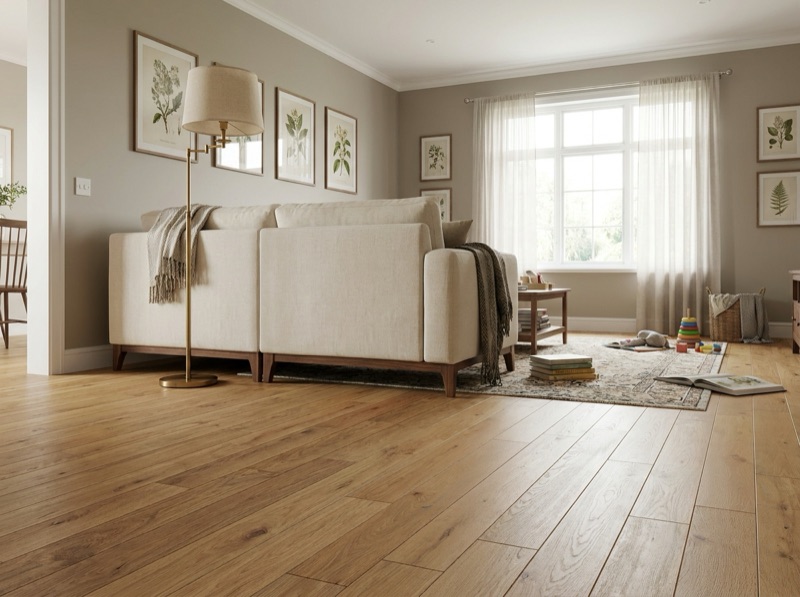
Is laminate out of style?
The reputation is out of style. The laminate that earned it, shiny, narrow, repeating the same three or four planks across a room, mostly stopped being made years ago. What decides whether today's laminate reads as current is the plank's pattern repeat and its sheen, not the fact that it's laminate. Check both before you judge the category by an old floor.
Picture the laminate that gives the category its bad name: high gloss, a narrow strip format, and the same handful of plank photographs repeating across the room in an obvious, regular rhythm. That floor was common at one point, and it looked exactly like what it was, a photograph of wood rather than wood. The pillar page walks through what a plank is actually built from, but the style question is a separate one from the construction question, and it deserves its own walk-through.
Where the reputation came from
That old look was not a flaw in laminate as a category. It was the print and finish technology of one era, and it went into a great many houses inside a short stretch of time. A small set of decors got specified over and over, so the same few plank photographs turned up in a rental, in a flip and in a friend's lower level, and anybody who saw all three read it as one floor rather than three. High gloss made it more obvious, not less, because gloss reads well on a lit showroom wall and then throws a hard sheet of reflection across a real room with real furniture in it.
Reputations in flooring also run behind the product, because a floor stays down long after it stops being sold. The laminate most people picture when they ask this question is still on somebody's floor right now, still doing its job, and still looking like the year it was bought. That is the image the category is arguing against. It is not a description of what is on a sample wall today.
Pattern repeat is what gives a plank away
The pillar page lists the specs that separate the two looks, embossing, pattern repeat, bevel and sheen, and that is the place to read them together. Two of them you can test yourself with boards in your hands, and pattern repeat is the one that does the most damage when it goes wrong.
A room can have honest texture and a generous board size and still read as fake the moment a guest clocks the same knot twice in one glance. That is not a color problem and no amount of good lighting hides it. It is also the hardest thing to judge from a listing, because a product photo only ever shows you one board, cropped and lit from one side. The repeat does not exist until boards sit next to each other, which means it cannot be seen at all until you put two of them down.
Sheen is the quiet second decider
A high gloss finish is the other giveaway, because real wood dulls as it gets lived on and a shiny laminate never does, which is exactly the mismatch that reads as artificial in a room full of other worn-in materials. Lower sheen sits closer to where a wood floor ends up on its own, so it is worth asking which lines carry a lower sheen version of the decor you like. That is a quick question at the sample wall and it changes how the whole room reads.
The two-sample test, in your own light
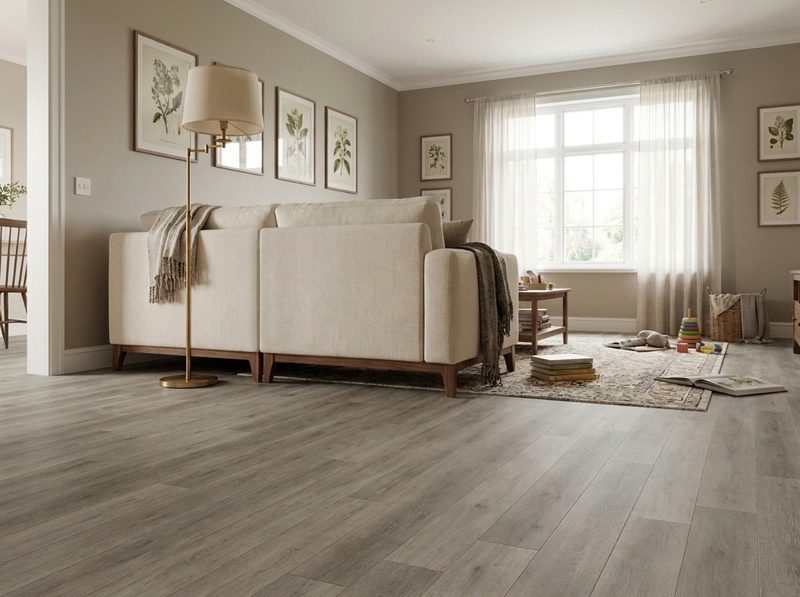
Do not judge a decor from one board. Bring a few samples home, set two or three of them down touching each other in the room they are actually going in, and look at them at the hour that room gets used. Two things surface immediately that a single board under showroom lighting will hide: whether the same plank image comes back within a few feet, and how hard the surface throws light once it is lying flat instead of standing on a wall.
Light is why the second half of that test matters. A decor that reads warm under one bulb can read gray under the next, and a sheen that looked restrained at eye level can flare across the floor when late sun comes in low through a window. The showroom is where you narrow the field to a few boards. Your own hallway, at your own time of day, is where you pick between them.
What style does not decide
None of this makes laminate as a category dated. It makes some individual planks dated and others current, the same way it does for any material. Style is also a separate axis from durability: how long the plank actually holds up is decided by different specs entirely, and what sits underneath the print explains why texture and pattern behave the way they do in the first place.
More on judging a laminate sample
Pattern repeat, plank width and sheen, the things that separate current from dated.
636-332-0654Lay two or three samples side by side under the room's actual light rather than judging one board under showroom lighting. Check whether the same plank photograph comes back within a few feet, and check the sheen against how worn-in the rest of the room already looks. Those two things matter more than the color you end up picking.
Format is one of the specs the pillar page lays out, and the trend has run toward wider and longer boards for a long stretch now. Narrow strip is the format most associated with the older, obviously printed look. A well executed narrow plank in the right room still works, so treat that as a starting point rather than a rule.
Not always, but it is a risk worth knowing before you choose one. Real wood dulls as it is lived on and a high-gloss laminate never does, which can read as artificial next to older furniture or trim. If that worries you, ask which lines in the showroom offer the same decor in a lower sheen and set the two against each other.
Narrow it down to a few boards, not one photo
Lay a few laminate samples side by side at the counter and the pattern repeat and sheen sort themselves out fast. Bring a cabinet door or a paint chip and we'll set today's options against it.
Free estimate
636-332-0654