 Flooring Correct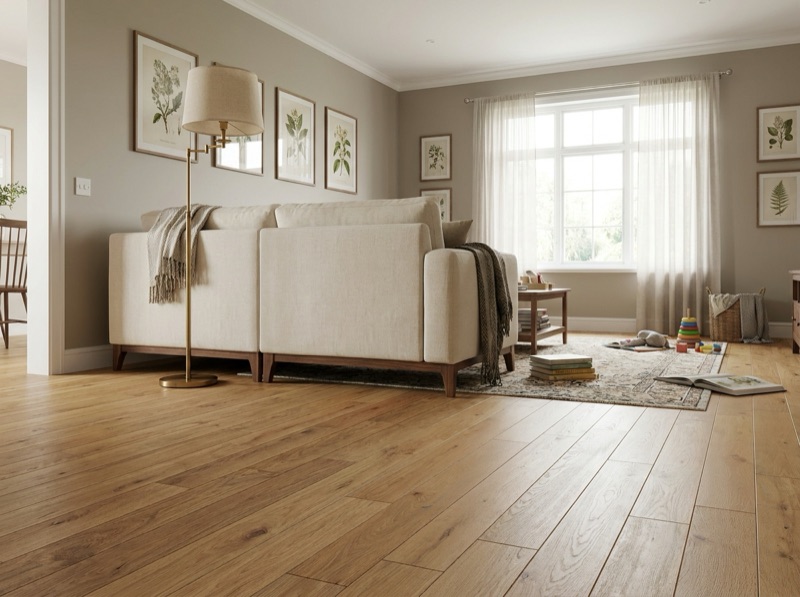

What flooring makes a low ceiling feel taller?
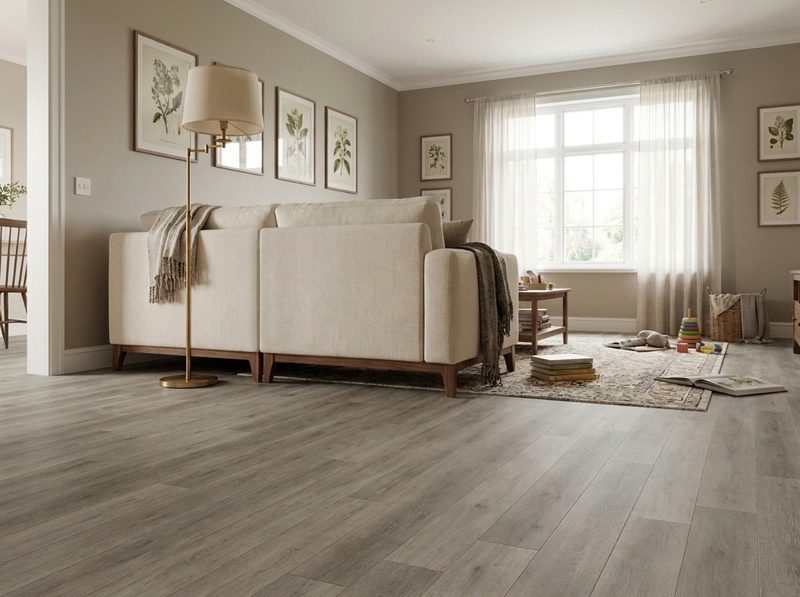
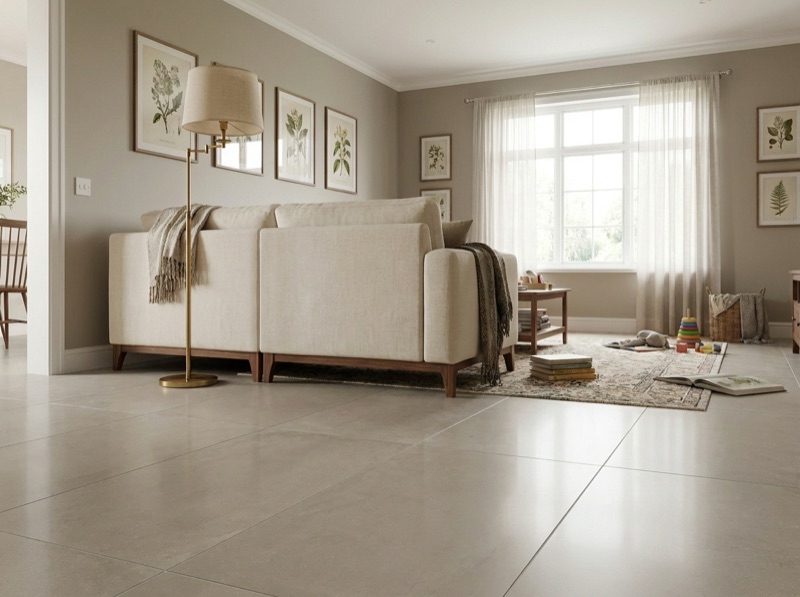
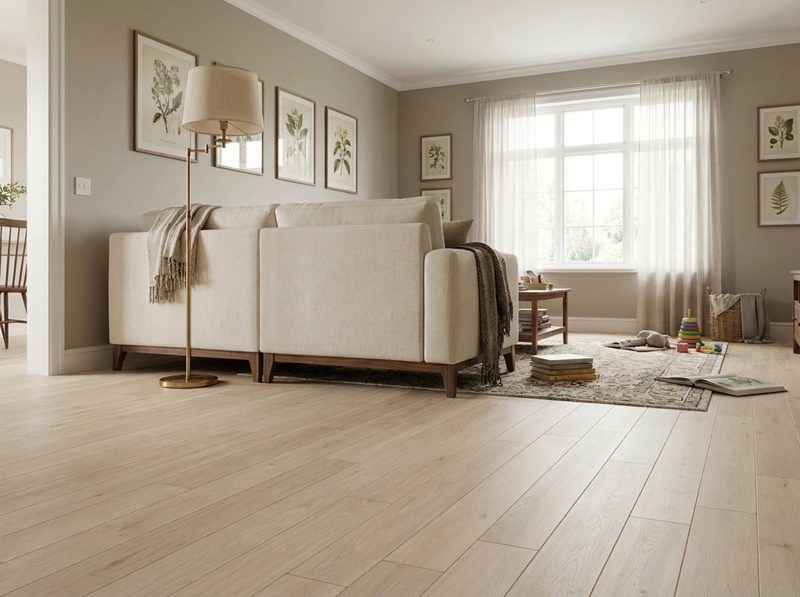
A floor kept close in tone to the baseboard and trim, with a low, matte or satin sheen. Removing the visible line where floor meets wall lets the eye travel up the wall uninterrupted, instead of stopping at a hard edge near the floor. The trade is a room with less definition and less contrast to hide daily wear, which is not free.
What you gain: an unbroken line from floor to wall
A low ceiling reads low because the eye finds a hard stopping point near the floor and measures the remaining height from there. A floor kept close in value to the baseboard and lower wall removes that stopping point. There is no strong line telling the eye where the room ends at the bottom, so it travels further up the wall before it registers a boundary, and the ceiling reads a little higher as a result. Sheen adds to it: a low, matte or satin finish reflects light softly rather than throwing a bright horizontal band across the floor plane, which keeps attention from settling low in the room in the first place.
What you give up: definition and forgiveness
That same low-contrast floor is harder to live with day to day. A floor close in tone to the trim shows scuffs and dust with less to hide them behind, which is the same contrast mechanism covered in full on our dirt-hiding page. It also gives the room less definition. A floor with real contrast against the walls anchors a space and makes furniture placement read as intentional; a floor that blends into everything around it can leave a room feeling underfurnished even when it is not. Neither trade is free, and pretending otherwise is how people end up disappointed with a floor that did exactly what it was chosen to do.
Where the height trade actually wins
A finished basement is the clearest case, because ceiling height there is often genuinely tight and the room usually has no other feature competing for attention. A low-contrast floor is worth the trade in that setting, and it pairs with the wider material logic already covered on our basement page, where slab moisture rules out some of the darker, more absorbent options anyway. A finished attic bedroom with sloped ceilings is another strong case, since the ceiling itself is already the room's defining feature and a quiet floor keeps attention off the one thing working against the space.
Where the definition trade wins instead
A room with a low ceiling but plenty of natural light and a clear architectural anchor, a fireplace, a bay window, a run of built-ins, often does not need the height trick at all. In that room, a floor with real contrast and personality does more good than a few inches of borrowed visual height, because the ceiling was never the room's main problem to begin with. Judge the room honestly before defaulting to the low-contrast strategy everywhere a ceiling happens to be lower than average.
The mistake this is meant to prevent
The actual mistake is not choosing the wrong floor. It is pairing a light, low-contrast floor with a dark, strongly contrasting baseboard or door trim, thinking a light floor alone solves the height problem. That combination puts a bold horizontal line right where you least want one, at ankle height, and it undoes most of what the floor color was trying to do. If height is the goal, the trim has to be part of the decision, not an afterthought painted after the floor goes in.
Bring a photo of the room with its existing trim, and a sample of the trim color if it is staying, when you come in. We will set floor samples next to it under the room's own light at 15570 Veterans Memorial Pkwy, since the trade only shows itself once floor and trim sit side by side. The free in-home measure is where the two get planned together rather than chosen apart.
More on ceiling height, sheen and trim
Glossy floors, when a dark floor still works, and how close the trim color actually needs to be.
636-332-0654It can, because a glossy sheen throws a bright horizontal reflection across the floor plane, which draws the eye down and holds it there rather than letting it travel up the wall. A low, matte or satin sheen does the opposite by scattering that light instead of bouncing it back as a sharp band. Sheen matters as much as color in a room where ceiling height is the concern.
Yes, when the room has another feature worth defining, since a dark floor with real contrast grounds a space rather than stretching it. A low ceiling paired with a strong architectural element, a fireplace or a run of windows, often reads better with a floor that commits to contrast than with one trying to disappear. The height trick is a tool for a room with nothing else going for it, not a rule for every low ceiling.
Not necessarily the same color, but close in value is what actually matters for the height effect. An exact match can look accidental, while a trim and floor a shade or two apart within the same tone family still removes most of the hard line the eye would otherwise stop at. The failure mode is contrast, a dark trim against a light floor, not an imperfect match.
Bring a photo with the trim in it
The height trick lives or dies on how the floor meets the baseboard, so bring a shot of the room as it is now. We'll set samples against your actual trim before you choose either.
Free estimate
636-332-0654