 Flooring Correct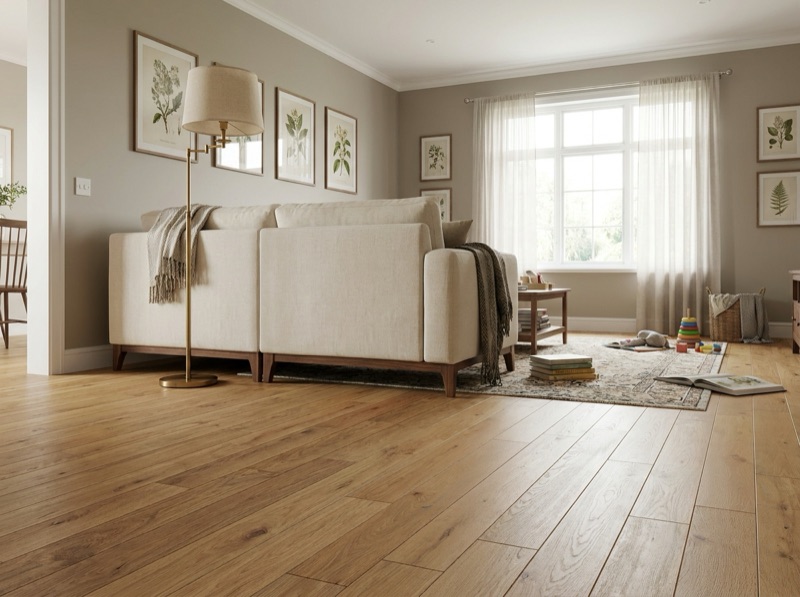
What flooring works for aging parents moving in?
Before comparing samples, walk the actual rooms with whatever your parent uses to get around. That walk shows you where height changes and glare cause hesitation, more than any material name would. What it cannot show you is how a floor behaves once it is wet, because wet traction is a lab measurement, not something you can feel from a dry sample at home.
Walk the house the way your parent will
Before comparing a single sample, walk the actual rooms your parent will use with whatever they get around on, a cane, a walker, a wheelchair, or simply a slower and less steady step than the rest of the household. Note every place the walk changes character, a threshold between rooms, a rug edge, a shift from one flooring to another, a turn into a bathroom. Do it at the time of day they are usually up and moving, since evening light changes what a floor shows you and what it hides.
What that walk actually tells you
It tells you where height changes and transitions sit, because those are the spots a foot, a cane tip or a wheeled walker most often catches, more than the flooring material itself ever decides. It tells you where glare shows up: a glossy, reflective floor under a window or an overhead light can visually read as wet or uneven to eyes that take longer to adjust to changing light, and that reads as hesitation at exactly the wrong moment, more than it reflects any real difference in traction. It also tells you which rooms are simply too dim in the evening, a fix that is about a light switch as much as it is about a floor.
What it cannot tell you
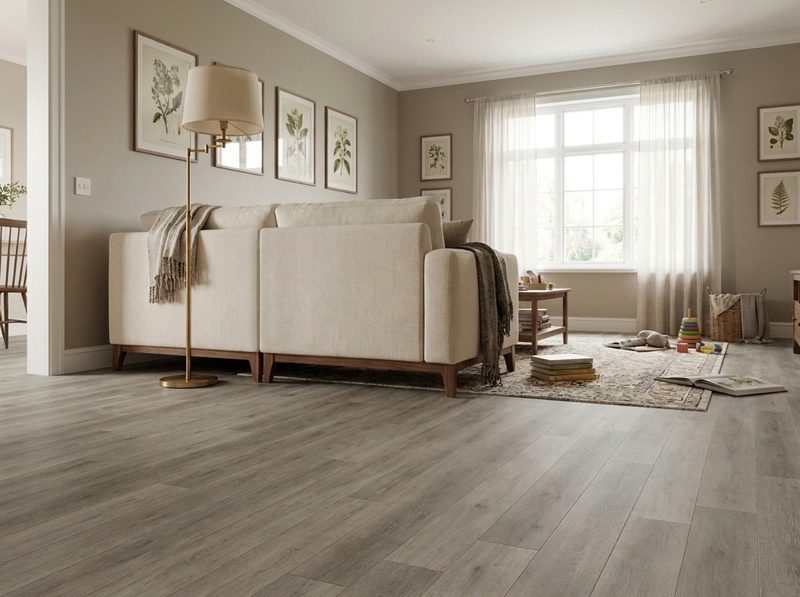
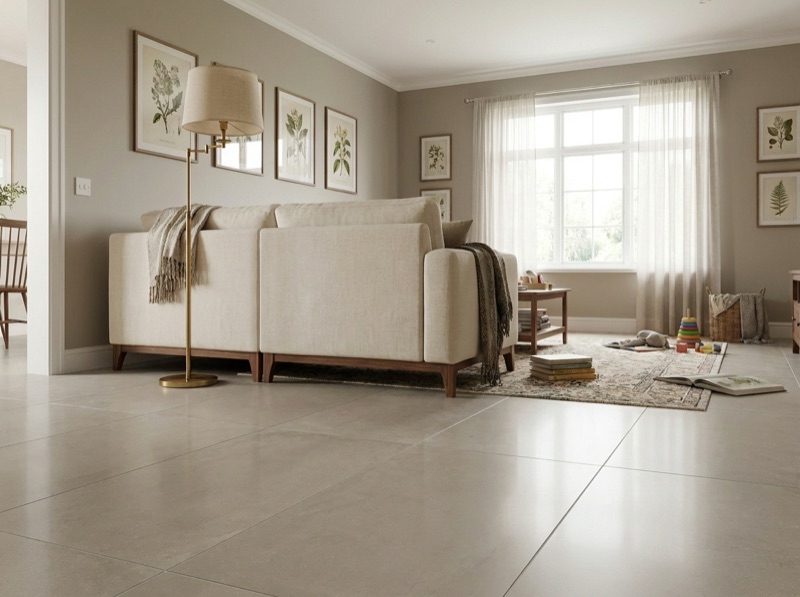
A walkthrough cannot tell you how a floor behaves once it is wet, which is exactly what matters most in a bathroom or a kitchen, the rooms most worth getting right. Wet traction is a lab measurement, and feeling a dry sample under a showroom light will not stand in for it. If the room is going tile, that figure is one of the numbers printed on the sample tag, and the tile page explains what it has to clear. Vinyl, laminate, wood and carpet do not carry the same published figure, so the useful questions there are texture and sheen: a surface with some grain or grip to it, finished matte or satin rather than high gloss.
A walkthrough also cannot tell you what the subfloor underneath an existing floor is doing, how flat it is, or how much room is left under each door once a new floor adds its own height to the room. Those get checked in person at the free in-home measure, alongside the thresholds and transitions you already noticed on your own walk. Anything else the house needs to make a room work for a slower step is a conversation worth having out loud while somebody is standing in it with you.
Stand on it before you decide from a screen
Bring the list of what you noticed, thresholds, glare spots, the rooms that felt dim. Full-size planks and tiles are laid out under real light at the Wentzville showroom, so you can repeat the same glare check you ran at home while standing on the actual surface, rather than guessing from a photo or a sample chip on a screen. A texture that reads flat in a picture often reads completely differently under a real shoe, and that difference is the whole reason the showroom exists.
More on flooring for an aging parent
Walkers and canes, the carpet-versus-hard-surface question, and what glare actually does to a slower step.
636-332-0654The safer answer usually has less to do with the material family and more to do with removing height changes between rooms and keeping a consistent, matte, non-slick surface along the path they use most. In a bathroom or an entry going tile, the wet slip-resistance number on the sample tag settles it better than feel does. For other materials, ask about surface texture and sheen instead.
Both have a real case. A low, dense carpet run continuously removes the height-change problem at doorways and cushions a stumble. A hard surface with a matte, textured finish is easier for a walker's wheels or a cane tip to glide across in a straight line. The honest answer depends on which rooms are involved and what mobility aid is in use.
There is no direct claim to make there, but a high-gloss, reflective surface can visually read as wet or uneven under changing light, and that reads as hesitation, which is its own hazard in a doorway or on a stair. A matte or satin finish removes that visual confusion, which is a separate issue from the floor's actual measured traction.
Stand on it before you decide from a screen
Bring the list of what you noticed on your walkthrough, thresholds, glare spots, the rooms with low light. Full-size samples are on the floor at our Wentzville showroom so you can feel the traction and see the glare for real, then we measure the actual rooms before anything is ordered.
Free estimate
636-332-0654