 Flooring Correct

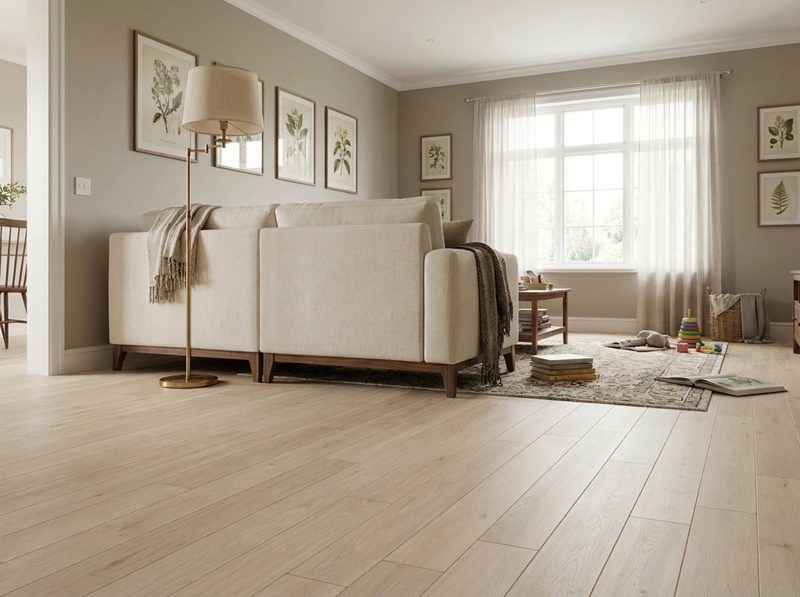
What happens to floors over a crawl space?
The main floor above a vented crawl space sits close to ground that gives off moisture constantly and to vents that let outside humidity and cold in and out with the seasons. The subfloor swings with that air more than a floor over a heated basement does. Left unchecked, that shows up as cupping, squeaks or a soft feel underfoot.
A crawl space is not a basement and it is not a slab. It is the low, unfinished gap between the ground and the first floor of the house, tall enough to get into but not to stand in, usually left unconditioned and vented straight to the outside air. That last part is the whole story of this page.
The ground below never stops giving off moisture
Bare or lightly covered dirt under a house behaves the way concrete does above grade. It sits in contact with the water table and the surrounding soil, and it releases vapor upward continuously, not only after rain. A crawl space with no ground cover down there is effectively an open dish of moisture sitting a few feet under your living room.
Foundation vents complicate that rather than solving it. They exist to let air move through the space, and in doing so they let whatever the outside air is carrying in with them. A humid August afternoon pushes damp air into the crawl space. A dry, cold January does the opposite. The result is a space that tracks the outdoor weather far more closely than the room above it does, which is a different situation from a basement that is at least partly buffered by conditioned space around it.
Why the floor above answers to what is below it
The subfloor, usually plywood or OSB nailed to joists, sits a short distance above that swinging air. Wood based subfloor material exchanges moisture with the air around it, so a subfloor over a damp, unvented or poorly vented crawl space can be measurably wetter than the same panel over a conditioned basement, even when nothing has ever leaked. That moisture content in the subfloor is exactly what the finished flooring is fastened, glued or floated onto, which is why what happens down in the crawl space rarely stays down there.
What it means for the material you choose
A crawl space foundation does not rule a room out. It changes what the subfloor needs before flooring goes down and it changes how forgiving the finished material has to be of a subfloor that moves a little with the seasons. Some materials tolerate that swing comfortably and some do not, and which is which depends on the room and the specific product rather than the crawl space alone, so we would rather look at both together at the free in-home measure than guess from a description over the phone.
The failure mode if it goes unchecked
The signs show up in the flooring, not in the crawl space, which is part of why they get missed until they are well established. Boards that cup or crown, a subfloor that develops a soft or springy feel in one part of the room, seams that open wider than the rest of the floor, or a faint musty smell rising through the boards on a humid day. The mechanism behind wood cupping specifically is its own question, and it applies here whether the moisture is coming from a crawl space or somewhere else.
How to check it yourself before it becomes a flooring problem
You can learn a fair amount before anyone comes out. Open the crawl space access and look for a continuous plastic ground cover over the dirt rather than bare soil. Check that vents are not blocked by landscaping, mulch or stored items. Look and smell for standing water, wet insulation sagging out of the joists, or a musty smell that gets stronger as you get closer to the ground. Upstairs, walk the room slowly and note any spot that feels softer or springier than the rest of the floor.
What that walkthrough does not tell you is how much moisture the subfloor is actually holding right now, or whether what you are smelling is active or a leftover from a wetter season last year. That reading needs a moisture meter on the actual wood, which is part of what gets checked at the free in-home measure, alongside the rest of the eight steps covered on our installation process page. If there is standing water down there right now, or the crawl space has never been looked at, that is worth mentioning before we ever talk about samples. Call 636-332-0654 and tell us what you found.
More on flooring over a crawl space
Ground covers versus flooring vapor barriers, and whether a given material tolerates the swing.
636-332-0654No. A well vented crawl space with a continuous ground cover and no standing water can sit for decades without ever causing a flooring issue. The concern is a crawl space with bare dirt, blocked vents or water that collects after storms, which is common enough to be worth checking rather than assuming either way.
No, and the two do different jobs. A continuous ground cover laid over the dirt in the crawl space cuts off moisture at the source for the whole structure. A vapor retarder built into the flooring installation deals with whatever moisture still gets past that. Whether your job needs the second one is covered on its own page.
Often, yes, and it tends to be more forgiving of subfloor moisture swings than solid hardwood or laminate. Whether it is the right call for your specific room still depends on how damp the crawl space is and what condition the subfloor is in, which is exactly what gets assessed in person before anything is recommended.
Tell us about the room over your crawl space
Whether the crawl space has a ground cover, whether the vents are clear, and whether the floor above has ever felt soft in one spot. We check the subfloor in person before recommending anything.
Free in-home measure
636-332-0654