 Flooring Correct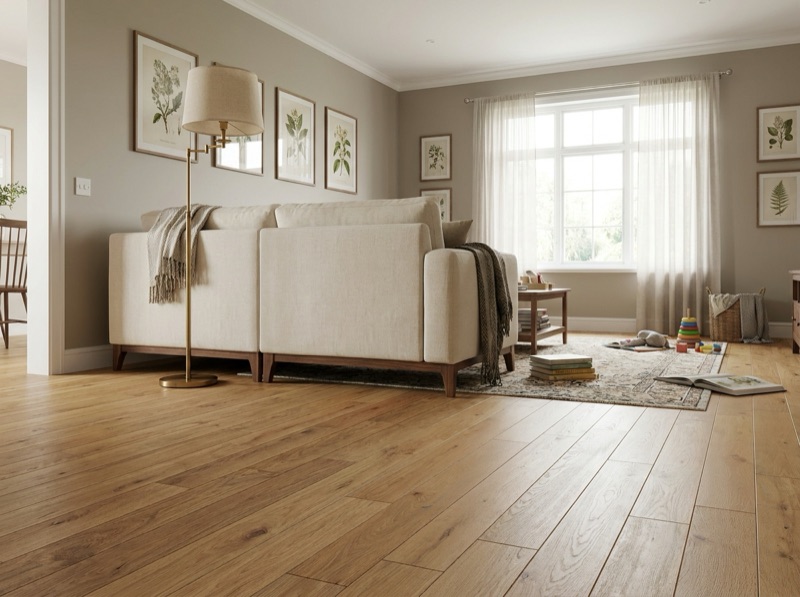
Laminate vs
Hardwood:
Upkeep or Permanence
Hardwood can be refinished decades from now and carries a resale case laminate cannot fully claim. Laminate asks far less of a busy household week to week and shrugs off a chaotic Tuesday better. Both claims are true. This page says exactly where each one carries the room.
Laminate and hardwood both give a room a wood look underfoot, and the honest reason people compare them is that the choice usually comes down to how much upkeep a household actually wants to sign up for. Hardwood rewards patience with permanence: it can be refinished and can plausibly outlast your ownership of the house. Laminate rewards a busy household with lower day-to-day demands and real toughness against kids, pets, and daily traffic. We sell both, so here is where each one honestly wins. Call 636-332-0654.
What each side is actually offering
Hardwood's case is permanence. A solid wood floor can be sanded back and refinished when the surface scratches, dents, or simply goes out of style, which means the same boards can look new again years from now instead of getting torn out and replaced. That renewability is also most of why hardwood carries the stronger resale reputation of the two, since buyers read it as a lasting feature of the house rather than a finish with a countdown on it. That same renewability is why many owners treat a hardwood purchase as a one-time decision for a room rather than something to revisit on a schedule.
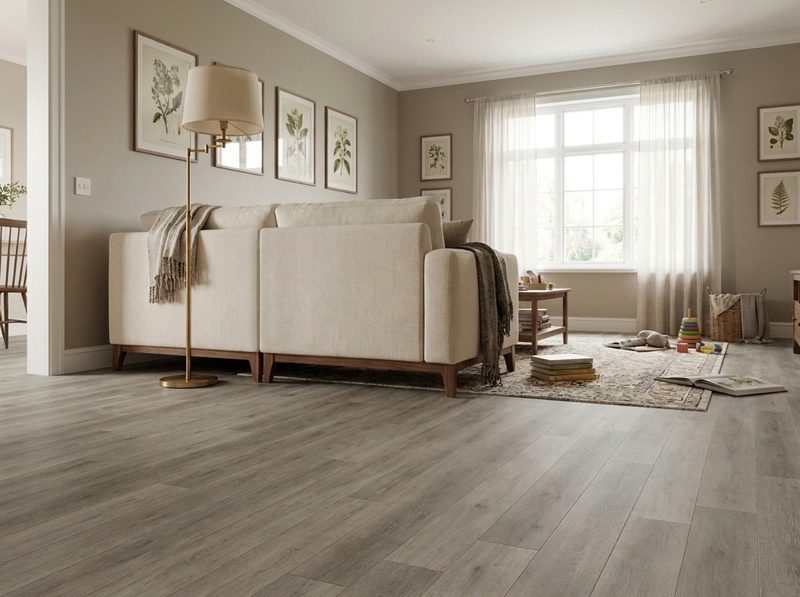
Laminate's case is how little it asks of you day to day. Its wear layer resists scratches from kids, claws, and everyday traffic better than a finished wood surface does, it does not need felt pads policed under every chair leg, and there is no refinishing to schedule ever. For a household that wants a wood look without babying the floor, that lower-maintenance reality is laminate's real strength, not a consolation prize next to hardwood.
Where each one actually struggles
Hardwood's honest weakness is that it demands real, ongoing attention to look its best. Direct sun fades and unevenly ages a wood finish over years unless it is managed with blinds or curtains. Humidity swings through a Missouri winter and summer ask for some discipline to avoid gaps and cupping. And while a wood floor can be refinished, it cannot be refinished forever. Each pass removes a thin layer of the wearable surface, and eventually there is not enough wood left to sand.
Laminate's honest weakness is water, and this deserves a plain answer rather than a soft one. Laminate as a category is not waterproof. Its core is wood based, and sustained moisture, a slow leak, a flooded room, standing water left too long, will swell and damage it in a way that cannot be sanded out or refinished away the way a scratch on hardwood can be. One brand name we carry happens to include the word Aquaproof, but that describes a single product line, not a claim about laminate generally. Genuinely wet rooms are not laminate's job, and framing it otherwise would be dishonest. That single fact is worth repeating plainly, since it is the one place this comparison cannot be softened for the sake of a sale.
Underfoot and sound, briefly
The two floors do not feel identical to stand on either. Laminate typically sits over a thin underlayment that gives it slightly more give and a bit less hard clack than a nail-down hardwood floor delivers, though neither is soft the way carpet is. Hardwood tends to carry footsteps and dropped items a touch more audibly through the room and to the floor below in a two-story house, while laminate's underlayment absorbs a small amount of that sound. It is a modest difference next to the upkeep and permanence questions this page leads with, but it is worth standing on both to notice for yourself before deciding.
The verdict, room by room
- Living rooms and formal entries: hardwood, for the permanence and resale case buyers respond to.
- Playrooms and family rooms with heavy daily use: laminate, since its wear layer tolerates a busy household better day to day.
- Home offices: either, decided by chair wheels and whether refinishing years from now is part of the plan.
- Bedrooms: either is reasonable, though laminate's lower upkeep suits a room nobody wants to fuss over.
- Bathrooms and laundry rooms: neither. Laminate is not built for standing water and this is tile's job, not either material's.
- Basements: neither, generally. A slab is a poor match for hardwood and a real risk for laminate's wood-based core.
Where a third material crashes the comparison
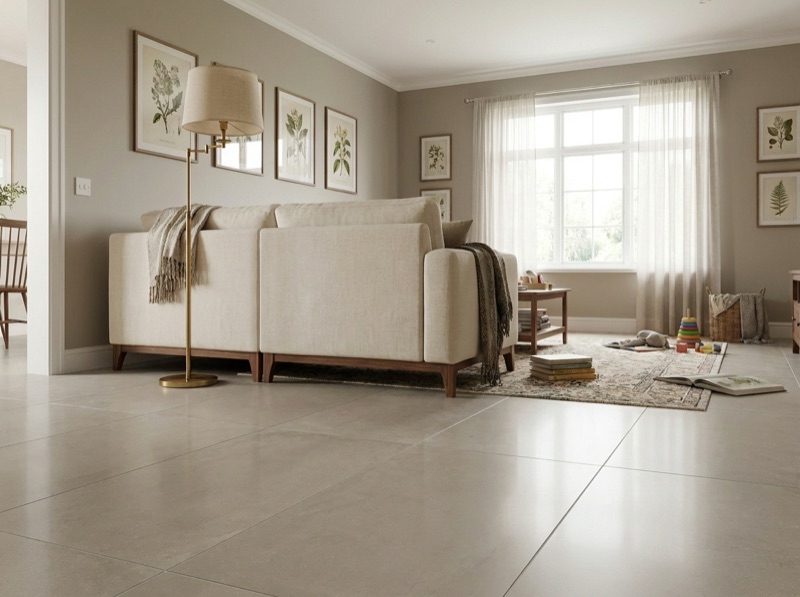
This matchup has a real blind spot worth naming. In any room where water sits rather than passes through, a bathroom, a laundry room, an entry with heavy snow melt, the honest answer is tile, and the full case for that is already made on tile versus laminate rather than repeated here. And where a slab or radiant heat makes solid wood impractical but the look of real wood still matters, solid versus engineered hardwood is the more useful page than this one.
The maintenance ledger, honestly
Hardwood's upkeep is real and ongoing: felt pads under furniture, blinds or curtains managing direct sun, humidity kept in a reasonable range, and a refinish scheduled every so often rather than treated as an emergency. Laminate mostly wants sweeping and occasional damp mopping, no wax, no refinishing, no humidity babysitting. That gap is small across any single week and considerable across years of an ordinary busy household, which is exactly why families with young kids or several pets so often land on laminate for the rooms they actually live in.
The permanence question, without the folklore
The folklore says hardwood is forever and laminate is disposable, and like most folklore it stretches a real pattern too far. Hardwood genuinely can be sanded back to new, repeatedly, which laminate cannot do at all. But a well chosen laminate floor, properly installed over a suitable subfloor, holds up for years of real household use without asking for anything beyond routine cleaning, and a damaged plank can typically be pulled and swapped rather than requiring the disruption of a hardwood refinish. Permanence and low maintenance are both legitimate goals. They are just not the same goal.
What we carry on each side
On the laminate side our lines run across Aquaproof, DreamWeaver, NextGen, Mohawk RevWood, Nextfloor, National Flooring Products, and In Haus. On the solid hardwood side: Portercraft, Paramount, Hartco, Jackson Hardwood, Casabella, Hudson Collection, Durango, and National Flooring Products. Both live on the same showroom floor at 15570 Veterans Memorial Pkwy in Wentzville, so you can stand on a laminate plank and a hardwood board within a minute of each other and feel how differently they respond underfoot. Call 636-332-0654 to check a specific line before making the drive.
Settling it
List your rooms and ask one honest question of each: does this household want the permanence of a refinishable floor, or the lower weekly demands of a wear layer that shrugs off daily life. Rooms with routine water go to tile, not either of these two, full stop. For the wood side split further, see solid versus engineered hardwood. The free in-home measure confirms subfloor readiness for whichever you choose, and the comparisons hub holds every other matchup on the site.
“The job was done quickly and done very well- thanks Randy. ... All in all, it was a good experience with Flooring Correct. I would recommend them to anyone”
The questions this matchup always raises
Straight answers on upkeep, refinishing, the word Aquaproof, and the rooms where neither material belongs.
636-332-0654No, not as a category. Its core is wood based and sustained moisture will damage it. One brand name in our lineup includes the word Aquaproof, but that describes a single product, not a claim about laminate generally.
Laminate. It mostly wants sweeping and occasional damp mopping, while hardwood asks for felt pads, sun management, humidity control, and an eventual refinish on schedule.
No. A damaged plank gets replaced, not sanded, since laminate has no wearable wood layer to sand into. That is a real trade against hardwood's ability to be refinished repeatedly.
For households that value permanence and resale, generally yes. For households that want a wood look without babying the floor, laminate's lower demands are a legitimate reason to choose it instead, not a compromise.
No. Bathrooms see routine standing water that neither material is built for. Tile is the honest answer there, and the full case for it is on our tile versus laminate comparison.
Often, yes. Laminate's wear layer tolerates daily traffic and the occasional accident better than a finished wood surface, which is why so many busy households land there for the rooms they live in most.
Split it by how much upkeep you want
Tell us your rooms and your household. We will say which want permanence and which want lower weekly demands, measure in your home, and quote from real numbers.
Free estimate
636-332-0654