 Flooring Correct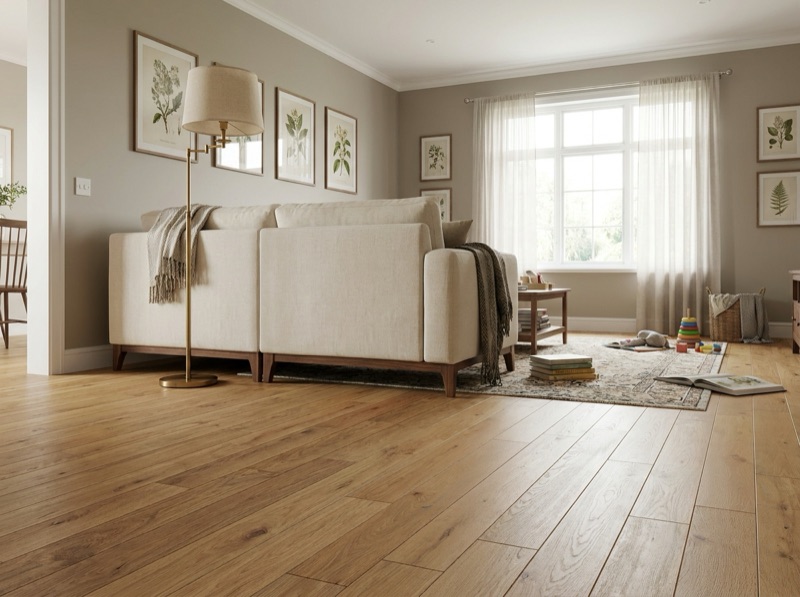
Hardwood Flooring
in Saint Charles,
Missouri
No city on our map has more original wood underfoot. Here the hardwood conversation starts with what the house already owns, and only then moves to what to buy.
Flooring Correct sells and installs solid hardwood across Saint Charles, 22.1 road miles east of the Wentzville showroom, about thirty minutes on I-70. This is the city where wood floors are least likely to be a blank-slate purchase: with 6.8 percent of housing predating 1939 per the Census Bureau American Community Survey, 2024 five-year estimates, table B25034, many houses here already own wood worth talking about. Call 636-332-0654.
Start with what the house already has
In the older streets, the first hardwood question is not which floor to buy but what is already down and what it deserves. Original boards from the early twentieth century are frequently still present, under carpet or in plain sight, and they are often narrower strip flooring in species and cuts that age gracefully. A floor like that, structurally sound, is usually worth keeping: sanding and refinishing renews it, and no new purchase buys the century of settled character it already carries.
The honest caveats belong in the same paragraph. Old floors have finite sanding life left, depending on how many times they have been taken back before. Deep water marks, pet staining that has penetrated, and previous patch repairs in different species all limit what refinishing can achieve. We assess rather than assume, and when replacement is the truthful answer we say so with reasons you can inspect yourself.
Matching into history
The hardest wood job in this city is extension: new wood meeting old where a wall came out, an addition was built, or a kitchen opened into a dining room with hundred-year-old boards. Species, board width, grain orientation and a century of color change all have to be negotiated, and the honest range of outcomes runs from seamless to deliberately distinct. Weaving new boards into old is genuine craft and sometimes the right answer; a clean intentional transition is sometimes the wiser one.
What makes the difference is evidence. Bring a photograph in raking light, and better, bring an actual board if any have ever been lifted. Matching against a physical piece on the counter, next to full size samples, turns guesswork into comparison, and it is the single most useful thing a Saint Charles homeowner can carry through our door.
New solid wood, chosen for this housing
Where the project is new hardwood throughout, the older housing rewards period-sympathetic choices: narrower boards read correctly in pre-war rooms, and site-finished floors can be stained to sit comfortably beside original trim. In the newer stock, including the 27.7 percent of the city built in 2000 or later and New Town's traditional streets begun in 2003, the full modern menu applies: wider planks, factory finishes, and the species conversation on its own merits.
That conversation, briefly and honestly: red oak remains the regional standard and takes stain predictably. White oak is the designer default with a tighter figure. Hickory is the hardest working domestic with dramatic variation. Maple is clean and contemporary and shows dents more than its hardness suggests. Walnut is beautiful and softer than people expect. Hardness matters less than grain and tone for hiding real life, and a busy mid-tone grain is the most forgiving thing you can buy.
Missouri seasons, old houses and humidity
Solid wood moves with the seasons everywhere, and a century-old Saint Charles house has been demonstrating that longer than anyone reading this page. Winter gaps that close in summer are normal behavior, not failure. What discipline looks like: reasonable indoor humidity through both extremes, proper acclimation before any new wood is installed, and expansion space respected at the edges. Houses of this age also often lack the vapour management newer construction takes for granted, which is one more reason the subfloor inspection matters before promises get made.
Where solid wood should not go, even here
Tradition does not overrule physics. Solid hardwood still does not belong below grade, over slabs, or in full baths and laundries, and an old house's charm does not change what a slab or a wet room does to one piece of wood. For real wood over a slab addition or a below-grade room, engineered hardwood is the honest answer, and the full reasoning lives on our solid against engineered page. For the wet rooms, tile and vinyl plank keep their territory.
The lines we carry, and the finish question
Our solid hardwood selection runs across Portercraft, Paramount, Hartco, Jackson Hardwood, Casabella, Hudson Collection, Durango and National Flooring Products, which covers the span from period-appropriate strip to wide modern planks. On finishes: prefinished boards arrive factory-cured and the house is usable quickly; site-finished floors give a continuous surface and color control, at the cost of dust, fumes and days of curing. In occupied older houses that trade-off often decides the method, and we will walk it through straight. Call 636-332-0654 before driving out to have specific boards pulled.
Stairs, the wood that ties old houses together
In the older housing here the staircase is often the most visible woodwork in the house, and it deserves a place in any hardwood conversation. Treads wear at their nosings, finishes dull in the climb line, and the question of whether stairs should match a refinished floor, contrast with it, or carry a runner is a genuine design decision rather than an afterthought. Refinishing treads is close-quarters work with its own disruption rhythm, since a household still needs to get upstairs, and we sequence it honestly, half a staircase at a time where the geometry allows.
Runners earn a mention of their own: on steep older stairs they add grip and quiet while showing wood at the margins, which is the classic answer in this architecture and often the safest one for households with young children or older knees.
Heat, radiators and the winter a wood floor lives through
Older heating arrangements shape wood floors in ways newer houses never learn. Rooms warmed by radiators develop a local microclimate around them, drier and warmer, and boards in that zone move on their own schedule. Forced-air retrofits with floor registers cut openings through the boards that any refinish or replacement has to negotiate. None of this changes the material advice, but it changes the craft: register surrounds, radiator clearances and the dry zone near heat sources all get looked at during the measure, and a winter humidifier does more for a wood floor in an old house than any product upgrade.
How a Saint Charles wood project runs
One planned showroom visit with your evidence: photos, trim pieces, a lifted board if one exists. Then the free in-home measure, which in this city is equal parts measurement and inspection: what is down, how much sanding life remains, what the subfloor is doing, and where new would meet old. The quote covers what the house actually needs, refinish or replace or both by room, and the work follows our installation process. More about the city is on our Saint Charles service area page.
“The team at Flooring Correct is great to work with. I have known the owners for years and they are great people. I'm a repeat customer and will continue to be one.”
What Saint Charles homeowners ask about wood
Straight answers on refinishing, matching into history, sanding life and the rooms where tradition does not overrule physics.
636-332-0654If they are structurally sound with sanding life left, refinishing usually wins: it renews the surface and keeps a century of character no purchase can replace. Deep water marks, penetrating stains and past patches are what push toward replacement, and we assess rather than assume.
Sometimes closely, sometimes a deliberate transition is wiser, and evidence decides it. A photograph helps; an actual lifted board on our counter next to full size samples helps far more. We will tell you honestly which outcome your floor supports.
It depends on how much wood remains above the tongue, which past refinishes have already spent. We check it physically at the measure, because the answer determines whether refinishing is an investment or a last lap.
Small seasonal gaps that close in summer are normal solid-wood behavior, especially in older houses. Keeping indoor humidity reasonably steady shrinks the swing. Gaps that never close or boards that cup are a different conversation.
Narrower boards in oak read correctly in pre-war rooms, and site finishing lets color sit comfortably beside original trim. In newer housing the full modern menu applies, wide planks included.
Not solid wood, and the house's age does not change the physics of a slab. Engineered hardwood is the honest way to have real wood below grade, and we will show you why at the counter with both board edges in hand.
Portercraft, Paramount, Hartco, Jackson Hardwood, Casabella, Hudson Collection, Durango and National Flooring Products. Call 636-332-0654 before the drive and we will pull boards to match what you bring.
It is a real design decision: matched treads read seamless, contrast reads deliberate, and a runner adds grip and quiet while showing wood at the edges. On steep older stairs the runner is often the safest answer, and we sequence the work so upstairs stays reachable.
We assess refinishing candidacy honestly at the measure, and where the verdict is replacement or extension we supply and install the new wood. Getting both opinions from one visit is the practical advantage: nobody is selling you their only tool.
Price a hardwood project, Saint Charles
Tell us what the house already has and what you want it to become. We inspect, measure and quote from what is actually there.
Free estimate
636-332-0654