 Flooring Correct


Radiant heat compatibility
Does radiant heat work under any type of flooring?
Not equally. Radiant heat gets sold as compatible with anything, but the floor sits directly on a heat source that cycles on and off, and materials respond to sustained direct heat differently than they respond to a warm room. Rigid, dimensionally stable floors generally pair well. Solid hardwood and heavily padded materials carry the real risk, not every floor.
Radiant heat gets sold, fairly, as one of the more comfortable ways to heat a house, and somewhere along the way that pitch turned into a shorthand: put it under anything. That shorthand is not quite true, and the gap between the two versions is worth understanding before a floor goes down on top of a system that is expensive to open back up if the pairing was wrong.
Where 'works under anything' comes from
The claim survives because it is mostly true. Modern engineered wood, luxury vinyl and tile genuinely pair with radiant heat far more often than they did years ago, and the products built for it keep improving. What the blanket version leaves out is where the exceptions are written down. They are not in the heating system's documentation, which describes what the system does. They are in the flooring manufacturer's documentation, which describes what that specific product will tolerate, and those two documents are usually read by different people at different stages of the same project.
What heat cycling actually does to a floor
A floor over radiant heat sits directly on a heat source that turns on and off, not on top of a generally warm room. That distinction matters because materials respond to sustained, direct heat the way they respond to sustained, direct moisture: by expanding and contracting. A material that behaves perfectly under normal room conditions can move differently with a heat source running underneath it for hours at a stretch, cycling on and off through the day rather than holding one steady temperature.
Wood is the material this affects most, because it is already reactive to humidity, and direct sustained heat compounds that. It can pull moisture out of a board faster than the room's air temperature alone would, on top of whatever moisture movement a slab underneath is already contributing. That is why the wood-family floors get the most scrutiny in this conversation and vinyl and tile get comparatively little.
What pairs safely, as a rule
- Engineered hardwood, because a cross-layered core holds its shape where a solid board sitting on a heat source would cup or gap. The engineered hardwood page carries the radiant rules that come with it, including the surface temperature limit and the installation methods most radiant assemblies call for
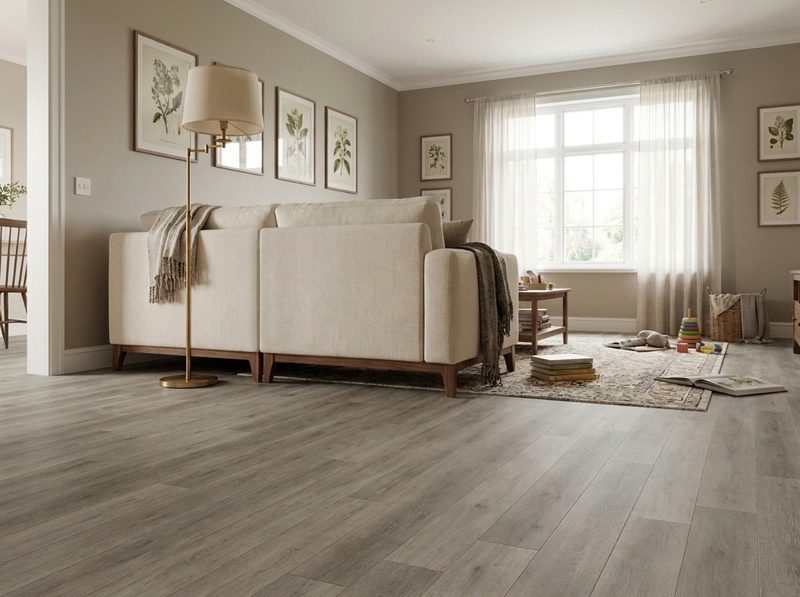
- Luxury vinyl plank, an engineered material rather than a natural, moisture-reactive one, and broadly compatible as a category
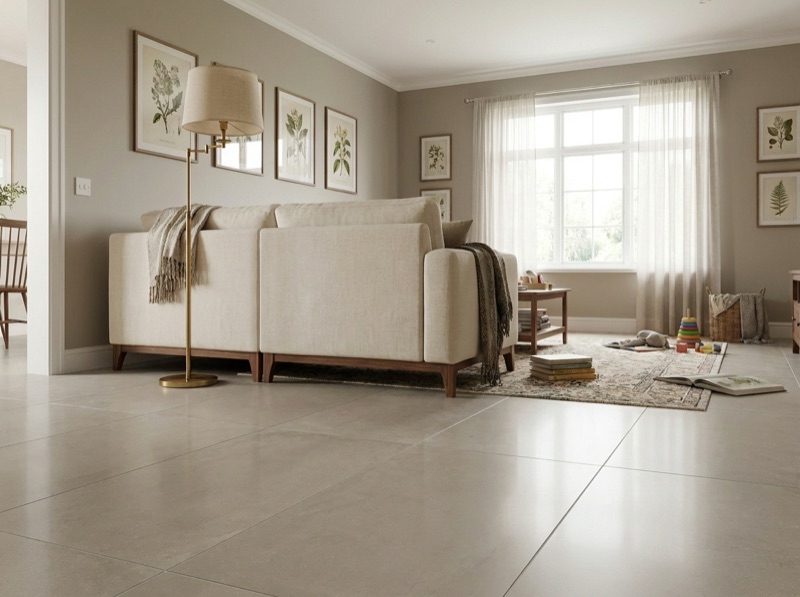
- Tile, which is how radiant heat has historically been paired most often, since tile conducts heat well and does not react to it structurally
- Rigid core vinyl generally, for the same dimensional-stability reasons that make it a safe bet over an uneven or imperfect slab
What needs a closer look before it goes down
Solid hardwood is not an automatic no, but it is the material most likely to develop a real problem over time, and the manufacturer's own written approval matters more here than almost anywhere else in flooring. If a solid product does not explicitly address radiant heat in its own documentation, that silence is worth treating as a caution rather than an oversight. Whether the wood in a radiant room should be solid or engineered is not really an open question, and the head-to-head page settles it along with the rest of that matchup.
The two conflicts nobody mentions: the pad and the adhesive
Carpet raises an issue the wood conversation never gets to, and it is not really about the carpet. A thick, heavily insulating pad works against a radiant system rather than with it, holding heat under the surface instead of letting it reach the room, which can mean a system running longer and working harder to do the same job. The fiber above it barely matters by comparison. A thin pad specifically rated for radiant use is what avoids the conflict, and <a href="/materials/underlayment-and-carpet-pad/">the pad's normal job of cushioning and sound</a> has to be traded off against that rating rather than chosen independently of it.
The adhesive is the second one, and it hides even better, because it is a layer nobody sees and nobody asks about. A glue-down floor over radiant heat puts the bond line closer to the heat source than anything else in the assembly. Not every flooring adhesive carries a heat rating, and one that does not can soften or creep under sustained direct heat that an ordinary room floor never subjects it to. If the install method is glue-down, the adhesive needs its own approval for radiant use, separately from the plank sitting on top of it.
Hydronic or electric, and what it changes
Hydronic systems move warm water through tubing, usually buried in or under a slab, so the heat comes with a large mass behind it: slow to come up, slow to come back down, and steadier once it is there. Electric systems use mats or cable set close under the finished surface, with very little mass, so they respond quickly and are often installed one room at a time as a comfort layer rather than as the house's heat source.
For the floor above, the compatibility question is the same either way, but the margin is not. An electric mat sitting directly under the covering puts its heat closer to the underside of the material than tubing buried in concrete does, which makes the temperature the system is set to reach matter more rather than less. A hydronic slab, meanwhile, is still a slab, and whatever moisture that slab is releasing is a separate question that does not go away because the concrete is warm.
Where the actual answer gets confirmed
Every honest answer here ends at one figure, the maximum floor-surface temperature the flooring manufacturer rates that specific product for, and the system's settings have to stay under it rather than the other way around. Ask your radiant heat installer, or check the system's own manual, for the maximum surface temperature it is set to run and whether the system is hydronic or electric. Bring that to the free in-home measure, along with the flooring you are leaning toward, and we will check it against what that product's manufacturer actually rates it for. That is a real answer built on the product in front of us, which the same in-home step in our installation process is set up to do for every room, radiant heat or not.
What else people ask about radiant heat and floors
Whether solid wood is ever safe, what carpet padding has to do with it, and warranty terms worth reading before ordering.
636-332-0654Occasionally, but it is the exception rather than the default, and it depends entirely on whether that specific product's manufacturer has written approval for radiant use into its own documentation. Where that approval exists it usually comes with its own moisture and temperature limits. Where it does not, engineered hardwood is the safer way to get a real wood look over the same system.
It can, but the pad matters more than the carpet does. A thick, heavily insulating pad works against the system by trapping heat below the surface rather than letting it reach the room. A thin pad specifically rated for radiant use avoids that conflict and lets the system do its job without running harder than it should have to.
It can void the manufacturer's warranty on the flooring itself, since most manufacturer documents state a maximum surface temperature and specific installation requirements for radiant use. Whether a given installation meets those terms is between the product's own paperwork and how the system is set, which is exactly why that number gets confirmed before ordering rather than after.
Not without taking the floor up, because the heat source has to sit underneath the finished surface to reach the room. Electric mats and hydronic tubing both go in before the covering does. If radiant heat is on the wish list for a room, it is worth raising before the flooring gets ordered rather than after, since the two jobs share the same subfloor and the same window of time.
Bring the system's floor-temperature rating
Ask your radiant installer, or check the thermostat's own manual, for the maximum floor-surface temperature the system runs. Bring that number to the measure and we will match it against what the flooring you're considering is actually rated for.
Free estimate
636-332-0654