 Flooring Correct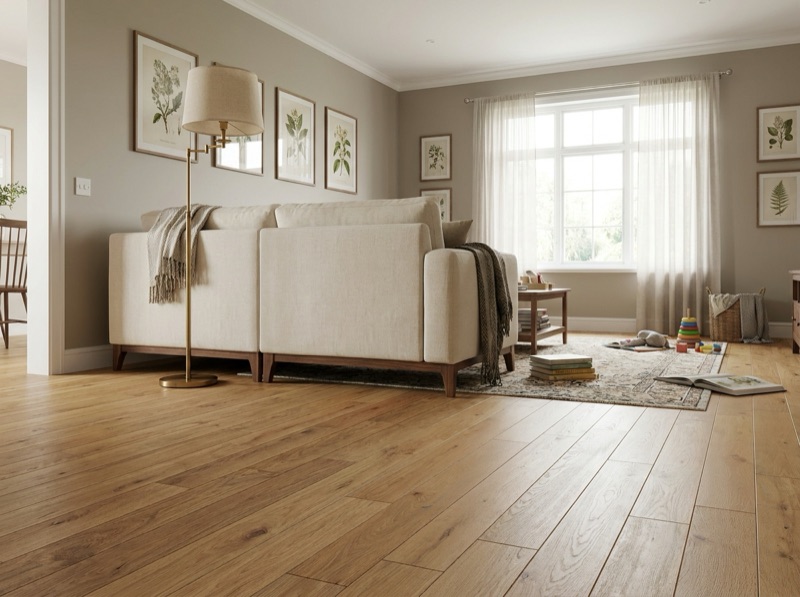

Vinyl print layer
What is the print layer in a vinyl plank?
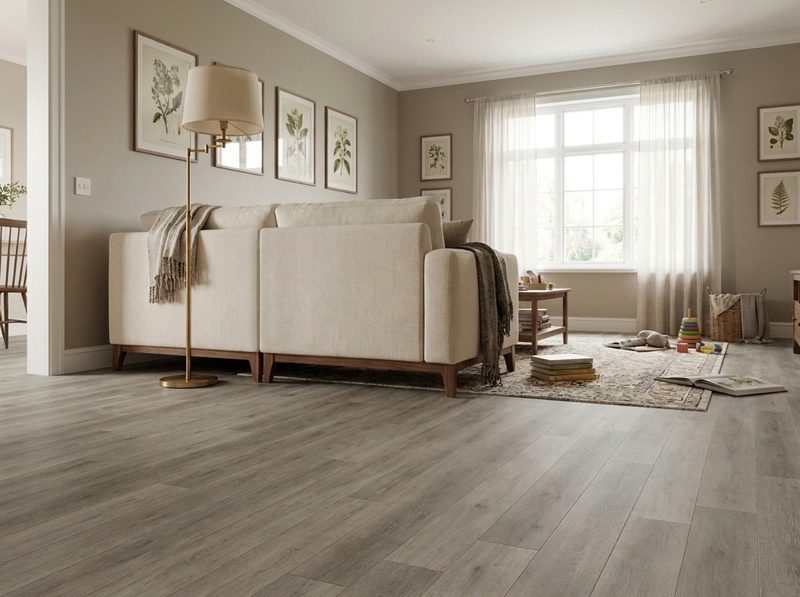
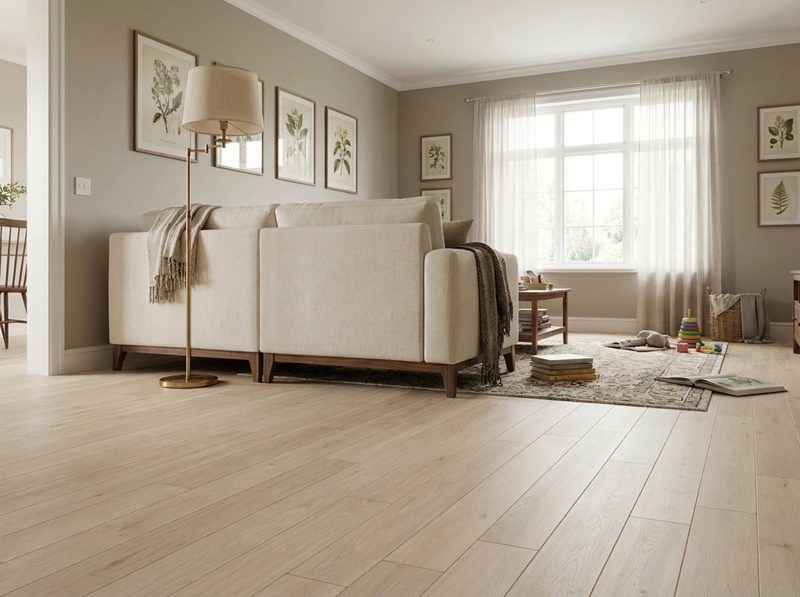
The print layer is the decor film that carries the wood or stone image on a vinyl plank. It sits above the core and below the clear wear layer, so nothing ever touches it. Its realism depends on how many different board faces the run contains and on how closely one production batch matches the next.
Two planks can carry the same photograph and land on a floor looking nothing alike. The image is only half of it. What decides whether a vinyl floor reads as wood from across the room is how many different boards went into the file the printer was working from, and whether every carton stacked in your hallway came off the same production run.
How the picture gets onto a plank
Every board sold as luxury vinyl plank is a stack, and the image lives in the middle of it. Underneath sits the core, which decides how the board feels and how it copes with your subfloor. Above it sits a clear film, the wear layer, which is the only part your shoes ever touch. The image itself is a printed decor film, produced either from engraved cylinders running a continuous web or from a digital press, then bonded into the stack under heat and pressure. A few lines skip the film and print directly onto the core. Either way the picture is sealed in, so it cannot be scuffed off. It can only be worn through from above, which is exactly what the wear layer number is measuring.
Every decor starts as a photograph or a scan of real boards. A styling team picks which boards to shoot, corrects the color, and decides how much variation to leave in. That editorial decision is why one oak reads as a floor and another reads as a catalogue page. The second one had its knots, its mineral streaks and its color range tidied out until every board agreed with every other board, and a floor where nothing disagrees is a floor the eye stops believing.
Print repeat, or how many boards are in the file
This is the specification almost nobody asks for and the one that decides whether a finished floor gives itself away. A run is built from a limited set of unique board faces. When those faces are used up the sequence starts again. A product with many unique faces reads as a stack of individual boards. A product with few of them produces twins, and once you have spotted one pair of identical boards in a room you will find the rest of them for the life of the floor.
Two things make a short repeat more obvious. Wide planks, because each face covers more floor and fewer of them fit in a room, and long uninterrupted sightlines, the open plan where one floor runs from the front door through the kitchen with no doorway to break the pattern. The same product in a bedroom, with a bed and a rug over most of it, may never show a repeat at all. Width has its own consequences, and the plank width page covers where that sits.
Color drift between production runs
The second failure has nothing to do with design. Vinyl is made in runs, and color drifts between them. Two cartons of the same name and the same item number, made months apart, can differ enough to see once the boards land next to each other, and a light color or a gray with a cool undertone shows it soonest. Cartons carry a run or lot number for precisely this reason, and it is worth reading before anyone opens them.
The consequences are ordering decisions. Order the whole job at once, waste included, rather than ordering short and topping up later. Keep the leftover boards, because a repair a few years from now is only invisible if the replacement came out of your own closet. If a project is going down in two phases, say so before anything is ordered so the material can be pulled together from one run. And if you are matching new material to a floor already down, that is a harder conversation and an honest one, because a discontinued run may not be matchable at all.
What the image is not responsible for
Realism gets blamed on the picture, and it is usually not the picture's fault. Texture is pressed in as a separate step, and whether that texture follows the grain you can see is a different specification entirely. That is also where sheen gets settled, because how visible a day to day mark looks is a finish question and not a print one. How a board feels underfoot, and how it handles a subfloor that is not flat, belongs to the core.
Edges belong here too, and they are quick to check. A bevel gives each board its own shadow line, which is what makes a floor read as separate boards rather than as one sheet. Look at whether the bevel is finished in the same color as the face or left pale, because a pale edge on a dark floor draws a grid across the room. Look at the board ends as well. A print that is careless anywhere is usually careless there first.
Judging a sample before you commit a whole level to it
- Pull several boards from the display or the sample set and lay them out together. Look for two faces that match. If you find a pair inside a small stack, expect to see the pattern in a large room.
- Take the samples to the actual room and look at them at night under your own bulbs as well as at noon. Print color moves under warm light more than people expect.
- Hold a sample at a low angle so the light rakes across it. If the texture and the grain disagree, you want to know now rather than after install.
- Ask what the run or lot number is, and ask for the whole job to be pulled from one run.
- Check the bevel and the board ends, and check the same color in a second box if one is open.
What happens to a printed floor over the years
A printed floor is a color, and color moves. Long term direct sun will shift any printed floor, vinyl included, which is why a wall of west windows or a room that gets full southern light deserves a word before you commit to something light sensitive. Sunlight has its own page. Everyday wear does something different. It does not fade the picture. It dulls the clear layer above it, and grit is what does the dulling, which makes it a housekeeping question as much as a product one. The cleaning routine is written out separately.
All of this sits inside the wider category, and the luxury vinyl plank page lays out the rest of the stack along with what we keep on the showroom floor. The print is the part people fall in love with under display lighting. It is worth a stretch of honest suspicion before it goes down across a whole main level.
More about how a plank gets its look
Printing methods, why a carton can differ from a sample, and how stone looks behave.
636-332-0654Not on its own. A digital press makes a long print repeat easier to produce, so digitally printed lines do tend to carry more unique board faces. That is a tendency rather than a rule, and a well made cylinder print with plenty of faces beats a lazy digital one. Ask how many faces are in the run and judge the boards in front of you instead of the printing method on the brochure.
Two reasons, and both are normal. The sample may have come from an older production run, and color drifts between runs enough to notice. The other is light. A board judged under showroom lighting and a floor seen under your own bulbs at night are not the same color. Open a carton and lay boards out in the room before installation starts, while there is still time to say something.
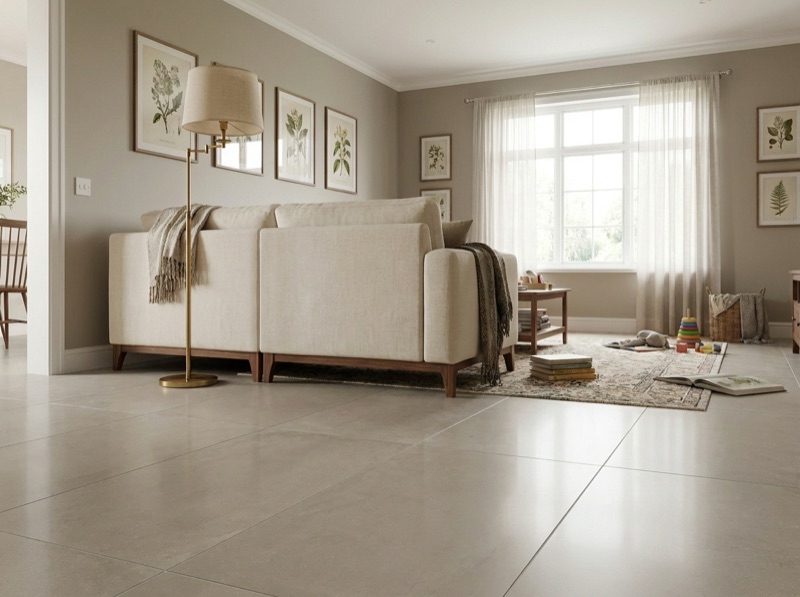
Yes. A slate or travertine look is a photograph of stone handled exactly the same way, so the same questions apply: how many unique faces are in the run, whether the texture lines up with the image, and whether a grout line effect is printed on or actually pressed into the board. Stone looks tend to show a repeat sooner, because the eye reads blotches faster than it reads grain.
Lay the boards out where the light travels
Tell us how far the floor runs without a doorway to break it, which way the windows face, and how much of it stays uncovered. We will pull the samples worth judging and you can take them home.
Free estimate
636-332-0654